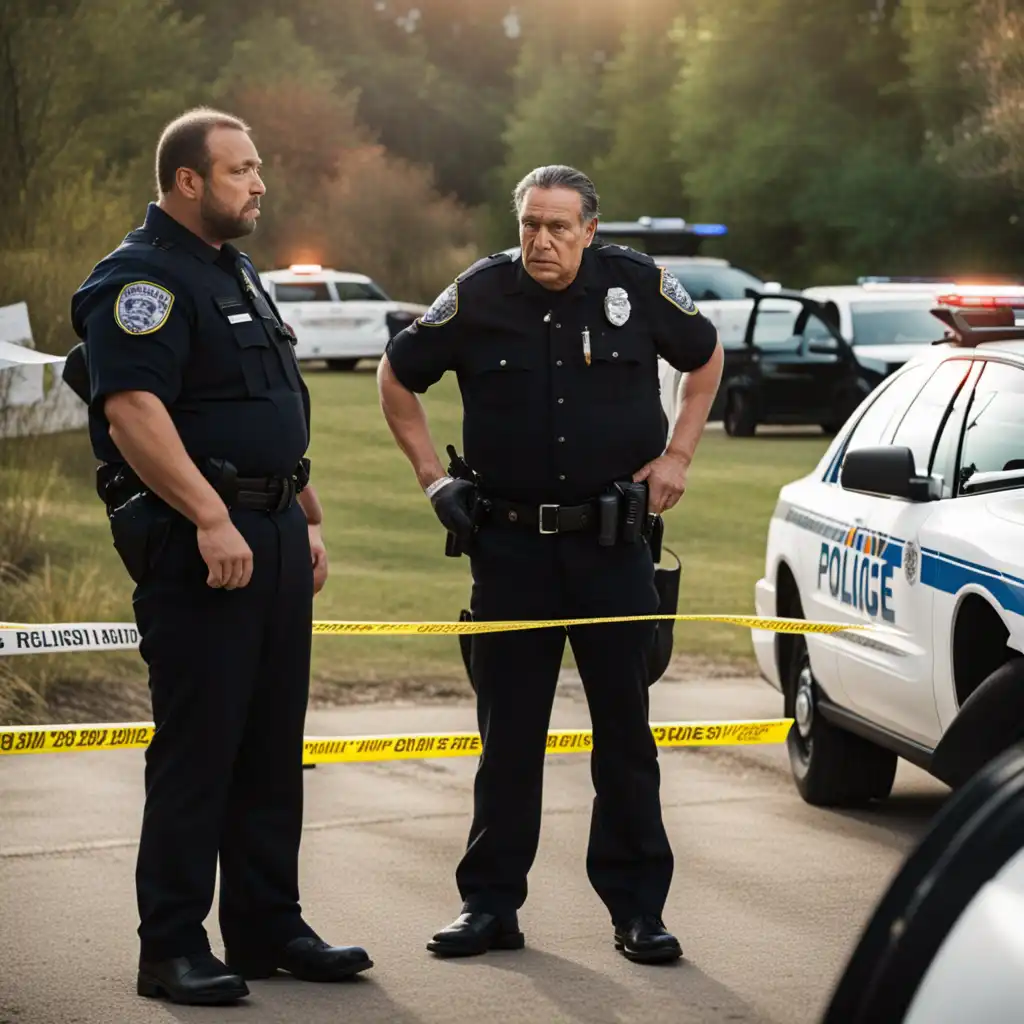
eyewitness
noun eyewitness
ˈaɪwɪtnəs
A person who has seen something happen, especially a crime or accident.
The police found an eyewitness to the robbery, who could identify the criminal.
eyewitness
ˈaɪwɪtnəs
Cargando…
ˈaɪwɪtnəs
A person who has seen something happen, especially a crime or accident.
The police found an eyewitness to the robbery, who could identify the criminal.
No se pudo cargar el audio. Inténtalo de nuevo más tarde.
The word 'eyewitness' is used to refer to someone who has seen an event happen with their own eyes. For example, if a car accident happens and someone sees it happen, that person is an eyewitness. The term can also be used in legal cases to refer to someone who has seen a crime take place and can provide information to help solve the case.
Behold means to see or observe something, often with wonder or amazement. It is more commonly used in a poetic or religious context, for example, "Behold the majesty of nature!" or "Behold, a miracle!".
Behold describes seeing something with wonder or amazement, while eyewitness describes someone who has personally witnessed an event and can confirm what happened.
Abrir palabra: Behold →A bystander is someone who is present at an event but is not directly involved in it. They may observe but do not necessarily have any knowledge of what is happening.
Bystanders are applicable when referring to people who witness an event but do not have any specific information about it.
Abrir palabra: Bystander →An observer can refer to someone who witnesses an event, but not necessarily directly. They might be watching through a window or a surveillance camera, for example.
Observer can also refer to someone who notices things like patterns or behaviors rather than specific events.
Both words are applicable in most situations, but may be more relevant in different contexts. Eyewitness is more commonly used in legal or investigative situations, while observer is more commonly used in scientific or research contexts.
Abrir palabra: Observer →An onlooker is a person who is present in the vicinity of the event but has not directly witnessed it. They have seen the event happen, but from a distance or at an angle that may not provide all the details.
Eyewitness is applicable when describing an individual who has seen an event directly with their own eyes, while onlooker is applicable when describing someone who was present at an event but may not have had a direct or complete view of what happened.
Abrir palabra: Onlooker →A spectator is someone who has simply watched an event take place from a distance, but was not directly involved in the event itself.
Spectators are typically passive observers who are there to enjoy the event rather than provide any crucial information about it.
In simpler terms, an eyewitness is someone who saw something happen while a spectator is someone who watched it happen but wasn't involved or affected by it.
Abrir palabra: Spectator →A viewer is someone who watches an event happen through a screen or from a distance. They do not have firsthand knowledge of what occurred and cannot provide specific details about the event.
For example, someone who watched a news report on the car accident would be a viewer.
An eyewitness was physically present during an event while a viewer was not, so they have different levels of knowledge and understanding about what occurred.
Abrir palabra: Viewer →Watch means to observe something or keep an eye on it.
It is used when referring to monitoring an event or situation from a distance, such as watching a movie or keeping a watchful eye on a child playing in the park.
Eyewitness refers to someone who saw something happen firsthand, while watch refers to observing something from a distance.
Abrir palabra: Watch →An eyewitness is someone who sees an event with their own eyes. They have directly observed something happening. For example, someone who witnessed a car accident and can provide details about what happened.
A witness is someone who can provide information about an event. This can include eyewitnesses, but it can also include people who heard about the event secondhand, or people who have some other knowledge or expertise related to the event.
For example, a doctor may be a witness in a court case related to medical malpractice, but they may not have personally seen the event happen.
An eyewitness is a type of witness who directly saw an event happen, while a witness is someone who has information about an event, regardless of whether they saw it directly or not.
Abrir palabra: Witness →the last eyewitness account of an incredible act of athleticism, disobedience, courage, unread, unheard,
Ver en YouTube ↗When we're awake, cortisol can fragment memories - one reason eyewitness crime scene accounts are so unreliable. But at night that very fragmentation allows creative recombinations of ideas.
identification quite defined so I don't know what that muscle is but for your words on the statements of which part of the leg are you referring smooth or well at the outside of the thigh I guess anything that is said to an eyewitness by a police officer can affect their
Ver en YouTube ↗I've read and traveled a lot in the Middle East, and I built on eyewitness accounts of horrific executions that would shape a boy's character and beliefs if he watched his father die that way. These are the stuff of which nightmares are made.
That means language can shape how you're thinking about anything that can be named by a noun. That's a lot of stuff. And finally I gave you an example of how language can shape things that have personal weight to us -- ideas like blame and punishment or eyewitness memory. These are important things in our daily lives.
Ver en YouTube ↗I have long argued that no one should be allowed to write opinion without spending years as a reporter - nothing like interviewing all four eyewitnesses to an automobile accident and then trying to write an accurate account of what happened.
whales flanking and driving others will periodically bite onto the tail flukes of the blue weighing him down further and exhausting him also while it is difficult to discern from this footage eyewitness is indicated that still other whales were constantly plunging underneath the big blue whale preventing
Ver en YouTube ↗Anyone with a smart phone is a potential eyewitness cameraman capturing and transmitting stories at speeds that turn Reuter photos and traditional reporting into, well... yesterday's news.
All of these fallibilities of memory can have real-world impacts. If police interrogations use leading questions with eye witnesses or suspects, suggestibility could result in incorrect identifications or unreliable confessions. Even in the absence of leading questions, misattribution can lead to inaccurate eyewitness testimony.
Ver en YouTube ↗Wrongful convictions happen every week in every state in this country. And they happen for all the same reasons. Sloppy police work. Eyewitness identification is the most - is the worst type almost. Because it's wrong about half the time. Think about that.
many in the scientific community have dismissed eyewitness reports as unreliable citing wildlife hoaxes and optical illusions
Ver en YouTube ↗I had been an eyewitness to a truly historic moment in American pop culture.
It's called reconstructed memories. It happens to us in all the aspects of our life all the time. It was those two considerations among others -- reconstructed memory the fact about the eyewitness fallibility -- that was part of the instigation for a group of appeal attorneys
Ver en YouTube ↗Perhaps the most telling witness against the claim of accurate history for the Bible comes when we read the earliest narrative of the crucifixion found in Mark's gospel and discover that it is not based on eyewitness testimony at all.
was called to the crime scene, it was a boating fatality, and the eyewitness told this detective that the boat had flipped over and the occupant had drowned underneath. Now instinctively crime scene investigators look for what is apparent, but this detective did something different. He looked for what wasn't there which is harder to do. And he raised the
Ver en YouTube ↗Hersh's account of the bin Laden raid is a farrago of nonsense that is contravened by a multitude of eyewitness accounts, inconvenient facts, and simple common sense.
that's not to say that it's straightforward or without controversy. Is it ethical to destroy memories? What about things like eyewitness testimony? What if you can't give someone Propranolol because it would interfere with other medicines that they're taking? Well with respect to ethics and eyewitness testimony,
Ver en YouTube ↗We are entering an age where people can claim to know more about what really happened than the people who were there. Where people will dismiss eyewitness accounts, on the basis of their gut feelings; where they will refute scientific discoveries because the scientist just doesn't look trustworthy.
but my research had shown that single-witness identification cases are prone to error. It doesn't mean he was innocent, it just means we ought to look a little bit closer at those cases. So we did. And the facts were relatively simple. The eyewitness said she heard a shot,
Ver en YouTube ↗