refraction
noun refraction
rɪˈfrækʃn
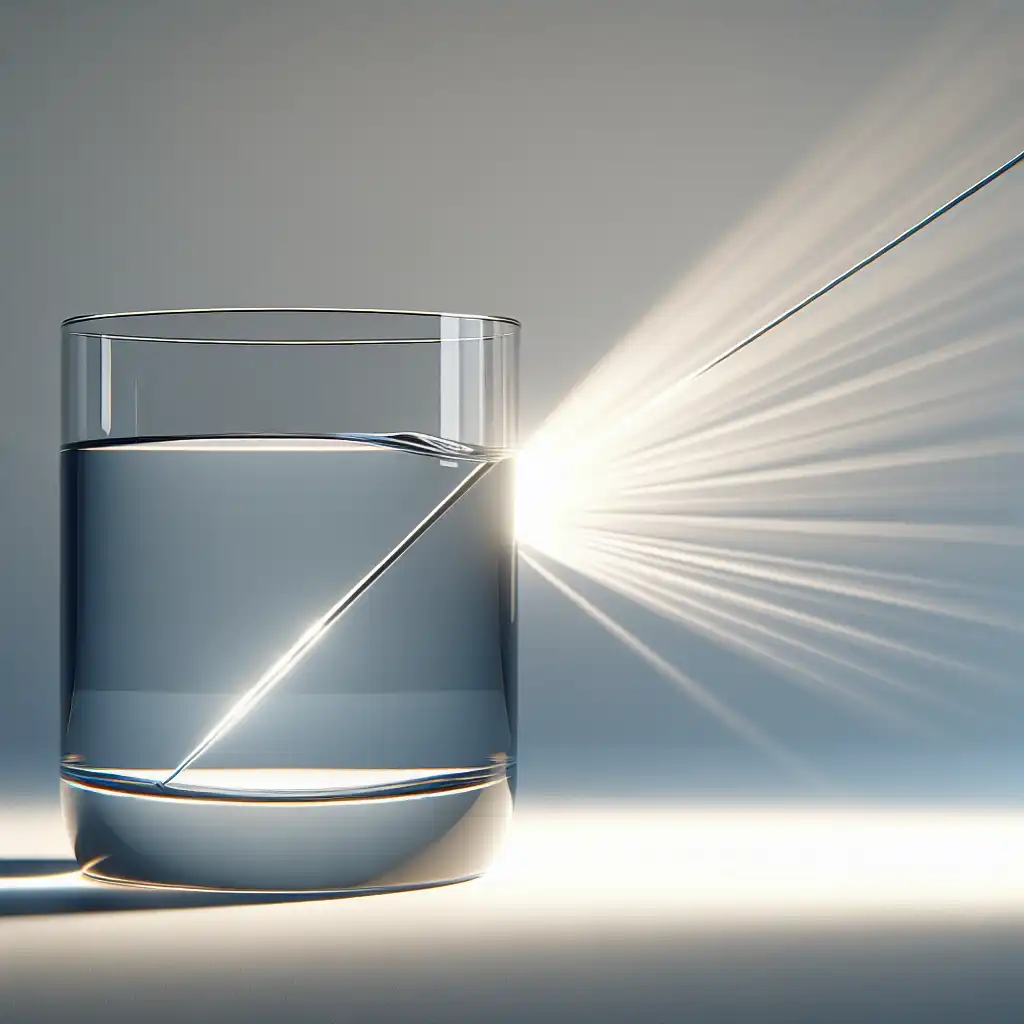
The bending of light as it passes through a different medium or envirnonment
When a light ray enters water from air, refraction occurs and it appears to change its path.
refraction
rɪˈfrækʃn
लोड हो रहा है…
rɪˈfrækʃn
The bending of light as it passes through a different medium or envirnonment
When a light ray enters water from air, refraction occurs and it appears to change its path.

rɪˈfrækʃn
A measurement of the focusing characteristics of an eye or the eyes
The optometrist performed a refraction to examine the degree of my nearsightedness.
rɪˈfrækʃn
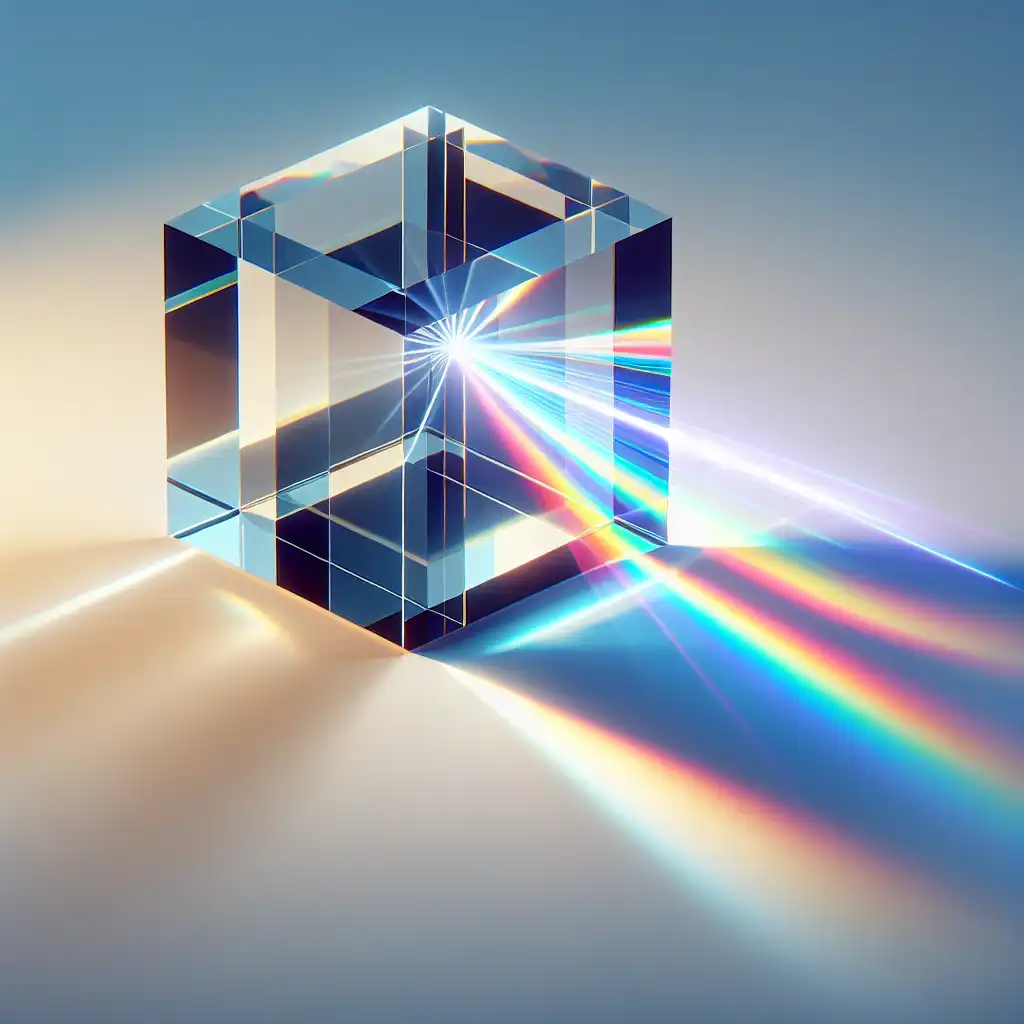
The process of changing direction of a wave as it passes from one environment to another
Refraction also occurs with waves other than light, such as sound waves and water waves.
ऑडियो लोड नहीं हो सका। कृपया बाद में फिर कोशिश करें।
Refraction is when light waves change direction as they pass through a different material, like when light from the sun moves through water or a magnifying glass. Refraction is important because it helps us see things clearly and can create cool visual effects in nature. You might hear the word refraction in science class or when talking about how a lens works.
Bend and refraction are both related to the way light travels but they have different meanings.
Bend refers to the change in direction of light when it passes through a medium with a different density, such as a prism or a lens.
This causes the light to change direction, but it doesn't change its speed. Bend is commonly used to describe the way lenses work in glasses, cameras, or binoculars.
Refraction refers to the bending and spreading out of light when it passes through a medium with a different density, like when light passes from air to water or from water to a diamond.
In summary, both bend and refraction involve the way light changes direction, but bend applies to when light passes through a lens or prism, while refraction applies to when light passes through a medium with a different density.
शब्द खोलें: Bend →Deflection refers to the change in direction of an object's path due to an obstacle in its way, such as a ball hitting a wall and bouncing off.
Deflection is applicable to physical objects moving in a straight path, such as balls or bullets, when they encounter an obstacle.
In simpler terms, deflection is when an object changes direction due to hitting or encountering something in its path, while refraction is when light bends as it passes through a medium.
शब्द खोलें: Deflection →Deviate and refraction are both words related to changing direction or bending.
Deviate means to move away from a planned or expected course of action, or to turn off from a straight path. For example, if you had planned to go to the mall but instead decided to go to the park, you have deviated from your original plan.
Deviate refers to a change in direction from a planned course of action, while refraction describes the bending of light when it passes through different media.
शब्द खोलें: Deviate →Dispersion is the phenomenon where light splits into different colors when it passes through a medium, such as a prism or water droplets in the air.
Both dispersion and refraction are applicable in the study of optics and the behavior of light.
Dispersion is often seen in rainbow formation, while refraction is used in lens design and in the production of eyeglasses to correct vision.
शब्द खोलें: Dispersion →Scatter is the process of light getting deflected in different directions when it interacts with small particles, like dust or smoke.
This is why the sky appears blue during the day, as the blue light is scattered while the other colors are not.
Refraction is a change in the direction of light when it passes through a medium, while scatter is when light is deflected in various directions when it hits small particles.
Refraction is more applicable in lenses and optics while scatter is more applicable in atmospheric science and meteorology.
शब्द खोलें: Scatter →How do glasses help us...
YouTube पर देखें ↗Similarly, many a young man, hearing for the first time of the refraction of stellar light, has thought that doubt was cast on the whole of astronomy, whereas nothing is required but an easily effected and unimportant correction to put everything right again.
Watch the Total Solar...
YouTube पर देखें ↗I care very much what the fans think. I'm starting to loosen my grip on caring about what critics say, because I think that critics care about what fans think of them, too, so there's a little bit of a refraction there, through that glass.
I think characters are going to be, if not a reflection of the author, at least some refraction of some part of their personality.
Exploring emerging technologies like new refraction technology will enable people to get prescriptions cheaper and more conveniently, which will, in turn, provide increased access to prescription glasses.
The model I came up with in 1964 is just the invention of a rather strange sort of medium that looks the same in all directions and produces a kind of refraction that is a little bit more complicated than that of light in glass or water.