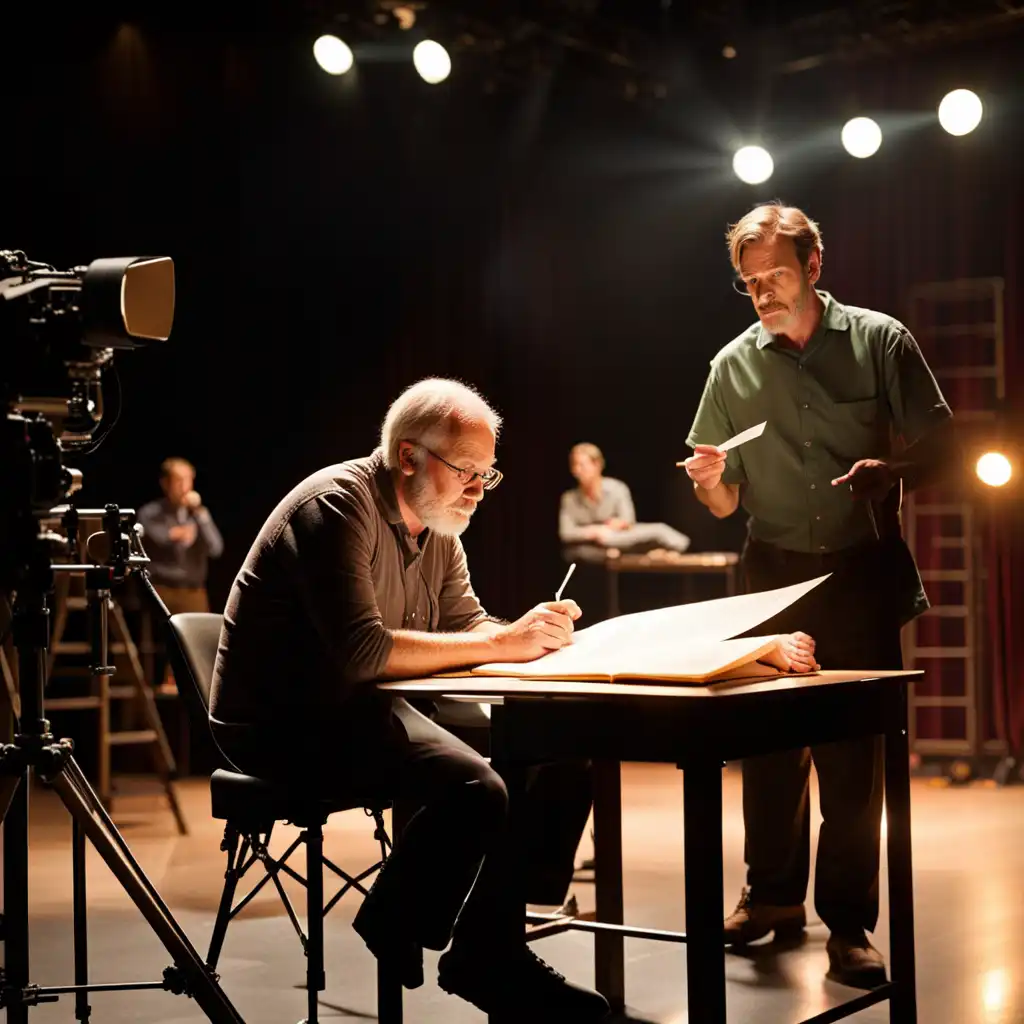
The skill or art of arranging and conducting a theatrical performance, including managing scripts, directing actors, and managing set design and lighting.
In order to produce a successful play, the theater director must master their stagecraft.
No se pudo cargar el audio. Inténtalo de nuevo más tarde.
Cómo se usa
Stagecraft refers to the various techniques, skills and methods used in theatre productions to create a convincing, entertaining and engaging performance. It includes things like lighting, sound, set design, costume, makeup, directorial choices and acting. The term can also be applied to other areas of performance, such as live music or dance productions. The word is often used by theatre professionals to describe the technical and artistic aspects of their work, and can be used by anyone interested in theatre to discuss and appreciate these elements.
Dramatic refers to the intense emotions or excitement that are created in a story, play, or movie. It also means something that is theatrical or exaggerated to create an emotional response from the audience.
For example, a playwright might use dramatic language and events to create an emotional reaction from the audience, while a stagecraft team would use their tools to bring the play to life on stage.
Performance refers to the actual act of singing, acting, or playing a musical instrument. It includes things like hitting the right notes, portraying emotions, and engaging with the audience.
Stagecraft refers to the techniques and skills used in the production of a performance. This includes things like lighting, set design, sound effects, and costumes.
Performance is what the audience sees and hears, while stagecraft is what goes on behind the scenes to make the performance possible and enjoyable for the audience.
Both are important and necessary for a successful performance.
Theatrical refers to the artistic aspects of theater, such as acting, directing, and scriptwriting. Stagecraft is applicable when discussing the technical aspects of theater production, while theatrical is applicable when discussing the artistic aspects of theater production.
Essentially, stagecraft is more focused on the behind-the-scenes work that makes a production run smoothly, while theatrical is more focused on the creative aspects of the production and its impact on the audience.
Theatricality refers to the overall tone, mood, and style of a performance or play. It encompasses the director's vision for the production, the performer's delivery of their lines, and the emotional impact that the performance has on its audience.
In other words, stagecraft is focused on the practical aspects of creating a play or performance, while theatricality is focused on the artistic and emotional impact of the performance on the audience.
Reaganism as a political movement has enormous resources behind it and it seeks - through stagecraft and through a tremendous level of effort toward propaganda - to present an image of Reagan that is so much larger-than-life that it sort of blinds us all, and keeps us all in a warm, happy, nostalgic state, thinking of a man who can do no wrong.
In an age when stagecraft, gauzy themes, and sound-bites have too often been substituted for leadership, Bill Clinton as a candidate made it essential to campaigning to take the specifics of governance seriously. Practical solutions were 'in;' ideology was 'out.
Elites are once again invoking Reagan, dropping their G's and saying things in a folksy sort of way that's meant to capture the hearts of people. And it's all fraud; it's all stagecraft. And people are falling for a great deal of elite behavior in this country packaged as if it's proletariat behavior.