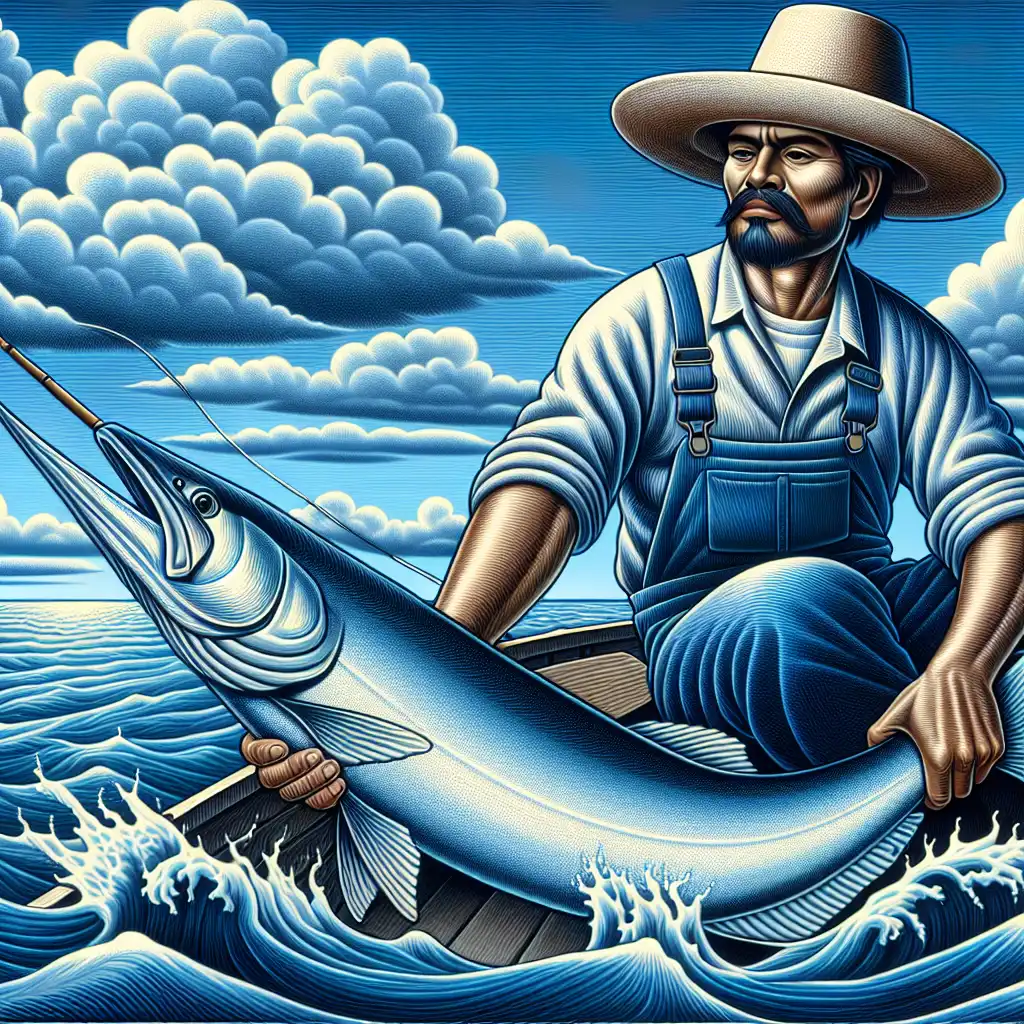
swordfish
noun swordfish
ˈsɔːrdfɪʃ
A large fish known for its long, sharp bill that looks like a sword
The fisherman caught a large swordfish during his deep sea fishing trip
swordfish
ˈsɔːrdfɪʃ
Cargando…
ˈsɔːrdfɪʃ
A large fish known for its long, sharp bill that looks like a sword
The fisherman caught a large swordfish during his deep sea fishing trip
No se pudo cargar el audio. Inténtalo de nuevo más tarde.
Swordfish is a type of fish that can be found in the ocean. It is a large fish with a long, pointed nose that looks like a sword. People catch swordfish for food and they are often served in restaurants. The word swordfish can also be used to describe the color or texture of something that is similar to the fish, such as a grayish-blue color or a firm and meaty texture.
Marlin and swordfish are two different types of fish. Marlin is a type of fish that is known for its long, narrow bill or spear, while swordfish has a long, flat bill that is shaped like a sword.
Marlin is typically found in warm waters, while swordfish can be found in both warm and cold waters.
Marlin is usually hunted as a game fish and is considered one of the most challenging fish to catch due to its speed and strength.
Marlin and swordfish are two different types of fish with distinct physical features and uses. Marlin is primarily a sport fish, while swordfish is more commonly consumed as food.
Abrir palabra: Marlin →shaking the foundation of our life support system, leaving plumes of death in their path. The next time you dine on sushi -- or sashimi, or swordfish steak or shrimp cocktail, whatever wildlife you happen to enjoy from the ocean --
Ver en YouTube ↗I do love fish, and I thought it was healthy without understanding the high mercury levels that fish like tuna, swordfish and halibut can contain.
seeing animals that we believe are surface animals that live in the top layer of the ocean and encountering them at phenomenal depths like swordfish coming straight at us at 700 meters and yes there was screaming just getting a whole new insight into how deep these animals work that how their world is so
Ver en YouTube ↗Undercook swordfish, and you get rubber. Overcook it, and you lose the fat and succulence.
are popular pastimes with recreational fishermen vying for the largest catch of the day sharks are also caught commercially for food in many countries they've become a substitute for swordfish which are protected and hard to come by in
Ver en YouTube ↗By the end of the 20th century, up to 90 percent of the sharks, tuna, swordfish, marlins, groupers, turtles, whales, and many other large creatures that prospered in the Gulf for millions of years had been depleted by overfishing.
life-support system leaving plumes of death in their path the next time you dine on sushi or sashimi or a swordfish steak or shrimp cocktail or whatever wildlife you happen to enjoy from the ocean think of the real cost for every pound that goes to market more
Ver en YouTube ↗extracting wildlife from the sea in ways that are clearly not sustainable consider what we're doing to creatures that once thrived in the high seas sometimes near the shores swordfish they're taken so relentlessly that they
Ver en YouTube ↗microbes plankton fish. Everything that lives here has amazing adaptations for the challenges of such an extreme environment. These animals help support top predators such as whales tuna, swordfish and sharks.
Ver en YouTube ↗are popular pastimes with recreational fishermen vying for the largest catch of the day sharks are also caught commercially for food in many countries they've become a substitute for swordfish which are protected and hard
Ver en YouTube ↗An eight-metre-long giant swordfish similar to those alive today. The saw-like rostrum is lined with lethal barbs and is in itself up to 2.5 metres in length.
Ver en YouTube ↗like we clear-cut forests. It's hard to overstate the destruction. Ninety percent of large fish the ones we love -- the tunas the halibuts the salmons swordfish -- they've collapsed.
Ver en YouTube ↗our global marine life has been slashed in half. And another recent report suggests that of our largest predatory species, such as swordfish and bluefin tuna, over 90 percent has disappeared since the 1950s.
Ver en YouTube ↗