planetary
adjective planetary
ˈplænəteri
Related to or belonging to a planet or planets.
Planetary motions are studied in astronomy.
planetary
ˈplænəteri
लोड हो रहा है…
ˈplænəteri
Related to or belonging to a planet or planets.
Planetary motions are studied in astronomy.
ˈplænəteri
Worldwide or global.
We are facing planetary challenges like climate change.
ˈplænəteri
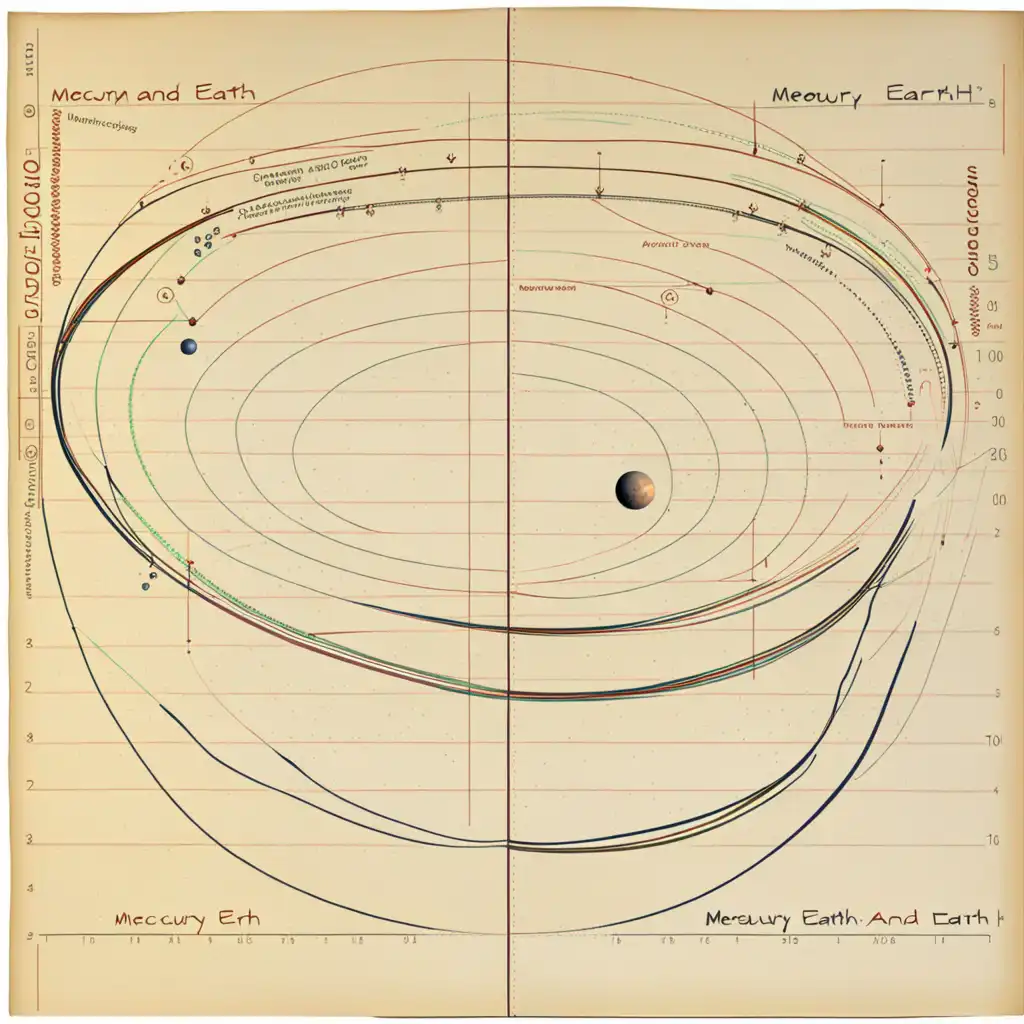
Of or like a planet; moving in an orbit.
Mercury's planetary rotation is slower than Earth's.
ऑडियो लोड नहीं हो सका। कृपया बाद में फिर कोशिश करें।
The word 'planetary' refers to something that is related to planets, which are large celestial bodies that orbit around a star. For example, we can say that the planetary system consists of various planets that revolve around the sun. Another example would be that planetary science is a branch of science that studies planets and their characteristics. The word 'planetary' can also be used to describe something that affects or involves a wide range of people or things, just like how climate change is a planetary issue.
Astronomical refers to things related to space or the study of space, such as stars, galaxies, black holes, and so on.
So, while both words are related to space and the study of space, astronomical is a broader term that can describe a range of celestial objects and phenomena, while planetary is more specific to planets and their characteristics.
शब्द खोलें: Astronomical →Celestial refers to anything that relates to the sky or outer space, especially the stars and other objects in space.
It is often used to describe things beyond the Earth's atmosphere, such as celestial bodies like stars, planets, and comets.
Celestial is applicable when talking about the universe beyond our solar system, including stars and galaxies. Planetary is applicable when talking about the planets in our solar system, like Earth, Mars, and Jupiter.
शब्द खोलें: Celestial →Both cosmic and planetary can refer to things related to outer space, but they have different meanings.
Cosmic refers to things related to the entire universe, including things beyond our solar system.
For example, we might say that the Big Bang was a cosmic event because it formed the entire universe, while the recent discovery of water on Mars is a planetary event because it only applies to that one planet.
शब्द खोलें: Cosmic →The term sidereal refers to anything related to the stars, particularly their position and motion relative to Earth. It is applicable when describing the time it takes for a star to return to its position in the sky after a full rotation of the Earth.
Planetary is about planets while sidereal is about stars.
शब्द खोलें: Sidereal →Planetary refers to anything related to planets, whether it's the study of planets or objects that orbit planets. It is a general term that can describe any planet in our solar system or planets outside of our solar system.
Solar specifically refers to our sun and anything related to it, such as the solar system (the collection of planets and other objects that orbit the sun), solar energy (energy that comes from the sun), and solar flares (bursts of energy from the sun).
Planetary is a broader term that encompasses all planets, while solar is more specific to our sun and its related objects.
शब्द खोलें: Solar →He developed three brilliant laws of planetary motion while he was studying decades of precise astronomical data in an effort to find support for his theory. While his three laws are still in use today,
YouTube पर देखें ↗There is no fixed physical reality, no single perception of the world, just numerous ways of interpreting world views as dictated by one's nervous system and the specific environment of our planetary existence.
to support human development as we know it. It's also good news because the planetary risks we're facing are so large, that business as usual is not an option. In fact we're in a phase where transformative change is necessary, which opens the window for innovation,
YouTube पर देखें ↗The world is not the prettiest place in this planetary universe.
these bodies often orbit their own stars, with some being a part of entire planetary systems. Exoplanets are made of the same elements as the world's and our solar system, and based on their composition and structures are just as diverse.
YouTube पर देखें ↗For many centuries, humans have speculated that there might be planetary systems around other stars and that there could be extraterrestrial life there and even intelligent being. However, those were simply speculations, and now we have evidence for the first part of these ideas.
and they look a lot like these microbial tubules we also study impact craters these are observed on every planetary body in the solar system and they're created when an asteroid or comet hits the planet or a moon they have a very destructive reputation but they actually
YouTube पर देखें ↗My father was not only a planetary scientist and a great popularizer of science, but he thought very deeply about the world. He was a scholar, he studied history. He taught a class in critical thinking, and he was very, very aware of the directions we might go.
first rocks eventually gravity assembled the rocks to create planetary embryos but in time form the four closest planets to the Sun
YouTube पर देखें ↗No government in the world today has explicitly assigned the responsibility for planetary protection to any of its agencies.
whether alien civilizations out there in the universe or our own, into three levels based on energy consumption. The tiny amount of energy we currently consume pales next to what we leave untapped. A Type I or planetary civilization,
YouTube पर देखें ↗When we realize that human beings are entering the world constantly and that each being is stamped at the first complete breath with the planetary pattern then in the sky, everyone must necessarily be different from everybody else.
In other words we have possibly stumbled upon the holy grail of modern day planetary exploration, or in other words an environment that is potentially suitable for living organisms. And I don't think I need to tell you that the discovery of life elsewhere in our solar system,
YouTube पर देखें ↗In any 'big science' enterprise, like planetary exploration, where you must work in big teams of similarly driven people, it is important also to know how to work alongside others even when they may be your fiercest competitors.
characterized by a nation versus nation very fragile standoff and basically we lived for all those years and some might argue that we still do in a situation of being on the brink literally of an apocalyptic planetary calamity
YouTube पर देखें ↗I think that an advanced planetary civilization will modify their own planets to be more stable, to prevent asteroid impacts and dangerous climate fluctuations.
F-sub-p is the fraction of stars that have planets. N-sub-e is the average number of habitable planets in any planetary system. F-sub-l is the fraction of planets on which life actually begins
YouTube पर देखें ↗Space exploration promised us alien life, lucrative planetary mining, and fabulous lunar colonies. News flash, ladies and gents: Space is nearly empty. It's a sterile vacuum, filled mostly with the junk we put up there.
and he couldn't quite make out what he was looking at. So he wrote that he had seen -- "I have observed that the furthest planet has three bodies." And this is what he ended up concluding that he saw. So without a theory of planetary rings and with only grainy data, you can't have a good theory.
YouTube पर देखें ↗We're not going to persuade people in the developing world to go without, but neither can we afford a planet on which everyone lives like an American. Billions more people living in suburbs and driving SUVs to shopping malls is a recipe for planetary suicide. We can't even afford to continue that way of life ourselves.