cosmology
noun cosmology
kɑːzˈmɑːlədʒi
The study of the universe, including its origin, properties, structure, and evolution.
Cosmology is a branch of astronomy that involves the origin and evolution of the universe.
cosmology
kɑːzˈmɑːlədʒi
加载中…
kɑːzˈmɑːlədʒi
The study of the universe, including its origin, properties, structure, and evolution.
Cosmology is a branch of astronomy that involves the origin and evolution of the universe.
kɑːzˈmɑːlədʒi
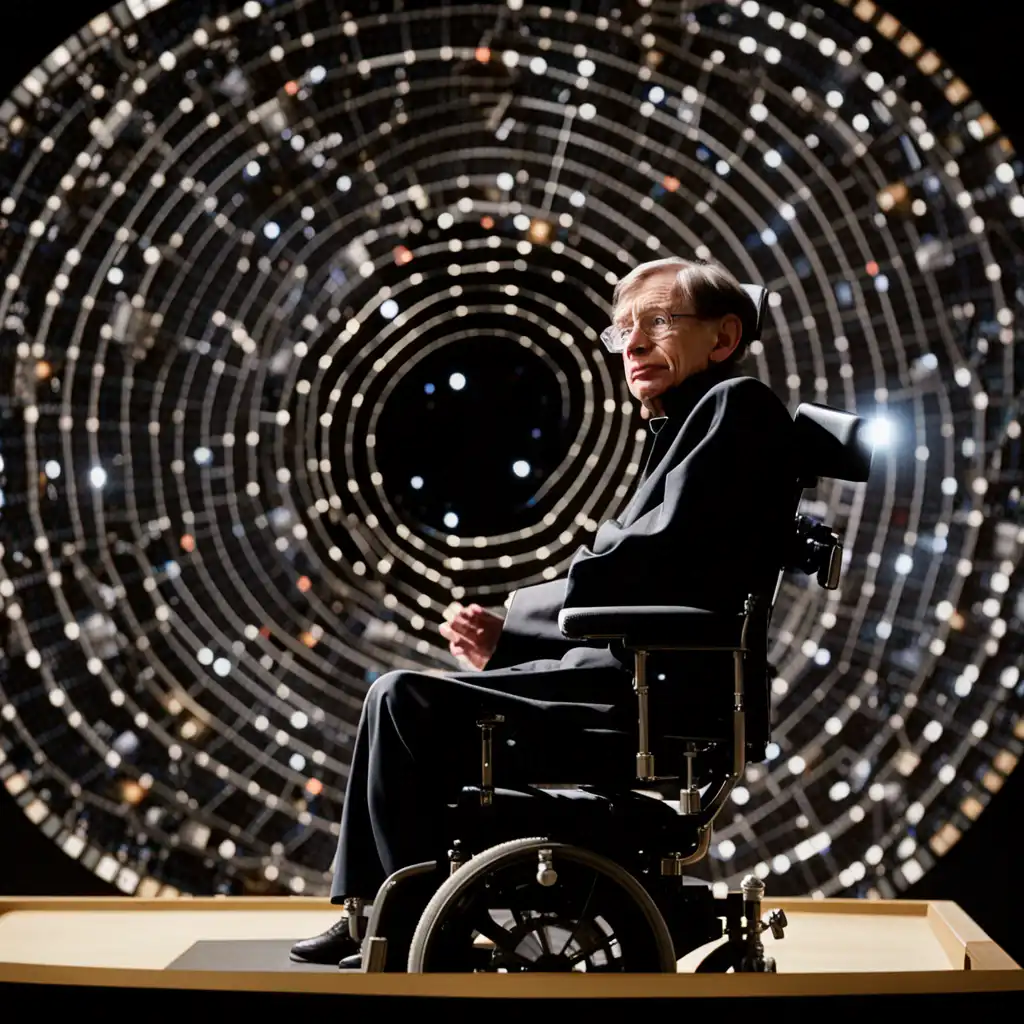
A particular theory, model, or view of the structure and origin of the universe.
Stephen Hawking's cosmology is defined in his book, 'A Brief History of Time'.
音频无法加载,请稍后再试。
Cosmology refers to the study of the universe and the origin, evolution, and structure of everything in it. It explores questions such as how the universe began, how it will end, and how things are distributed and behave throughout. Cosmology is a branch of astronomy and is largely concerned with the physical properties of celestial objects and the interstellar medium. Scientists use observations, mathematical models, and other tools to expand our understanding of the universe and its mysteries. The word cosmology can be used in scientific or more general contexts to describe the study of the universe or the philosophical and cultural ideas associated with it.
Astrometry is the scientific study of astronomy that deals with measuring the positions and motions of celestial objects, such as stars and planets.
Astrometry focuses on studying the movements and properties of celestial objects within our galaxy, while cosmology focuses on understanding the nature of the universe as a whole.
打开单词: Astrometry →Astronomy is the study of objects and phenomena that exist in space, such as stars, planets, galaxies, and black holes.
While astronomy focuses on individual objects and their observable properties, cosmology seeks to explain how and why the universe as a whole looks and behaves the way it does.
Astronomy is applicable to the study of any specific celestial body, while cosmology is applicable to the study of the universe as a whole.
打开单词: Astronomy →Astrophysics is the study of the physical properties and behavior of objects and phenomena in space, such as stars, galaxies, and black holes.
Cosmology is a branch of astrophysics that deals with the study of the origins, structure, and evolution of the universe as a whole.
In simpler terms, astrophysics is concerned with individual objects in space and their physical properties, while cosmology is focused on the overall structure and history of the universe as a whole.
Astrophysics is more applicable to understanding specific phenomena like stars, while cosmology is more applicable to the bigger picture of the universe itself.
打开单词: Astrophysics →Cosmography is the study of the physical features and characteristics of the universe. This includes mapping the stars, planets, galaxies, and other celestial bodies.
In simpler terms, cosmography is more focused on describing what exists in the universe, while cosmology tries to explain why and how it exists.
Cosmography is applicable in astronomy, while cosmology is more focused on theoretical physics.
打开单词: Cosmography →Making sense of...
在 YouTube 上观看 ↗Evolutionary cosmology formulates theories in which a universe is capable of giving rise to and generating future universes out of itself, within black holes or whatever.
Stephen Petranek: 10...
在 YouTube 上观看 ↗The realization that baryonic matter is only a trace component of the universe revealed our understanding of the cosmos as shockingly incomplete and was one of the milestones that ushered in the era of modern cosmology.
The Role of Role Models...
在 YouTube 上观看 ↗The success of ordinary cosmology speaks against the idea that the universe was created in a random fluctuation.
How electromagnetic...
在 YouTube 上观看 ↗One of the great challenges of modern cosmology is to discover what the geometry of the universe really is.
Why is our universe...
在 YouTube 上观看 ↗My present work concerns the problems connected with the theory of elementary particles, the theory of gravitation and cosmology and I shall be glad if I can manage to make some contribution to these important branches of science.
CERN's supercollider %\PIPE%...
在 YouTube 上观看 ↗The main reason why people should care about research in fundamental physics is the same reason they care about astronomy and cosmology. People, children, want to know what we're made out of, how it works, and why the universe is the way it is.
The beginning of the...
在 YouTube 上观看 ↗In my cosmology, indigenous wild deer are more important than exotic ornamental shrubs.
Alex Wissner-Gross: A...
在 YouTube 上观看 ↗I've always been fascinated by the Norsemen, their lives, history and cosmology. The more we study them the more interesting they become... breaking their own stereotypes. We usually think of them as barbarians, but there were aspects to their society that shows a tremendous level of civilization, sophistication and social advance.
The fascinating physics...
在 YouTube 上观看 ↗I wouldn't say that 'The Fabric of the Cosmos' is a book on cosmology. Cosmology certainly plays a big part, but the major theme is our ever-evolving understanding of space and time, and what it all means for our sense of reality.
Where does creativity...
在 YouTube 上观看 ↗I have my own cosmology that's kind of like an esoteric mix of a lot of different things that work for me and that to me, are worth exploring. There is a little bit of the archetypal Christianity that I've kind of reconciled because when you're raised that way, inevitably that infrastructure will persist into your adulthood.