plausible
adjective plausible
ˈplɔːzəbl
Something that seems likely to be true based on the facts or evidence that you have.
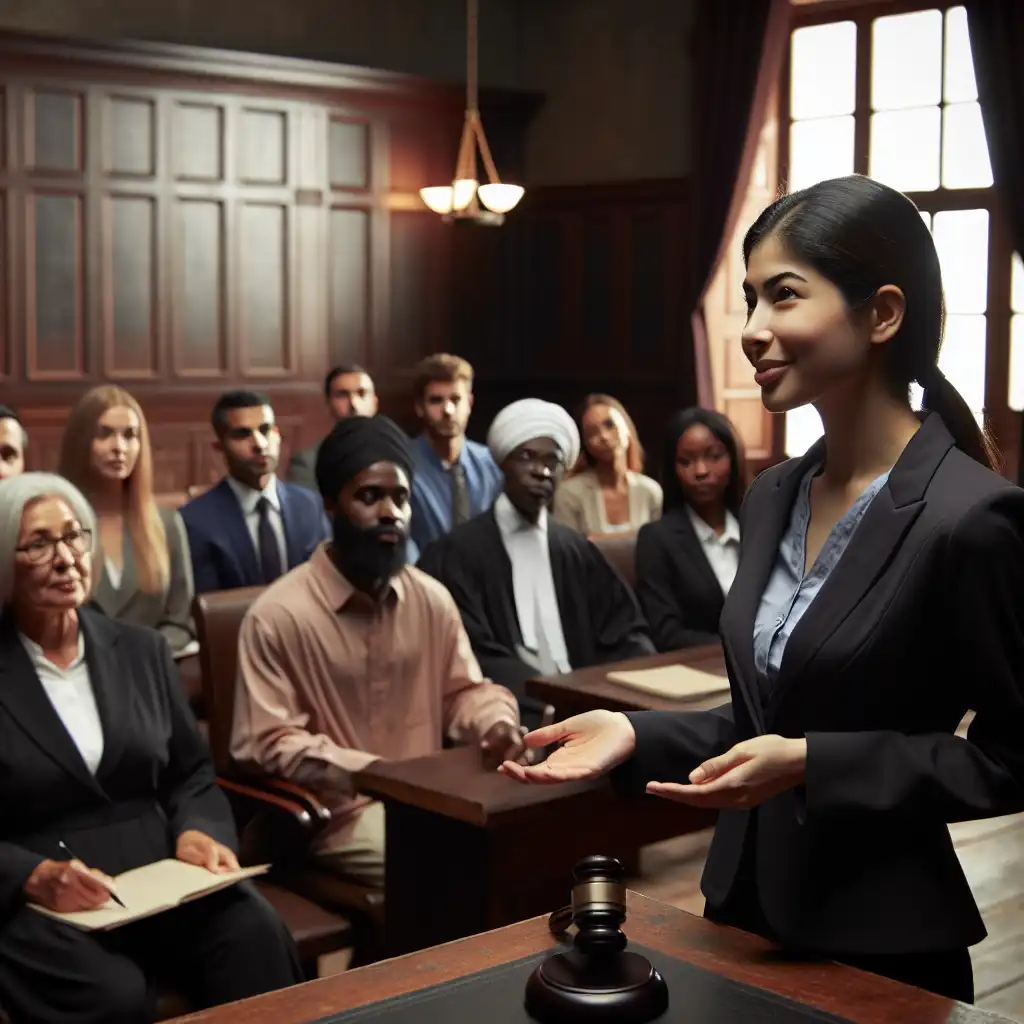
His argument was plausible and the jury believed him.
plausible
ˈplɔːzəbl
불러오는 중…
ˈplɔːzəbl
Something that seems likely to be true based on the facts or evidence that you have.
His argument was plausible and the jury believed him.
오디오를 불러오지 못했어요. 잠시 후 다시 시도해 주세요.
The word 'plausible' means something that seems believable or reasonable. You can use it when you are trying to explain or convince someone of something, and you believe that what you are saying is likely to be true. For example, if you are telling a story or giving an explanation, you could say "It is a plausible explanation" meaning that it seems reasonable and could be true. You can also use this word in everyday conversations, such as when discussing news or events, and in academic or professional settings, such as when presenting information or doing research.
Believe means to have faith or confidence in something or someone even without proof or evidence. For example, you might believe in the existence of ghosts even though there is no scientific evidence to prove it.
Believe is about having faith without evidence, while plausible is about something that is reasonable or believable based on evidence or common sense.
단어 열기: Believe →Convince means to persuade someone to believe or do something.
Convince is used when you want to persuade someone to believe or do something, while plausible describes whether a statement or claim is reasonable or believable.
단어 열기: Convince →Credible means believable or trustworthy. This means that the information, story or source is likely to be true and can be relied upon.
For example, if someone says they saw a unicorn walking down the street, that would not be credible because unicorns are not real.
However, if someone says they saw a rare bird in a nearby park, that could be credible if the person is trustworthy and knows how to identify the bird correctly.
단어 열기: Credible →Feasible means that something is possible to do or achieve based on the resources available, the time frame, and the abilities of those involved.
Example: It is feasible to complete a 10-page research paper within a week if you manage your time well and work consistently.
Feasible emphasizes the practicality or possibility of something, while plausible suggests that something is likely but not necessarily certain.
단어 열기: Feasible →Likely means that something is probable or has a high chance of happening. For example, it is likely that it will rain today because of the dark clouds in the sky.
Likely is used when something is probable or has a high chance of happening while plausible is used when something is believable or reasonable, but may not necessarily be true.
단어 열기: Likely →Probably means something that is very likely to happen or be true. It refers to a situation or an event that has a high chance, possibility or likelihood of occurring.
Plausible refers to something that is believable, while probably refers to something that is highly likely to happen.
단어 열기: Probably →Reasonable means that something is logical, fair, and sensible. It's based on what we can know from evidence and facts, and it's more likely to be true than something that's just plausible.
But it's not reasonable because there's no evidence to support the existence of real unicorns.
In contrast, if someone says they saw a deer in the park, that's more than plausible–it's reasonable because there are plenty of deer in many different parks around the world and it's a more logical conclusion based on what we know about the sightings of animals in parks.
단어 열기: Reasonable →Both plausible and tenable describe something that is believable or reasonable, but there is a slight difference in usage.
Tenable describes something that is logically defensible or holds up under scrutiny. It refers to an argument or position that can withstand criticism or opposition.
For example, a scientific theory is tenable if it is supported by evidence and can be used to make accurate predictions.
Plausible suggests something that could be true, while tenable suggests something that is supportable by evidence and reason.
단어 열기: Tenable →perfectly rational and relentlessly self-maximizing. But just ask yourselves, is it plausible that every single time for your entire life, when you did something nice for somebody else,
YouTube에서 보기 ↗Truth is so hard to tell, it sometimes needs fiction to make it plausible.
gives us a narrative that resonates with our intuitions— it makes it seem more plausible. And we choose the option that seems more representative of the overall picture, regardless of its actual probability. This effect has been observed across multiple studies,
YouTube에서 보기 ↗The truth has got to appear plausible on the stage.
lot of arguments theories very dramatically from the somewhat plausible to the downright bizarre some pointed out of control hormones or cataracts others blamed a world taken over by
YouTube에서 보기 ↗In the future, I think it's pretty plausible that collective intelligence tools and skills will be important in order to be a part of global dialog, global business, and global creativity. People who know how to negotiate collective intelligence networks are going to be in a good position to contribute to global society.
enables illegal drug purchases with delivery to any address in the world with near complete plausible deniability on behalf of the buyer well I have absolutely no first-hand knowledge the where I've heard is that the service is doing quite well so by now you must be
YouTube에서 보기 ↗All economic forecasts are subject to considerable uncertainty. There is always a wide range of plausible outcomes for important economic variables, including the federal funds rate.
It's too important a question to ignore. But there's an obvious we're alone. It's just us. There could be a trillion planets in the galaxy. Is it plausible we're the only creatures capable of contemplating this question?
YouTube에서 보기 ↗When I create a false reality, I always try to create a plausible structure to help convince people.
There's no legal or ethical or plausible way to enforce laws like these anyway. They exist only to foster fear and promote transphobia.
YouTube에서 보기 ↗What makes 'The Handmaid's Tale' so terrifying is that everything that happens in it is plausible.
that is quite plausible, like you're unlikely to encounter a society that uses flint axes and jet planes. But you can almost think of a technology as a set of affordances. So technology is the thing that enables us to do various things and achieve various effects in the world.
YouTube에서 보기 ↗The more we learn about life, the less plausible is any evolutionary theory that relies on blind, undirected, piece-by-piece change.
So you get the best of both worlds. And a similar analysis I think, can apply to the potential awkwardness of a sexual solicitation, and other cases where plausible deniability is an asset. I think this affirms
YouTube에서 보기 ↗First comes an idea. Then, characters begin to evolve out of the landscape of that idea. And then, finally, characters dominate: plot is simply a function of what these people might do or be. Everything has to flow from their personalities; otherwise it will not be emotionally engaging, or plausible.
and we trained them for work and weaponry and companionship. And throughout history we've treated some animals like tools or like products, and other animals we've treated with kindness and we've given a place in society as our companions. I think it's plausible we might start to integrate robots in similar ways.
YouTube에서 보기 ↗Truth is so hard to tell, it sometimes needs fiction to make it plausible.
These are plausible claims, but in truth, we can't see the brain's wiring clearly enough to tell if these are really true. And so the technologies for seeing connectomes will allow us to finally read mis-wiring of the brain,
YouTube에서 보기 ↗When I am preparing my 'lookalike' photographs, I think about the character of the real people, because, if the photographs are going to be plausible, you have to convince the viewer that they could have happened.