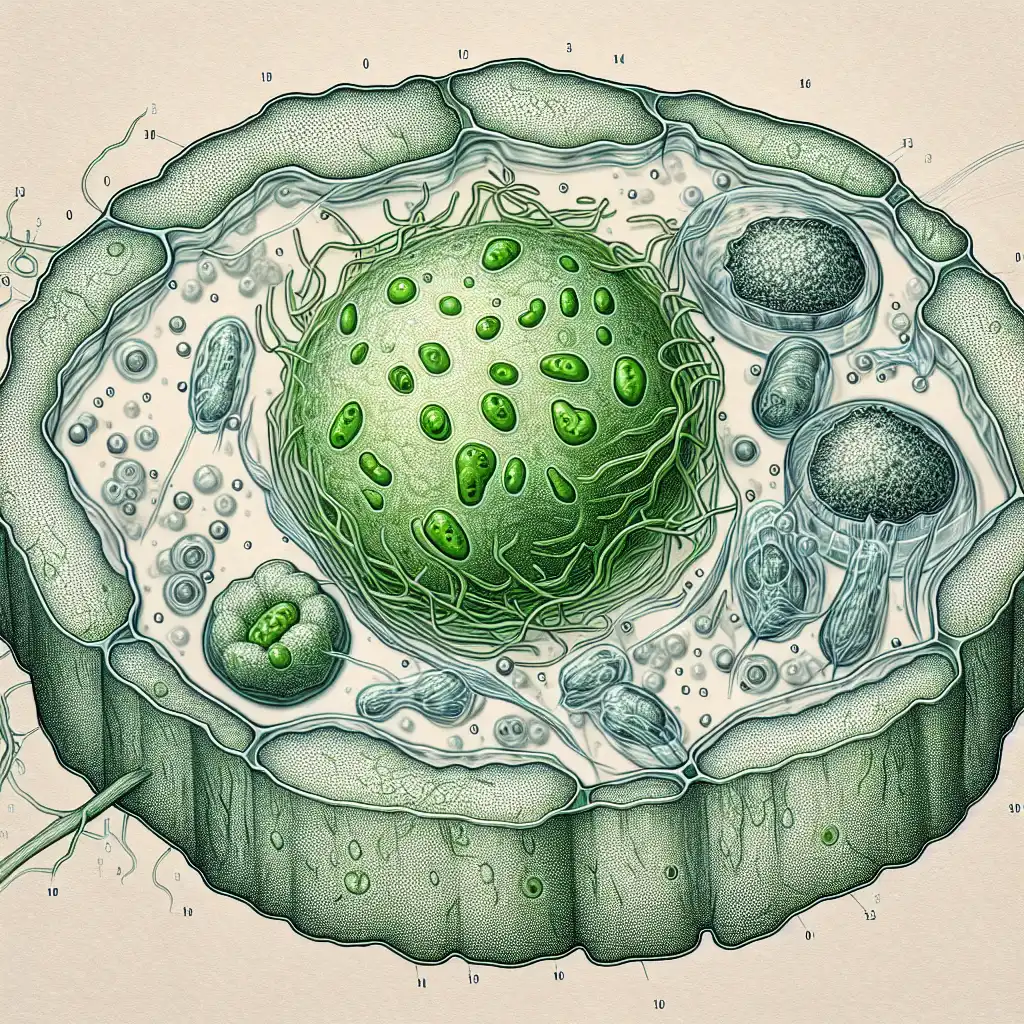
cytoplasm
noun cytoplasm
ˈsaɪtəʊplæzəm
The liquid inside a living cell where all the cell's parts are found.
In a plant cell, chloroplasts are present in the cytoplasm.
cytoplasm
ˈsaɪtəʊplæzəm
Cargando…
ˈsaɪtəʊplæzəm
The liquid inside a living cell where all the cell's parts are found.
In a plant cell, chloroplasts are present in the cytoplasm.
No se pudo cargar el audio. Inténtalo de nuevo más tarde.
Cytoplasm is the material inside of cells that holds organelles like mitochondria and ribosomes. It's like the jelly-like substance that fills up the inside of a cell. Scientists use the word "cytoplasm" to describe this part of cells when they are talking about how cells behave and function.
Protoplasm refers to the entire cell substance, including the cytoplasm and the nucleus.
Cytoplasm is a part of protoplasm, which includes everything within the cell boundary. Cytoplasm is applicable to all types of cells, while protoplasm is less commonly used and typically reserved for more specific discussions.
Abrir palabra: Protoplasm →Cell membranes are way...
Ver en YouTube ↗The importance of the egg's non-nuclear material - the cytoplasm - in early development is apparent in the consistent relation that is seen to exist between certain regions in the cytoplasm of a fertilized egg and certain kinds or directions of cell differentiation.
Nuclear transplantation is a technique that has enormously facilitated the analysis of these interactions between nucleus and cytoplasm.