parasite
noun parasite
ˈpærəsaɪt
A small animal or plant that lives on or inside another animal or plant and gets food from it.
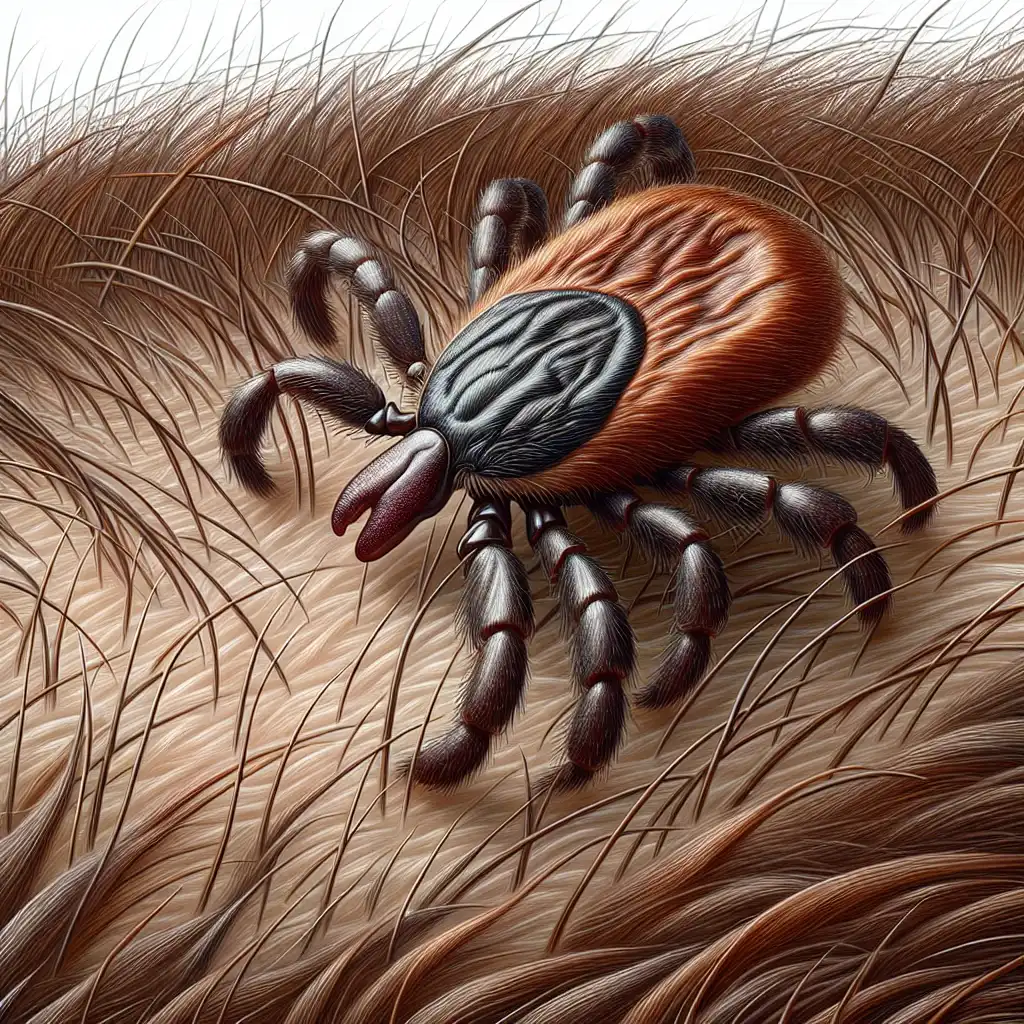
Ticks are parasites that feed on the blood of mammals.
parasite
ˈpærəsaɪt
लोड हो रहा है…
ˈpærəsaɪt
A small animal or plant that lives on or inside another animal or plant and gets food from it.
Ticks are parasites that feed on the blood of mammals.

ˈpærəsaɪt
A person who depends on other people to do everything for them or gives them things, but never does anything for those people in return.
She's a parasite who only married him for his money.
ऑडियो लोड नहीं हो सका। कृपया बाद में फिर कोशिश करें।
A parasite is a living thing that lives on or inside another living thing, called a host. The parasite feeds on the host and may harm it. The word 'parasite' can also be used to describe a person or an organization that lives off others or benefits by exploiting them without giving anything in return. It is important to understand the context in which the word is used to communicate effectively in English, as it can carry negative connotations.
Both bloodsucker and parasite refer to organisms that live off of other creatures, but the words have slightly different connotations.
Bloodsuckers are creatures that literally suck blood from their hosts. For example, mosquitoes are bloodsuckers because they bite humans and animals to draw blood.
Bloodsucker is often used in a negative or derogatory way to refer to people who take advantage of others or drain resources without giving anything back.
Bloodsucker is a more specific term that refers to creatures that suck blood, while parasite is a more general term that can refer to any organism that feeds off of another.
शब्द खोलें: Bloodsucker →Deadbeat refers to a person who does not fulfill their financial obligations or debts, such as not paying back borrowed money.
Deadbeat is applicable when talking about someone who doesn't pay their debts or is lazy when it comes to earning money, while parasite is applicable when talking about someone who takes from others without giving anything in return.
शब्द खोलें: Deadbeat →Both leech and parasite refer to organisms that live off another organism in order to survive.
A leech is a type of worm that attaches itself to the skin of a host (usually a human or animal) and feeds on its blood.
Leeches are commonly used in medical treatments, such as in the treatment of blood disorders, as they contain natural anticoagulants which prevent blood from clotting.
A leech is a specific type of parasite that feeds on blood, while a parasite is a general term referring to any organism that feeds off a host without providing any benefit.
शब्द खोलें: Leech →A louse is a specific type of insect that lives on the scalp, body hair, or clothing of humans or animals and feeds on their blood.
Lice are small and have six legs, and they are often spread through close contact or sharing personal items like combs or hats.
In summary, lice are a specific type of insect that live on the body, while parasites are a larger group of organisms that can live on or inside the body and derive nutrients from the host.
शब्द खोलें: Louse →A pest is any organism that is considered harmful or annoying to humans, crops, or livestock. This can include insects, rodents, and weeds.
Unlike parasites, pests can cause immediate harm or damage to their environment.
In summary, parasites live on or in a host and obtain resources, while pests are harmful or annoying organisms that cause damage or harm.
Parasites are typically found in animals and pests can be found in both animals and plants.
शब्द खोलें: Pest →A predator is an animal that feeds on other animals. Predators hunt and kill their prey, usually for food. They have adaptations that help them hunt and capture their prey.
A parasite lives off another organism while a predator hunts and kills other animals for food. Parasites are generally harmful to their host, while predators are a natural part of the food chain.
शब्द खोलें: Predator →A sponge is a type of aquatic animal that lives in the ocean and filters food particles from the water. Sponges do not harm other organisms and do not rely on them for survival.
A parasite is a harmful organism that relies on another organism for survival, while a sponge is a harmless organism that filters food from the surrounding environment.
शब्द खोलें: Sponge →Vermin, on the other hand, refers to pests or small animals that are considered harmful or annoying, often because they spread disease or damage property.
Parasite is applicable when talking about organisms that live on or inside hosts and benefit by feeding on them, while vermin is applicable when referring to pests or small animals that are considered harmful or annoying.
शब्द खोलें: Vermin →A vulture is a scavenging bird that feeds on the remains of dead animals. Vultures play an important role in cleaning up the environment by consuming carcasses that could otherwise attract disease and pests.
A parasite feeds off of a living host without providing any benefit, while a vulture feeds on the dead remains of animals to help keep the environment clean.
शब्द खोलें: Vulture →One of humanity's most deadly assailants is a behavior-altering parasite, though if it's any consolation, it's not our brains that are being hijacked.
YouTube पर देखें ↗I feed off the fashion world like a parasite.
fungi spread across the world other creatures such as wasps moths and caterpillars have also fallen prey to these parasites ants are another notable victim of these killer fungi
YouTube पर देखें ↗You get annoyed about things in real life, and then the tragic thing is that while you are moaning on the awful injustice and suffering of something, something grimly comic will then strike you about it, like a parasite feeding off the misery of the world.
She's one of the best dog trainers in the world, and she believes that we can do a lot more. Since we also know that people that carry malaria parasites smell different compared to people that are uninfected, she's convinced that we can train dogs to find people that carry the parasite.
YouTube पर देखें ↗It seems the most logical thing in the world to believe that the natural resources of the Earth, upon which the race depends for food, clothing and shelter, should be owned collectively by the race instead of being the private property of a few social parasites.
the caterpillar becomes a bodyguard actively protecting the cocoons from other parasites it will watch over them unceasingly until it eventually starves to death
YouTube पर देखें ↗I am no parasite.
that the white fly transmits the virus to the plant much like a mosquito transmits a malarial parasite when it feeds on us arguably the most important of these 600 plants is cassava as seen here with my friend dr. Donald catchy
YouTube पर देखें ↗Noise is a parasite. Anything noisy is poorly designed.
with the diversity of wildlife it supports. More than just a parasite it's also known as a keystone species. It's eaten by a diversity of animals, including deer, elk, squirrels, chipmunks, porcupines, robins, bluebirds, morning doves,
YouTube पर देखें ↗We humans are the greatest of earth's parasites.
searching for a blood vessel. When it hits one the lucky parasite can suck two to three times its weight in blood. Turns out we don't really like that too much. In fact humans hate mosquitos so much that we spend billions of dollars worldwide to keep them away from us -- from citronella candles
YouTube पर देखें ↗I find Trump to be like a parasite.
But those are just the physical symptoms. Toxoplasma also nestles into our brains and meddles with our behavior behind the scenes. To understand why let's take a look at the parasite's life cycle. While the parasite can multiply in practically any host,
YouTube पर देखें ↗There are more than 200,000 people in Maputo who are nothing more than parasites.
They're successfully outcompeting top predators, such as the alligator and panther, causing a significant reduction in their food sources. They're not a problem in their native Asia because diseases parasites and predators help to control their population size.
YouTube पर देखें ↗I love parasites! I can't get enough of them.
People who grow up on farms, in big families, and in the developing world also tend to have fewer allergies, although there are plenty of exceptions partly thanks to genetics. One theory is that as children, they encounter more of the microbes and parasites
YouTube पर देखें ↗The greater part of critics are parasites, who, if nothing had been written, would find nothing to write.