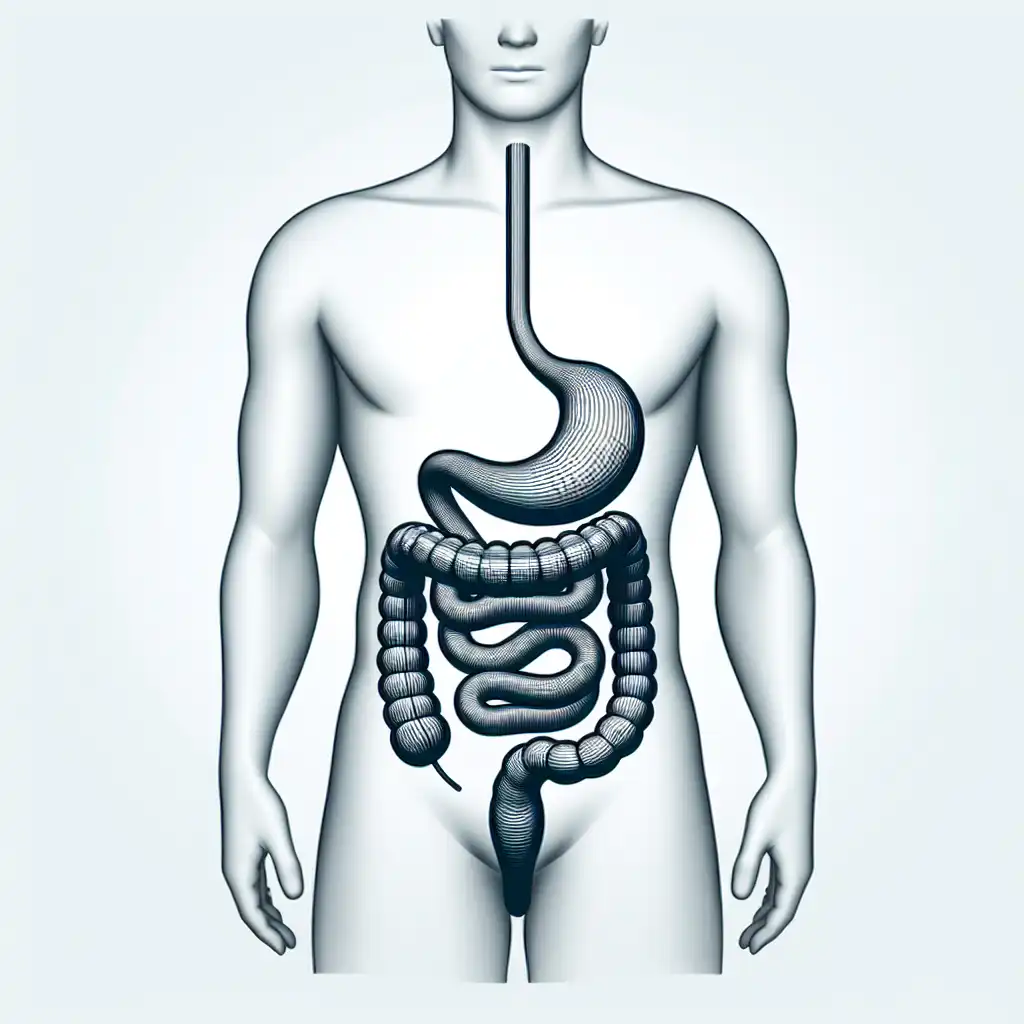
intestine
noun intestine
ɪnˈtestɪn
The tube inside the body where food is processed after it leaves the stomach.
The food you eat moves from the stomach to the intestine.
intestine
ɪnˈtestɪn
불러오는 중…
ɪnˈtestɪn
The tube inside the body where food is processed after it leaves the stomach.
The food you eat moves from the stomach to the intestine.
ɪnˈtestɪn
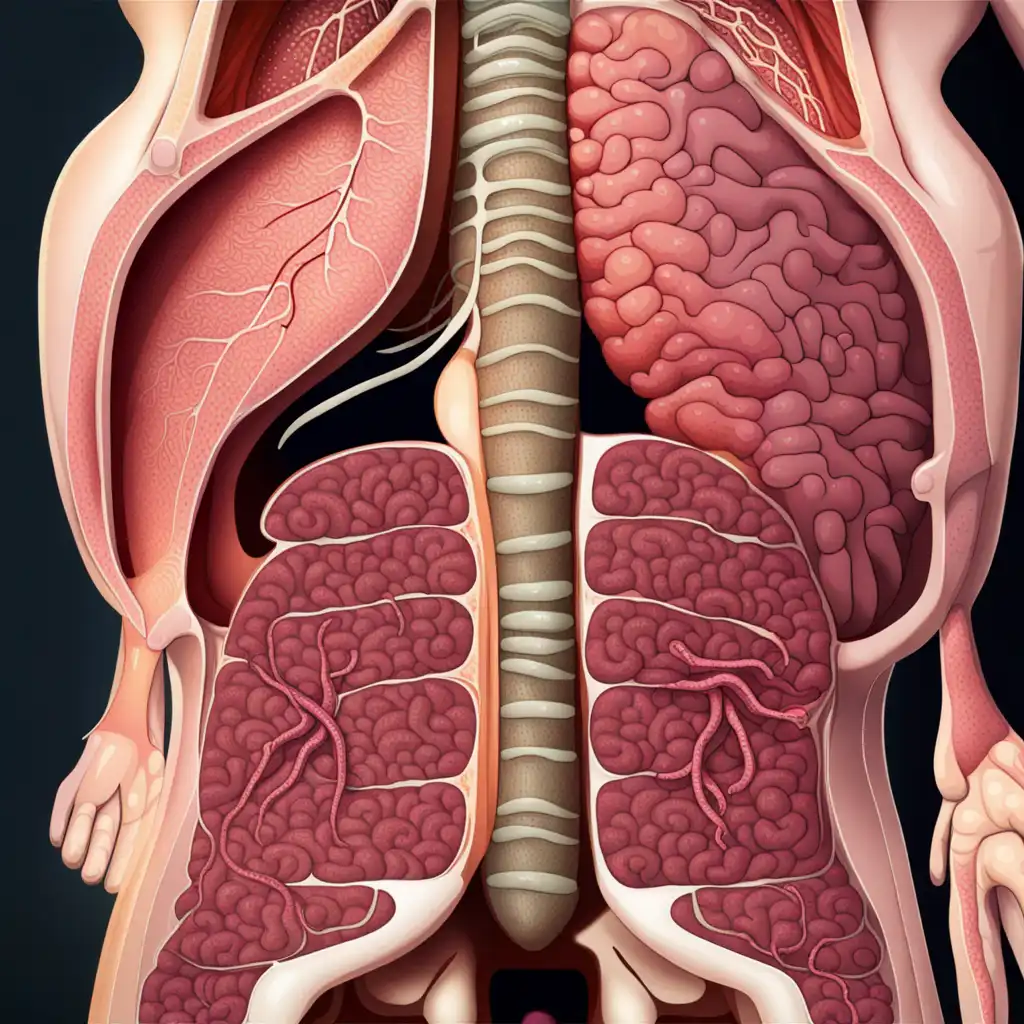
The part of the alimentary canal below the stomach.
He was diagnosed with intestine cancer.
ɪnˈtestɪn
Used to represent the innermost parts or depths of something.
The machine was cleaned out to its very intestines.
오디오를 불러오지 못했어요. 잠시 후 다시 시도해 주세요.
The word 'intestine' is used to describe a very important part of our digestive system. It is a long, tube-like part of our body that helps to break down food and absorb nutrients. We have a small intestine and a large intestine, and they work together to process the food we eat. You can use the word 'intestine' when you are talking about digestion or when you are describing a medical condition related to the digestive system.
Bowel is a term used to refer to the lower part of the digestive tract that starts from the stomach and ends at the anus.
In simpler terms, bowel is a broader term that includes the intestine, while intestine is only a part of the bowel. Bowel is applicable when referring to the entire digestive tract, while intestine is used when referring to the part of the digestive tract responsible for absorbing nutrients from food.
단어 열기: Bowel →The colon is a part of the large intestine, a muscular tube where water and nutrients are absorbed into the body from fecal matter (waste).
The colon is responsible for forming feces and passing it out of the body.
The colon is a specific section of the intestine that helps eliminate waste while the intestine as a whole is responsible for absorbing and processing nutrients.
단어 열기: Colon →Gut usually refers to the area of the digestive system that starts from the mouth and ends at the stomach. It's where initial digestion happens and where food is broken down into smaller pieces.
The gut is the beginning of the digestive system where food is initially broken down, while the intestine is the end of the same system where nutrients are absorbed into the body.
단어 열기: Gut →and meddles with our behavior behind the scenes. To understand why let's take a look at the parasite's life cycle. While the parasite can multiply in practically any host, it can only reproduce sexually in the intestines of cats.
YouTube에서 보기 ↗People don't appreciate their intestines until something goes wrong. But I always hope that people gain a little appreciation for their guts.
capillaries running through that tissue but tissue not only keeps the guts together it helps protect them from injury or infection if there's any damage to the wall of the intestine and there's a lesion or hole penetrating
YouTube에서 보기 ↗They want you to bring out your intestines.
The food then travels to the small intestine, where fats proteins carbohydrates and micronutrients are further broken down with help from the pancreas gallbladder liver and the microbiome, so they can be absorbed across the small intestine and sent to the liver for processing.
YouTube에서 보기 ↗My dad was a doctor, and he would tell us a lot of nasty, funny stories from the hospital. It was funny to me when I'd go over to other people's houses and they didn't talk about intestines at the table.
local materials not important and I produce these products from local materials starting from Kota molasses chicken ovens the intestines the crooks
YouTube에서 보기 ↗Who needs such a long intestine, anyway?
pollution is a huge issue for us here in the Mediterranean. Sea turtles can get entangled in it they can ingest it as well. The females as they come up to nest on the beach the plastics can get in the way as well. So there's a lot of different places that they are encountering these plastic. Another threat is hooks and sea turtles can either ingest these hooks so we can see an x-ray of a turtle here where the hook is actually in the intestinal tract of the turtle. It's made it it's swallowed it and it's made it all the way to the intestines. The hooks can also get entangled on their squint their skin and their flippers. They can get entangled or entrapped in nets so sea turtles can hold their breath for up to four hours in the water but when they're entrapped in a net, that's very very difficult while they're fighting to hold their breath for that long. we were talking a bit before now you were saying that the turtles they're not leaving the harbour is that right?
YouTube에서 보기 ↗God gave us intestines for a reason. I'm not keen on surgery. It's too extreme. All it took was one of those plastic surgery shows to see how violent it is.
This double delivery fills the liver with nutrients, that it then sorts processes and stores with the help of thousands of tiny internal processing plants, known as lobules. Both blood flows also deliver the oxygen that the liver needs to function. The blood that is received from the intestine
YouTube에서 보기 ↗Nothing hurts so much the interest and reputation of America as to hear of their intestine quarrels.
leading to mild problems and in rare cases, a potential dangerous reaction called anaphylaxis. Celiac disease is an inherited disease, in which eating foods with gluten leads to inflammation and damage of the lining of the small intestine.
YouTube에서 보기 ↗Since I've been in the U.S. I've lost the back of my heart, 15 ft. of intestine and my marriage - and God, I miss my intestine.
as they digest parts of food which we cannot. Our intestine is home to trillions of bacteria living in a symbiotic relationship with us. We provide them with a safe place to stay and food to eat. In exchange they help us extract energy from our food,
YouTube에서 보기 ↗All these bacteria that coat our skin and live in our intestines, they fend off bad bacteria. They protect us. And you can't even digest your food without the bacteria that are in your gut. They have enzymes and proteins that allow you to metabolize foods you eat.
in a rhythmic cycle. That pumps blood through the smooth internal walls of blood vessels, enables the intestine to constrict and push food through the digestive system, and allows the uterus to contract when a person is giving birth. As muscles work they also use energy and produce an important byproduct heat.
YouTube에서 보기 ↗The story of gluten as it relates to the brain throws a wide net, so much more encompassing than the inflammation of a small section of the small intestine that characterizes celiac disease.
Over time research has also uncovered aspirin's risks. Overconsumption can cause bleeding in the intestines and the brain. It can also trigger Reye's Syndrome, a rare but often fatal illness that affects the brain and liver
YouTube에서 보기 ↗Which came first the intestine or the tapeworm?