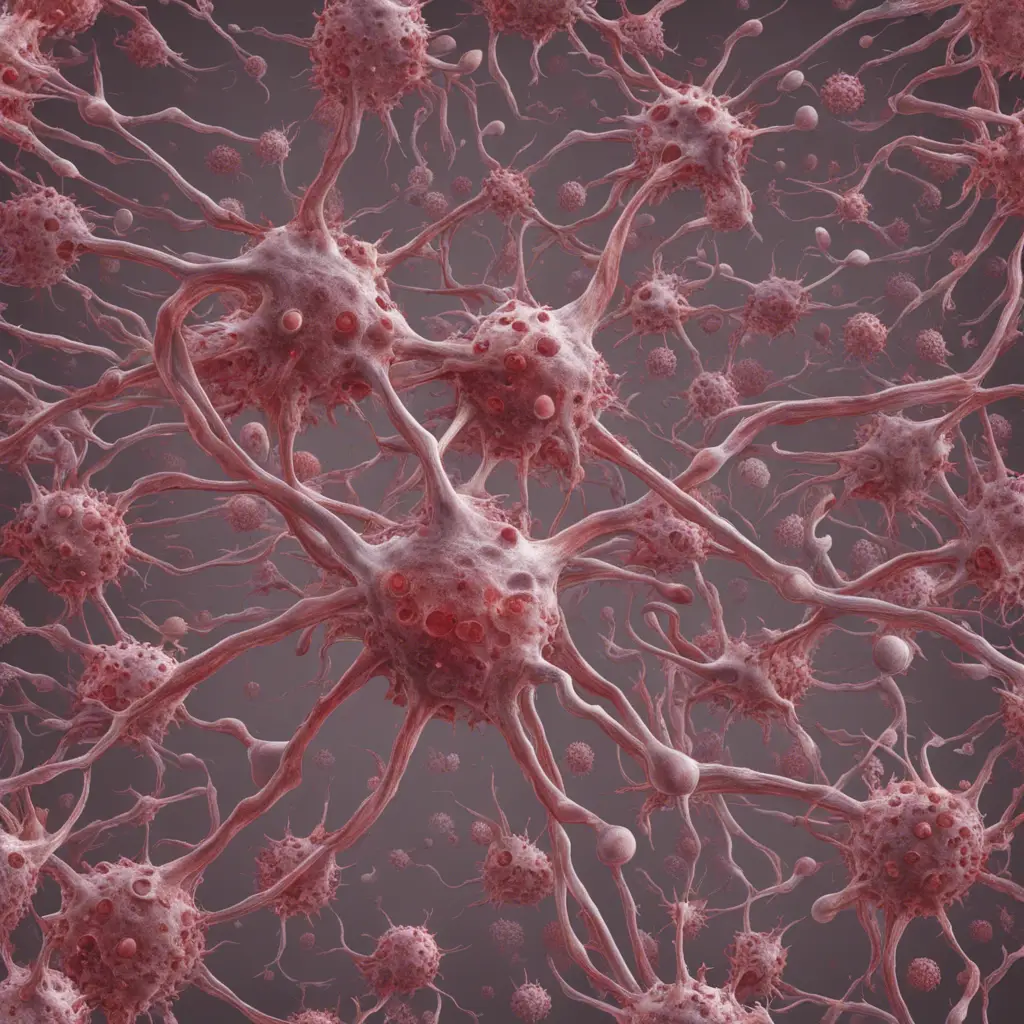
malignant
adjective malignant
məˈlɪɡnənt
Something very harmful, causing sickness
The doctor found a malignant tumor in his lungs.
malignant
məˈlɪɡnənt
Đang tải…
məˈlɪɡnənt
Something very harmful, causing sickness
The doctor found a malignant tumor in his lungs.

məˈlɪɡnənt
Something evil or very bad
His malignant behavior towards his employees eventually got him fired.
Không tải được âm thanh. Vui lòng thử lại sau.
Malignant is a word used to describe something that is harmful or dangerous. It is often used in reference to medical conditions like cancer, where a malignant tumor is a tumor that can spread and cause harm to other parts of the body. Other uses of the word might reference a person's behavior, where a malignant person is someone who intentionally causes harm to others. It is important to note that the word carries a negative connotation and should only be used to describe things that are truly harmful or dangerous.
Both cancerous and malignant describe abnormal cells in the body. Cancerous refers to any type of abnormal cell growth or tumor, while malignant specifically means that the abnormal cells are capable of spreading to other parts of the body (metastasizing) and can be life-threatening.
Therefore, all malignant tumors are cancerous, but not all cancerous tumors are necessarily malignant. For example, a benign tumor is cancerous but not malignant, as it does not spread to other parts of the body.
Mở từ: Cancerous →Dead refers to something that is no longer alive or functional. It is applicable to organisms, machines or anything that at some point was alive or had functionality but has ceased to exist.
Dead is related to something no longer alive, while malignant has to do with something harmful or dangerous to a person's well-being.
Mở từ: Dead →Destructive means causing damage or harm, while malignant means causing harm or damage in a way that is specifically cancerous or infectious.
Destructive can apply to anything that causes harm or damage, such as a tornado, while malignant is generally used to describe diseases.
Destructive is a broader term while malignant is more specific.
Mở từ: Destructive →Harmful refers to something that can cause damage, injury, or negative effects on something or someone. For example, smoking is harmful to our health.
So while both words imply negative impacts, ‘harmful' is more general and applicable to any sort of negative impact, while malignant is specific to serious health issues like cancer.
Mở từ: Harmful →Injurious means harmful or damaging, while malignant means evil or malicious.
Injurious can describe something that causes physical or emotional harm, such as an injurious substance or an injurious comment.
Essentially, injurious refers to causing harm, while malignant carries a connotation of intent or evil.
Mở từ: Injurious →Malevolent means having or showing a wish to do evil or harm to others.
Malevolent describes intentional harm, while malignant describes harm that may or may not be intentional but is still harmful nonetheless.
Mở từ: Malevolent →Both malicious and malignant describe something that is harmful or damaging, but there is a subtle difference in their meaning.
Malicious refers to someone or something that intends to do harm or hurt someone else, while malignant specifically describes something that is cancerous or has the potential to spread and harm other parts of the body.
For example, if someone spreads rumors about someone else with the intention of hurting their reputation, we would say that they are being malicious.
To sum up, malicious refers to harmful intent, while malignant refers to something that is harmful in and of itself.
Mở từ: Malicious →Malign means to speak ill or speak bad about someone or something.
It is usually associated with words like 'slander' and 'defame'. For example, "She maliciously maligned her boss behind her back.".
Malignant describes something harmful or cancerous. It is associated with diseases like cancer which spread and cause damage to the body.
For example, "He was diagnosed with malignant brain tumor."
Therefore, while malign refers to speaking badly about someone or something, malignant refers to something that is causing harm, either physically or emotionally.
Mở từ: Malign →Virulent describes a virus or bacteria that is harmful and can cause severe illness or death.
Malignant is used when referring to cancer or harmful people, while virulent is used when talking about harmful viruses or bacteria.
Mở từ: Virulent →As the cells proliferate, they spread via one of the three common routes of transcoelomic lymphatic or hematogenous spread. In transcoelomic spread malignant cells penetrate the covering surfaces
Xem trên YouTube ↗Regional clustering of specific cancer types triggered some investigations on a potential role of infectious agents in these malignant proliferations.
to help detect whether a cancer is benign or malignant in the off chance that she can save her daddy's life because he has cancer. These are just three examples of thousands,
Xem trên YouTube ↗I actually think the civil service, who are the malignancy at the heart of public life, have consciously prevented, talked ministers out of, made it difficult regulatory-wise, to allow more pressure on alternative energy sources to grow.
Tumors may be benign meaning that they remain in one area, or malignant which means that they are capable of spreading. Through a process called metastasis
Xem trên YouTube ↗At a time when unbridled greed, malignant aggression, and existence of weapons of mass destruction threatens the survival of humanity, we should seriously consider any avenue that offers some hope.
When they're bombarded by radiation or chemotherapy, some cancer cells can effectively switch on protective shields against whatever's attacking them by changing their gene expression. Malignant cancers are complex systems that constantly evolve and adapt.
Xem trên YouTube ↗Even the most malignant gods would not continue to inflict life upon humanity, time without end.
This short lifespan means that patients live with a constantly depleted supply of red blood cells; a condition called sickle-cell anemia. Perhaps what’s most surprising about this malignant mutation is that it originally evolved as a beneficial adaptation.
Xem trên YouTube ↗The very name 'Manson' has become a metaphor for evil... He has come to represent the dark and malignant side of humanity, and for whatever reason, there is a side of human nature that is fascinated with ultimate evil.
The stem cells themselves are not cancerous, but these mutations can interfere with the process of differentiation and result in malignant blood cells. So for patients with advanced blood cancers like leukemia and lymphoma, the best chance for a cure is often an allogeneic bone marrow transplant,
Xem trên YouTube ↗Germany was beaten after World War I, but it didn't take long for it to rise again as a much more malignant threat. The end of World War II was not to be a compromise; it was to come about from the total annihilation of the enemies' ability and will to make war.
And it raises a series of I think some of the most interesting questions about how we think about medicine in the future. Could your medicine be a cell and not a pill? How would we grow these cells? What we would we do to stop the malignant growth of these cells?
Xem trên YouTube ↗There are moments from childhood that attract heat in our memories, some for their sublime brilliance, some for their malignancy. The first time that I was treated differently because of my race is one such memory.
So scientists were very excited, and they said a single oncogene can do it. All you need is a single oncogene. So they put the cells in cultures chicken cells, dumped the virus on it, and it would pile up, and they would say this is malignant and this is normal.
Xem trên YouTube ↗Sometimes evil is in the form of a malignant clown, and sometimes evil is in the form of policy and legislators, and sometimes it's a grinning death mask and it has something more viscerally terrifying about it.
But the patients are going to have to take drugs that suppress their immune system for the rest of their lives. What does that mean? They have an increased risk of infection an increased risk of malignancy. This is not a life-saving transplant -- like a heart or liver or lung transplant -- it is a quality-of-life transplant,
Xem trên YouTube ↗I had it all: congestive heart failure, malignant high blood pressure, kidney damage, enlarged heart, sleep apnea, borderline diabetic, etc.
so that I could look over her shoulder and verify what was written on the page in front of her. Malignant carcinoma. But still not wanting to believe it I said, "Now malignant carcinoma you're sure that means cancer?"
Xem trên YouTube ↗Words are most malignant, the most treacherous possession of mankind. They are saturated with the sorrows of all time.