idiom
noun idiom
ˈɪdiəm
A phrase or expression with a special meaning different from the normal meaning of the words in it.
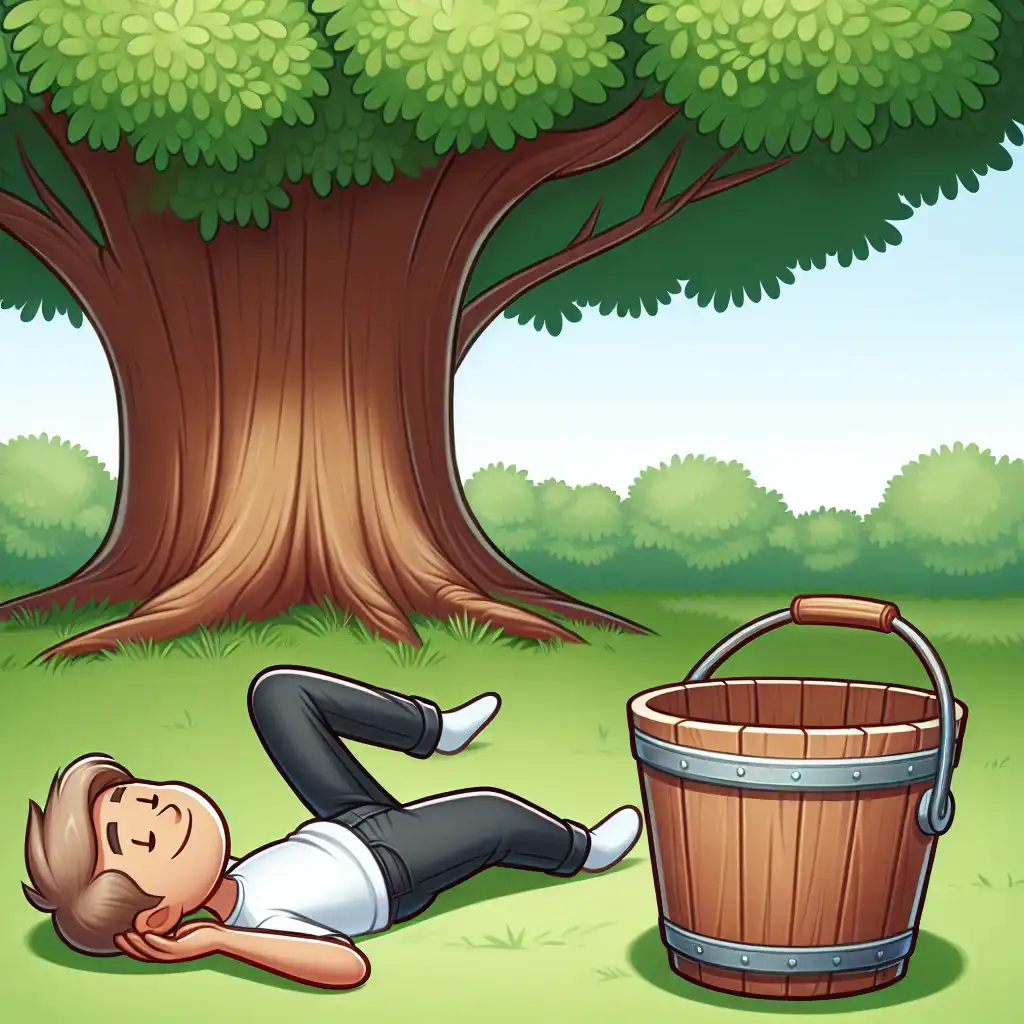
To 'kick the bucket' is an idiom meaning to die.
idiom
ˈɪdiəm
読み込み中…
ˈɪdiəm
A phrase or expression with a special meaning different from the normal meaning of the words in it.
To 'kick the bucket' is an idiom meaning to die.

ˈɪdiəm
A characteristic manner of speaking or way of expressing something peculiar to a language, group, or individual.
Each language has its own idioms and expressions.

ˈɪdiəm
A style or form of artistic expression that is characteristic of an individual, a period or a movement.
The artist's unique idiom is recognizable in all his works.
音声を読み込めませんでした。しばらくしてからもう一度お試しください。
An idiom is a type of expression that has a different meaning than the actual words used. It's like a special saying that's specific to a language or culture. For example, "break a leg" doesn't actually mean someone wants you to break your leg. It's just an idiom used to wish someone luck. As an English learner, you might hear idioms in conversations, books, or movies. It's important to understand them because they can help you sound more natural and fluent in English. But they can also be confusing if you take them literally. To use idioms correctly, you need to understand their context and the situations where they are appropriate. You can learn them by practicing them in conversation, reading, and listening to native speakers. With time, you'll become more comfortable using idioms and understanding them as part of the English language.
A colloquialism is a word or phrase that is commonly used in everyday speech but is not formal or literary.
It is often part of a specific dialect or regional language. An example of colloquialism is "gonna" instead of "going to.".
Both colloquialisms and idioms can add color and interest to language. Colloquialisms are more informal and should be used cautiously in professional or academic writing, while idioms add flavor and character to writing and speech in any context.
単語を開く: Colloquialism →An expression is a commonly used phrase or sentence that conveys a particular feeling or idea.
It can be used in a literal or figurative sense. For example, "I'm over the moon" is an expression that means someone is very happy.
Expressions are used in a straightforward way to convey emotions or ideas, while idioms are used in a more figurative way and require some knowledge of the language and culture to understand their meaning.
Both expressions and idioms are applicable in everyday speech, literature, and poetry.
単語を開く: Expression →A locution refers to the style or way in which something is expressed. It is a broader term that encompasses not only idioms, but also figures of speech, metaphors, and other linguistic devices.
Locution can describe the overall tone and style of writing or speech.
Idiom refers to a specific type of phrase with a figurative meaning, while locution is a more general term for the way in which language is used.
単語を開く: Locution →A phrase is any group of words that express a single idea or concept. This can include idioms, but it can also include more straightforward expressions like "happy birthday" or "I'm tired.".
Phrases can be used in any context where language is being used, and can be understood by anyone who knows the language.
To sum up: idioms are a specific kind of phrase that have a special meaning beyond the individual meanings of the words used, while phrases can be any group of words that express a single idea or concept.
単語を開く: Phrase →A proverb is a saying that gives advice or shares a lesson. One example is "practice makes perfect." This means that the more you do something, the better you will become at it.
Idioms are often used in casual conversation and everyday language, while proverbs are used to offer words of wisdom or to teach morals.
単語を開く: Proverb →Say refers to a single word or phrase that people use to express a particular idea or concept. It is a direct way of conveying a thought or message, without any figurative language or hidden meanings.
An idiom adds flavor to the language by using figurative expressions, while say is a direct expression of an idea or concept.
単語を開く: Say →Slang refers to words or phrases that are informal and often used within a particular group or subculture. Slang words or phrases can change frequently and may not be widely understood by everyone.
For example, "lit" is a slang term that means "cool" or "awesome". Slang is commonly used in casual conversation and can reflect current trends or pop culture.
In summary, idioms are used in formal writing and speech to add personality and meaning, while slang is used in casual conversation to express current trends and add personality.
単語を開く: Slang →Vernacular refers to the common, everyday language spoken by a group of people in a particular region or country. This includes the words, phrases, and grammar structures specific to that group's language use.
For example, the vernacular in the southern United States might include phrases like "y'all" and "fixin' to" that are not commonly used in other parts of the country.
In summary, idioms are specific phrases that have a non-literal meaning, while vernacular refers to the overall language used by a particular group of people.
単語を開く: Vernacular →Antony Gormley: Sculpted...
YouTube で見る ↗K. Thiagarajan is a painfully shy young man. But he is the human personification of the idiom 'Still waters run deep.
We tend to assume that we have a baseline of speech that's going to be normal in all contexts, but the truth is, we all change our ways of speaking depending on who we're talking to. And so I think it's kind of a gesture of politeness to the people you're speaking to to try to say something in their own idiom.
Speaking in Hindi has helped me a lot as I can tell my stories with the exact idiom in which they come to me. I think it also helps the audience when I am speaking in a language that is non-elite, so to say, as my stories are also from that perspective.
Questlove is an artist who I respect because he constantly shifts within the idiom, challenging perceptions of hip-hop and black American culture.
I try to use the Australian idiom to its maximum advantage.
You can't buy time or save it, common idioms notwithstanding. You can only spend it.
Unfortunately or fortunately, in order to become acquainted with the idiom of country or rock music, it is necessary to occasionally play in a bar. Bars are a rehearsal place.
The development of new instrumental and vocal idioms has been one of the remarkable phenomena of recent music.
Each person is an idiom unto himself, an apparent violation of the syntax of the species.
Foreign languages are another favourite topic, and as these men are bilingual they have a fair notion of what it means to speak and think in many different idioms.