travail
noun travail
ˈtræveɪl
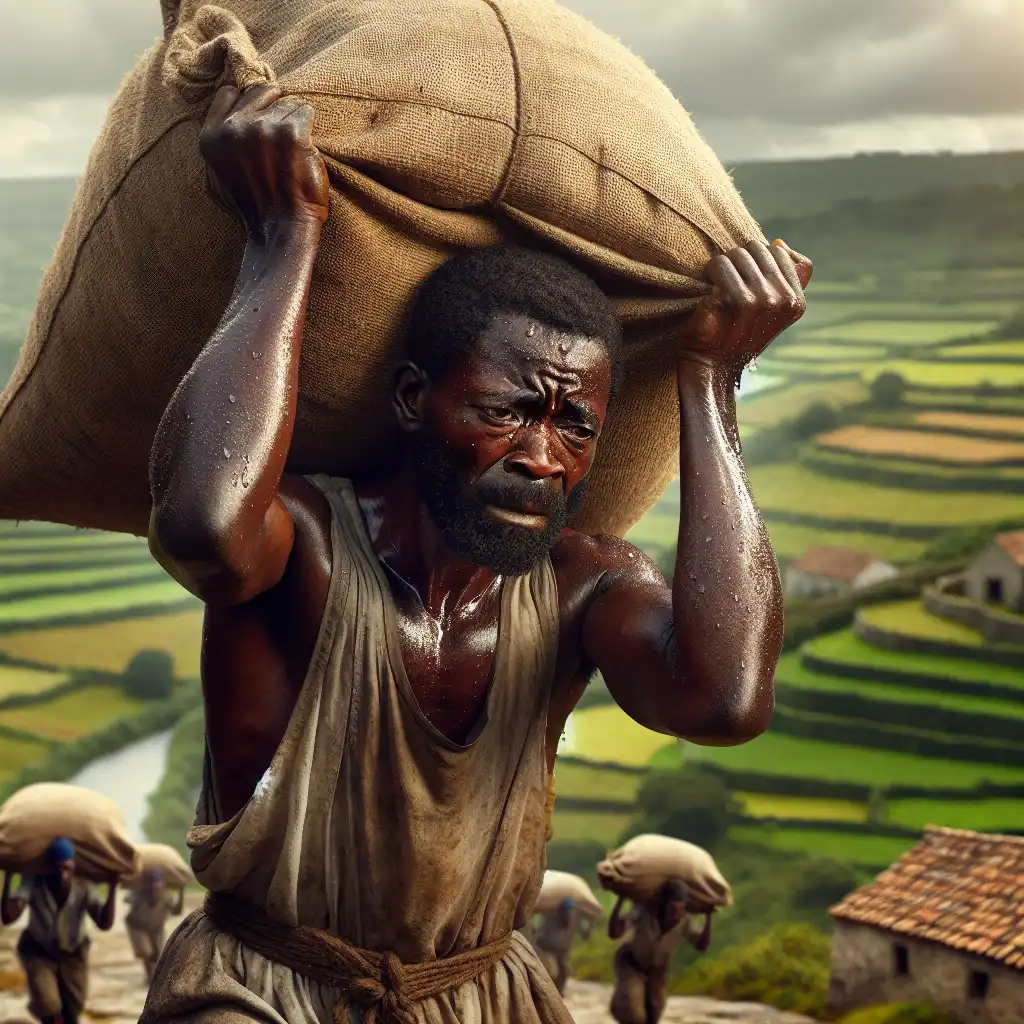
Hard or painful work
The travail of carrying heavy loads up the hill exhausted him
travail
ˈtræveɪl
Đang tải…
ˈtræveɪl
Hard or painful work
The travail of carrying heavy loads up the hill exhausted him

ˈtræveɪl
The pain experienced during childbirth
The woman was in travail for several hours before the baby was born

ˈtræveɪl
To work very hard
He was travailing in the fields from dawn to dusk

ˈtræveɪl
To suffer the pains of childbirth
She travailed for hours before her baby was born
Không tải được âm thanh. Vui lòng thử lại sau.
The word 'travail' is not commonly used in everyday English. It means "hard work" or "painful labor". It is typically used in a formal setting, such as in academic or literary contexts. For example, you might read about the travail of a character in a book who has to overcome many difficulties in order to achieve their goals. It can also be used in a historical context to describe the hardships people faced in the past. Unless you are reading or writing something formal or historical, you can use the more common word "work" instead.
Drudgery refers to the feeling of continuously doing boring, difficult, and repetitive tasks that lack excitement or enjoyment.
Travail refers to a difficult or painful physical or mental effort. It signifies a more extreme level of hardship or struggle than drudgery.
Drudgery can be used more broadly than travail to describe any activity that is dull or unenjoyable.
Mở từ: Drudgery →Effort refers to the amount of energy or work put into something.
Effort is more commonly associated with the application of energy to complete a task, while travail is more closely associated with difficult, burdensome, and often prolonged periods of laborious work.
Mở từ: Effort →Exertion is the physical or mental effort exerted to accomplish something.
Exertion implies effort, while travail implies extreme difficulty and suffering.
Mở từ: Exertion →Gruel is a type of watery porridge made from grains such as oats or rice.
The key difference is that gruel refers specifically to a type of food, while travail describes a broader concept of hardship or struggle.
Gruel can apply to any situation in which watery porridge is being consumed, but travail could be used to describe everything from a physically demanding job to a challenging emotional experience.
Mở từ: Gruel →Lab refers to a place where scientific or experimental research is conducted, such as a laboratory for chemistry, biology or physics.
Travail refers to work or labor, especially physical work that requires effort or strain such as farming, construction or manufacturing.
Mở từ: Lab →Both struggle and travail refer to difficult or strenuous activities, but travail implies a more intense and excruciating struggle or labor.
Struggle is applicable in most situations where there is opposition or difficulty, such as overcoming a challenge or dealing with a problem.
For example, "I struggled to understand the math problem."
Struggle refers to a general challenge or difficulty, while travail implies a more intense and painful struggle, often related to physical or emotional hardship.
Mở từ: Struggle →Both words refer to hard work, but toil typically refers to work that is difficult or tedious and involves physical labor, while travail often refers to suffering, struggle, or hardship due to one's work or circumstances.
Toil can be applied to any kind of hard work, such as manual labor or studying for a difficult exam, while travail is often used in more serious contexts, such as describing the struggles of childbirth or the hardships of working in harsh conditions.
Mở từ: Toil →Travail and tribulation are both words that describe difficult experiences or struggles, but there are some differences in their meanings and usage.
Tribulation is also a noun, but it refers more specifically to trials or hardships that are caused by external circumstances or events.
Tribulation can include things like natural disasters, wars, or illnesses that cause suffering and difficulties for people.
For example, a family might experience tribulation if their home is destroyed by a hurricane, or a community might face tribulation if they lose many members to a disease outbreak.
Travail is more focused on personal effort and struggle, while tribulation is concerned with external hardships and challenges.
Mở từ: Tribulation →How the worst moments in...
Xem trên YouTube ↗The travail of freedom and justice is not easy, but nothing serious and important in life is easy. The history of humanity has been a continuing struggle against temptation and tyranny - and very little worthwhile has ever been achieved without pain.
Christmas is the season I use to clock failure in life. It stops time, as it were, on the year - where you are in it, where you are in your travail unto the grave.
An educated person is one who, through the travail of his own life, has assimilated the ideas that make him representative of his culture.
People with a sense of humor tend to be less egocentric and more realistic in their view of the world and more humble in moments of success and less defeated in times of travail.
I always keep a firewall between my own travails and my perception of public-policy issues; otherwise I would retain no credibility as a commentator.
Due to my genetic predisposition to certain cancers and having experienced the travails of my mom and grandmother in their battles against this awful disease, I wanted to use my platform to raise awareness and funds for crucial research for these below-the-belt cancers.
I can't imagine a God who would ever need to intercede in the daily travails of my life.
Out of the agony and travail of economic America the Committee for Industrial Organization was born.
It is impossible to read for pleasure from something to which you are both father and mother, born in such travail that the writer despises the thing that enslaved him.
The film 'Kaliman' is about the various travails a woman undergoes. Since giving birth to a child tops the list and I was pregnant as well, I accepted the role.