
particulate
adjective particulate
pɑːrˈtɪkjələt,pɑːrˈtɪkjəleɪt
Relating to or in the form of very small separate particles
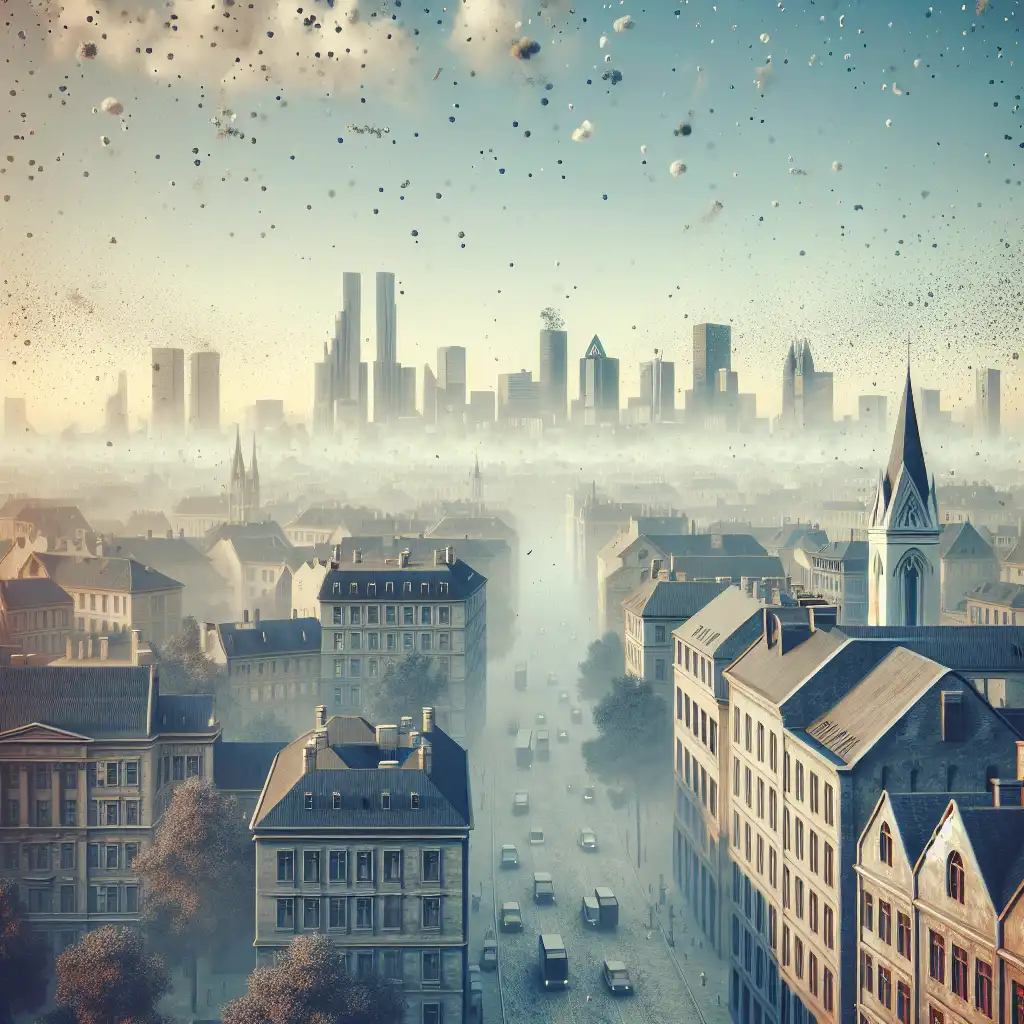
A particulate substance can be seen in the air when the sunlight comes through the window.
particulate
pɑːrˈtɪkjələt,pɑːrˈtɪkjəleɪt
読み込み中…
pɑːrˈtɪkjələt,pɑːrˈtɪkjəleɪt
Relating to or in the form of very small separate particles
A particulate substance can be seen in the air when the sunlight comes through the window.
pɑːrˈtɪkjələt,pɑːrˈtɪkjəleɪt
A small separate particle, especially when in the air
The level of particulates in the city's air was measured to be high.
音声を読み込めませんでした。しばらくしてからもう一度お試しください。
The word 'particulate' refers to anything that is made up of tiny pieces or particles. It is mainly used in scientific or technical contexts to describe the small solid or liquid particles in the air, water, or soil. For instance, we use the word 'particulate' when talking about air pollution caused by particles in the air. However, you might also come across the word 'particulate' in other fields like engineering, chemistry, or geology, where it describes any substance in particulate form. In simpler terms, particulate refers to small pieces or particles that make up a larger substance or mixture.
The words dust and particulate refer to small pieces of matter that can be suspended in the air.
However, dust usually refers to a specific type of particulate, such as tiny bits of dirt, skin cells, or pollen. Particulate is a more general term that can refer to any small particle, including dust but also things like smoke, soot, or chemicals.
In terms of where each word is applicable, dust is typically used in everyday conversation when referring to things like cleaning or allergies.
単語を開く: Dust →Fine generally means that something is small, smooth, and not rough to touch.
So while fine refers to texture or size, particulate refers to the actual makeup of something. For example, you might say that a face cream has a fine texture, but that air pollution contains particulates that can be harmful to breathe in.
単語を開く: Fine →Both granular and particulate refer to things that are made up of particles, but the difference lies in the size of the particles.
Granular usually refers to things that have larger particles, such as sand or salt. These particles are usually visible to the naked eye or can be felt when touched.
Granular is often used in discussions about soil, rocks or food, while particulate is used in discussions about air pollution, emissions or scientific studies.
単語を開く: Granular →Microscopic refers to things that are too small to be seen with the naked eye, while particulate refers to things that are made up of individual particles or pieces.
Microscopic is applicable when talking about things that are very tiny and cannot be seen with the naked eye, such as cells, bacteria, and viruses.
Microscopic refers to size, while particulate refers to composition.
単語を開く: Microscopic →Minute refers to something very small, often used to describe time (one minute equals 60 seconds) or physical size (a minute bug).
Minute is applicable to many things, including time and size, while particulate is more specific to things made up of small particles.
単語を開く: Minute →A particle refers to a single small piece of matter or substance, such as an atom or molecule. Particulate refers to a collection or group of particles or small pieces of matter that can be solid or liquid, such as dust or smoke.
Particles are applicable in different physical sciences, while particulate is most commonly used in environmental science and pollution studies.
単語を開く: Particle →It is often used to describe pollutants in the air or water that are too small to be seen with the naked eye.
Small on the other hand, simply means something that is not large.
So, while small is a general term that can be applied to anything, particulate is specifically used to describe things that are made up of tiny particles or pollutants.
単語を開く: Small →Particulate refers to very tiny particles or pieces of something. These particles can be solid, liquid or gas. Solid refers to a substance that is firm, hard and not a liquid or a gas.
Solid is applicable to objects that are not gases or liquids, and have a defined shape and size. For example, a brick is a solid object, whereas water is a liquid.
Particulate refers to small particles, whereas solid refers to objects that are firm and not a liquid or a gas.
単語を開く: Solid →The magic ingredient...
YouTube で見る ↗As physics has proven, we're ultimately particulate matter, which means we are all one. That's why racial and gender bias is so ridiculous.
Tracking Plastic Sea to...
YouTube で見る ↗A well-seasoned and properly cleaned wok will always have micro-pores in the metal that hold some oil or food particulate, etc. - that's a good thing.
The Khan Academy %\PIPE%...
YouTube で見る ↗Art makes you see people as individual, unique human beings. Art, in that way, allows us to see each other in particulate, as opposed to in aggregate.
Ink made of air...
YouTube で見る ↗In reality, Chernobyl proves why nuclear is the safest way to make electricity. In the worst nuclear power accidents, relatively small amounts of particulate matter escape, harming only a handful of people.
How China is (and isn't)...
YouTube で見る ↗Having made a real 3D movie, you realize that, right from the production design, you're designing sets that complement the 3D. You're designing interactive elements, like rain or smoke - all this particulate matter in the air enhances the 3D. But if you're shooting in 2D, you don't know about that.
A personal air-quality...
YouTube で見る ↗In the rich world, the environmental situation has improved dramatically. In the United States, the most important environmental indicator, particulate air pollution, has been cut by more than half since 1955, rivers and coastal waters have dramatically improved, and forests are increasing.
This is your brain on...
YouTube で見る ↗Is the world getting...
YouTube で見る ↗Al Gore: This Is the...
YouTube で見る ↗The shocking danger of...
YouTube で見る ↗