Impossible de charger l’audio. Réessayez plus tard.
Comment l’utiliser
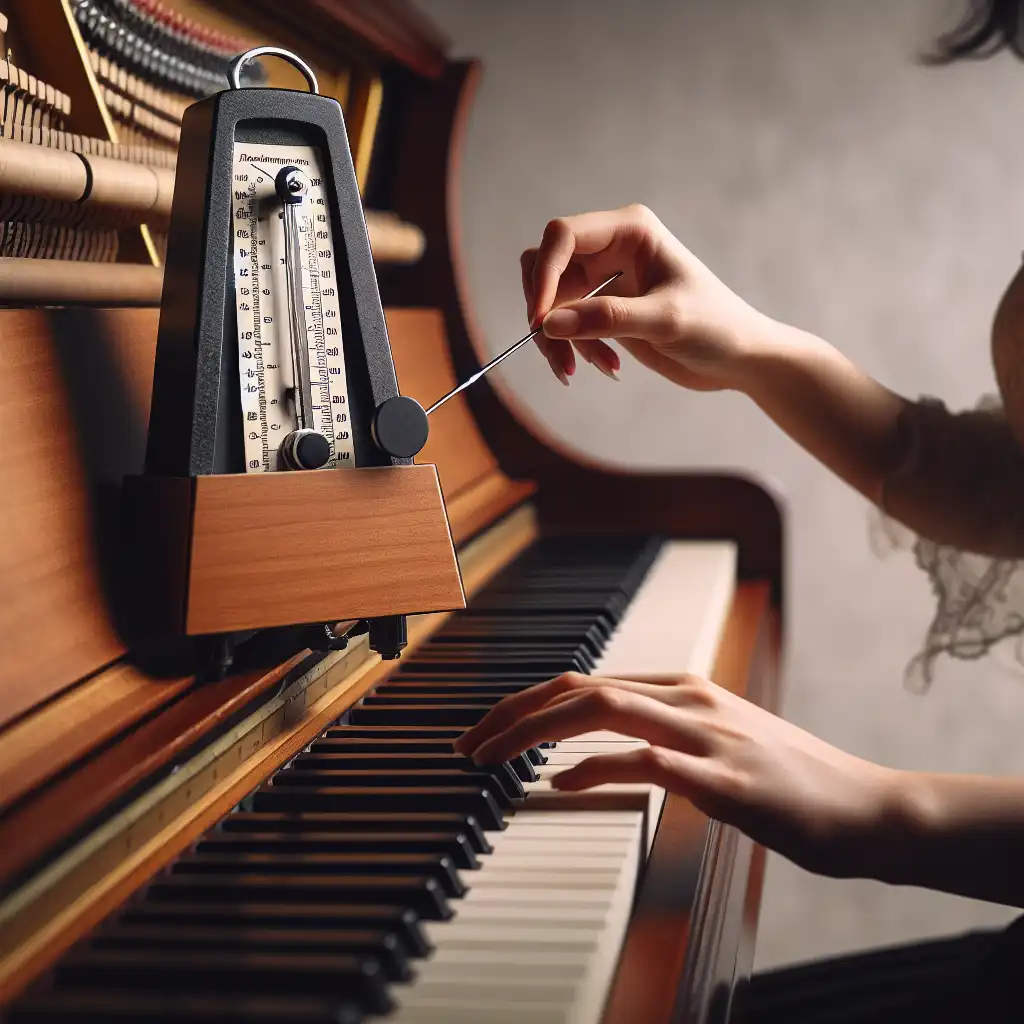
A metronome is a small tool that musicians use to help them keep a steady beat while playing music. It makes a rhythmic clicking sound or beeps at a consistent tempo (speed), which helps musicians to stay in time with each other. You can use a metronome when you're practicing an instrument or singing, or when you're composing music and want to make sure your rhythm stays consistent. It's commonly used in music classrooms, rehearsal spaces, and recording studios.
A timekeeper is a person who keeps track of time and ensures that things happen according to a schedule. They may use a clock, stopwatch or other time-tracking tools to measure the passage of time and keep things on track.
A metronome is used to maintain a steady beat while playing music, while a timekeeper oversees the progress of events and ensures everything stays on schedule.
I think it's beneficial to practice with a metronome or drum machine in order to strengthen your sense of time. It will help your concept of time and improve your feel.
I'll admit that I don't have a lot of discipline when it comes to practicing. I'm not the type of guy who sits at home with a metronome and runs through scales and stuff like that. But I do go through phases when I'll be more diligent, and I notice that warming up and working on some patterns will make my playing cleaner.
To me, there's no question that using a metronome develops your speed and accuracy. If you're learning scales or you're jamming on parts that you can't quite pull off, it's a must.
So, first you have to be able to play with a metronome. Then you take your freedom. If you play in an orchestra, you got to watch the conductor, he is like a metronome, but it is more difficult because he can change rhythms.
I've listened to musicians who say that using a metronone makes you robotic, that it decreases your 'feel.' That's ridiculous. Either you have feel or you don't. Feel is one of those intangibles that can't be taught. But if you do have feel, using a metronome will allow you to play cleaner - and that'll make your 'feel' have more, well, 'feeling.