polytheism
noun polytheism
ˈpɑːliθiɪzəm
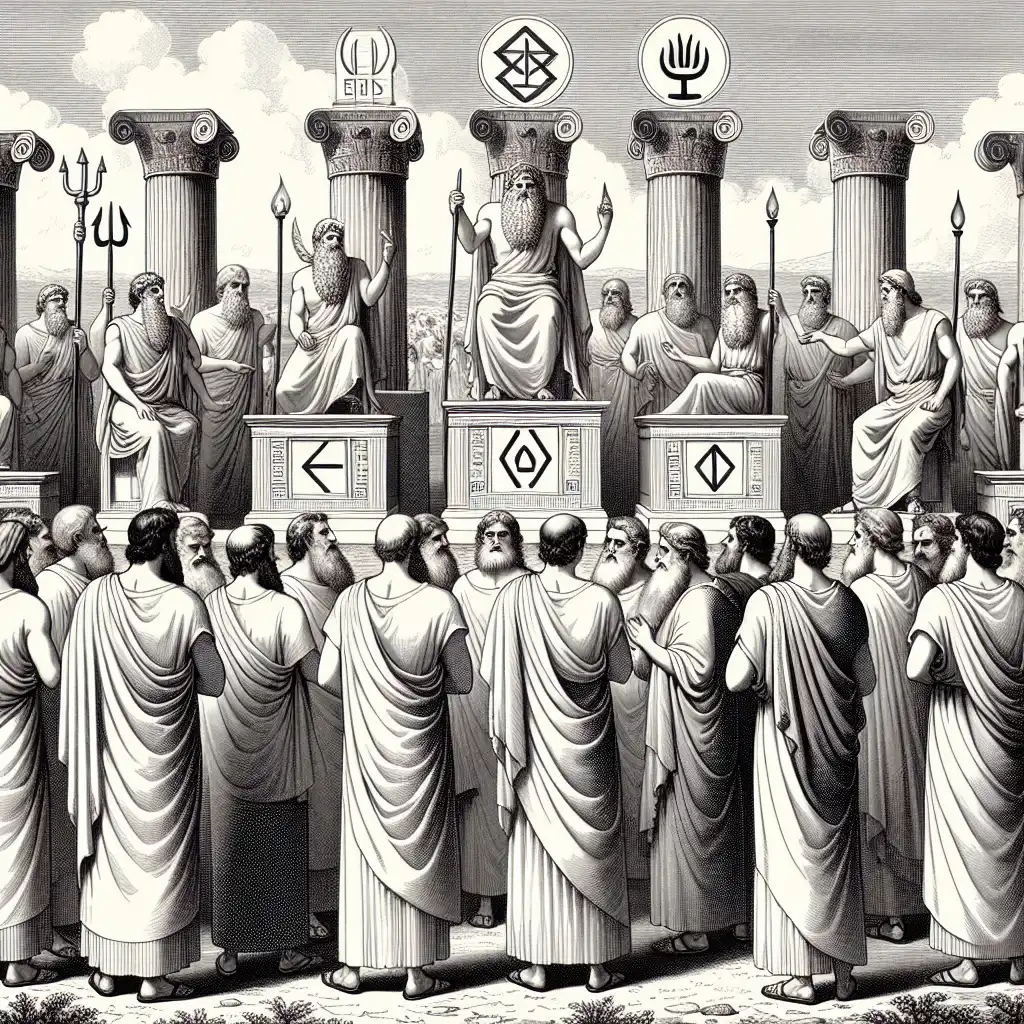
The belief in or worship of more than one god.
Ancient Greek religion is an example of polytheism, as they worshipped many different gods.
polytheism
ˈpɑːliθiɪzəm
加载中…
ˈpɑːliθiɪzəm
The belief in or worship of more than one god.
Ancient Greek religion is an example of polytheism, as they worshipped many different gods.
音频无法加载,请稍后再试。
Polytheism is the belief in many gods or goddesses. This term is often used to describe religions that have multiple gods or goddesses, such as ancient Greek and Roman mythology, Hinduism, and some Indigenous religions. It's important to understand this term when talking about different religions and their beliefs.
Animism is the belief that everything around us has a spirit or soul, including animals, plants, and even rocks.
Animism is applicable in cultures where nature and the environment are highly respected and revered, such as many indigenous communities.
打开单词: Animism →Idolatry refers to the worship of idols or images as gods or divine beings, while polytheism refers to the belief in multiple gods or deities.
Idolatry is typically associated with religions that use physical representations of their gods, such as statues or icons.
Idolatry is a specific practice within certain religions, while polytheism is a broader belief system that can be found in various religions.
打开单词: Idolatry →Mythology refers to a collection of myths or stories that explain beliefs, cultural practices and traditions of a particular group of people.
Polytheism refers to a belief in many gods and goddesses. Polytheistic religions often incorporate mythology into their beliefs and practices, but not all mythological stories are considered to be religious beliefs.
Mythology is a collection of stories that can include religious or non-religious stories, while polytheism refers specifically to the belief in many gods and goddesses as part of a religion.
打开单词: Mythology →Paganism refers to a broad range of spiritual or religious beliefs that are not part of major world religions such as Christianity, Judaism, and Islam.
Polytheism is one of the beliefs that can come under the umbrella term of paganism, but paganism can also refer to other non-monotheistic beliefs such as animism or pantheism.
打开单词: Paganism →Pantheism is the belief that everything in existence is part of a divine or spiritual entity, and that this entity is present in everything.
Pantheism is applicable in the sense that it is a way of understanding and connecting with the world around us. It emphasizes the interconnectedness of all things and the idea that we are all part of a greater whole.
Pantheism is the belief in one all-encompassing spiritual entity that is present in everything, while polytheism is the belief in multiple gods or deities that are worshipped and revered.
打开单词: Pantheism →The pattern behind...
在 YouTube 上观看 ↗The deepest difference between religions is not that between polytheism and monotheism.
The pattern behind...
在 YouTube 上观看 ↗I discovered I was a monotheist... That rules out polytheism. I have also had a problem with authority, which rules out any religion with a priesthood or leader who claims to be God's representative on Earth.