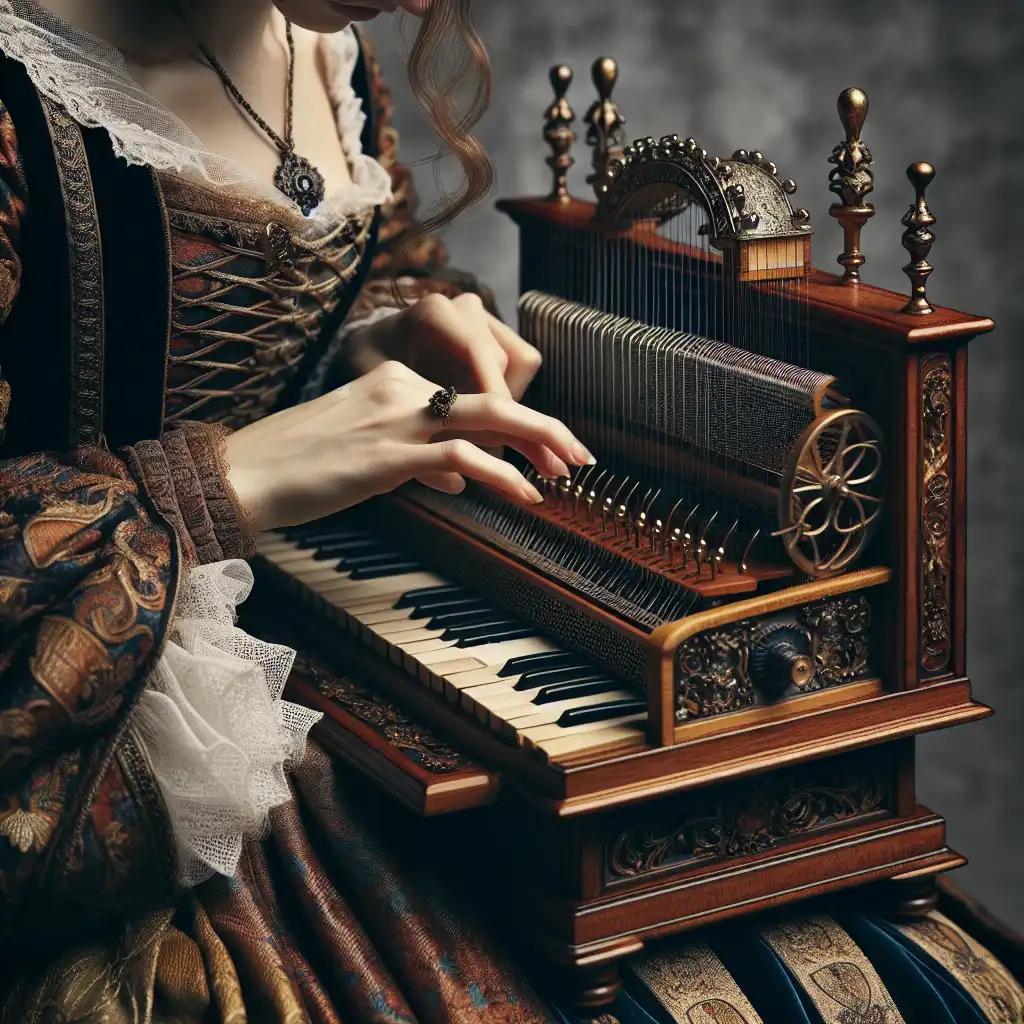
harpsichord
noun harpsichord
ˈhɑːrpsɪkɔːrd
A musical instrument similar to a piano but smaller and with strings plucked by pieces of quill.
She delighted everyone with her sublime performance on the harpsichord.
harpsichord
ˈhɑːrpsɪkɔːrd
Cargando…
ˈhɑːrpsɪkɔːrd
A musical instrument similar to a piano but smaller and with strings plucked by pieces of quill.
She delighted everyone with her sublime performance on the harpsichord.
No se pudo cargar el audio. Inténtalo de nuevo más tarde.
A harpsichord is a musical instrument that has strings inside it. When you press down on the keys, it plucks the strings and makes a sound. It is used for playing classical music, especially from the Baroque period (around 1600-1750), and is often used in chamber music, solo performances, and accompanying singing. You might find a harpsichord in a concert hall, music school, or in someone's home if they are a musician.
Both the clavichord and harpsichord are musical instruments from the keyboard family. The main difference between them is in the way they produce sound.
The clavichord is a smaller and quieter instrument compared to the harpsichord. When a key is pressed on a clavichord, a metal blade pushes against a string, causing it to vibrate and produce sound.
The volume and intensity of the sound on a harpsichord are not affected by how hard you press the keys, as they are on a clavichord.
Clavichords are still produced and played, but are rarer and tend to be used mainly for historical music performances.
Abrir palabra: Clavichord →A harpsichord and a spinet are both types of keyboard instruments, but they differ in size and sound.
A harpsichord is larger than a spinet and has a more elaborate mechanism inside that produces a brighter and more distinct sound.
A spinet is smaller and produces a softer and less distinct sound. It was more commonly used in the Renaissance era and became a popular domestic instrument in the 18th century.
A harpsichord is larger and produces a brighter sound, while a spinet is smaller and produces a softer sound. Each one is applicable in different types of music and settings.
Abrir palabra: Spinet →Both the harpsichord and virginal are keyboard instruments that were popular during the Renaissance and Baroque periods of music.
The harpsichord is larger and has multiple sets of strings that are plucked by quills when the keys are pressed. It has a louder and more resonant sound than the virginal.
The virginal is smaller and has only one set of strings that are also plucked by quills. It has a quieter sound than the harpsichord, but is still suitable for solo performances.
The virginal was often used in home settings for domestic entertainment.
The harpsichord is larger and louder, while the virginal is smaller and quieter. The harpsichord is more commonly used in concert settings, while the virginal was often used in homes.
Abrir palabra: Virginal →Why should you listen to...
Ver en YouTube ↗Someday we may have as many followers as the harpsichord.
The Secret of Musical...
Ver en YouTube ↗I don't use the harpsichord because it evokes a past time period: I use it because I like the sound.
The playful wonderland...
Ver en YouTube ↗The simple act of sitting down and playing something enormously complex and spiritually uplifting on a harpsichord just bores kids to tears. There's no sizzle, there's no grab. But it's the great lesson of serious music, that it invites you to listen, rather than demands that you listen.
I don't try to make the guitar sound like the harpsichord or lute. That makes you end up being like a bad copy.
There used to be a certain condescension to Mozart. His music was regarded as pleasant. He was a porcelain figure playing a porcelain harpsichord.
Lurch's quietness is a result of personal dignity. He appreciates things of quality. His greatest joy is playing Bach on the harpsichord, and he recognizes the music as the result of 'a great human effort to express.
I decided I wanted to be a musician when I saw the movie 'Amadeus' around 1987. I was five years old, so it was a good time to start piano lessons after seeing Tom Hulce who played Mozart play the harpsichord on his back with his hands crossed. Such a great movie to inspire a five-year-old.