mussel
noun mussel
ˈmʌsl
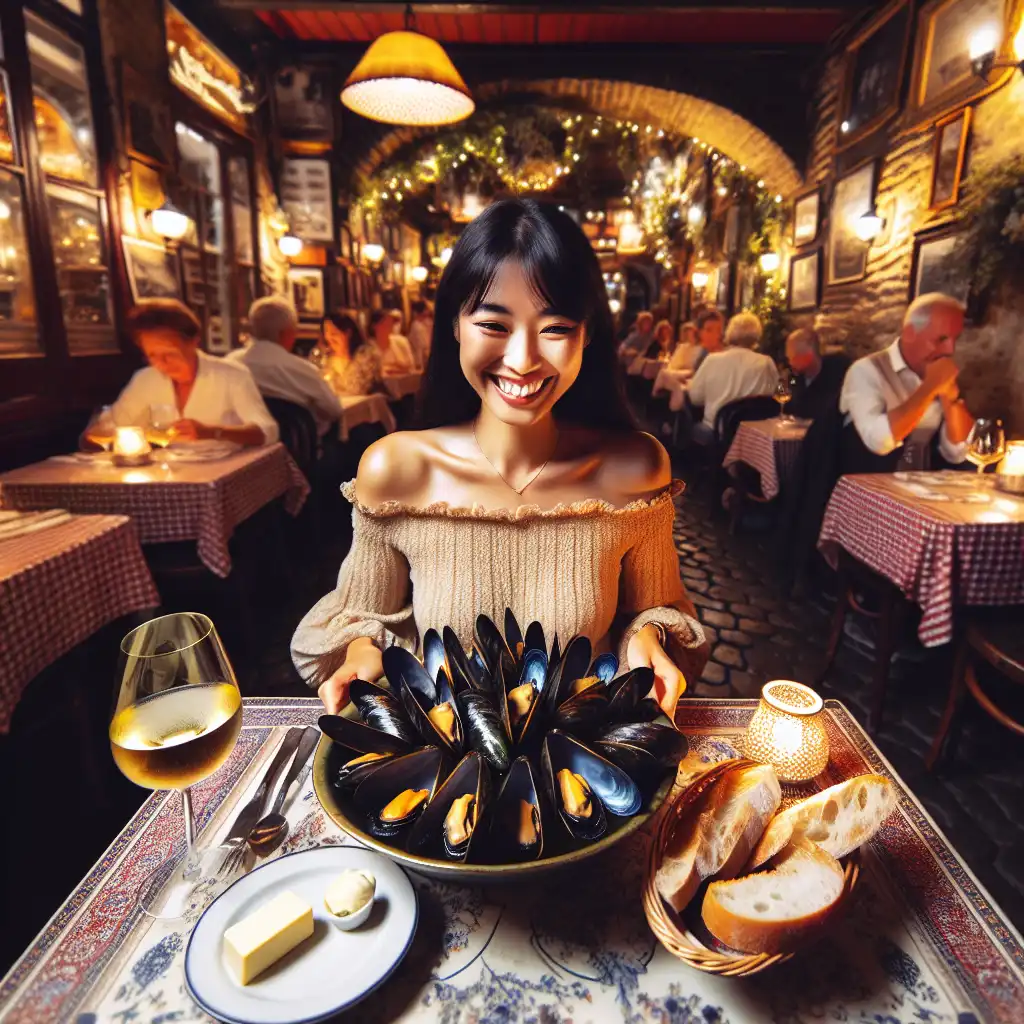
A kind of sea creature with a shell that is often eaten as food.
She ordered a large bowl of mussels for dinner at the restaurant.
mussel
ˈmʌsl
加载中…
ˈmʌsl
A kind of sea creature with a shell that is often eaten as food.
She ordered a large bowl of mussels for dinner at the restaurant.
ˈmʌsl
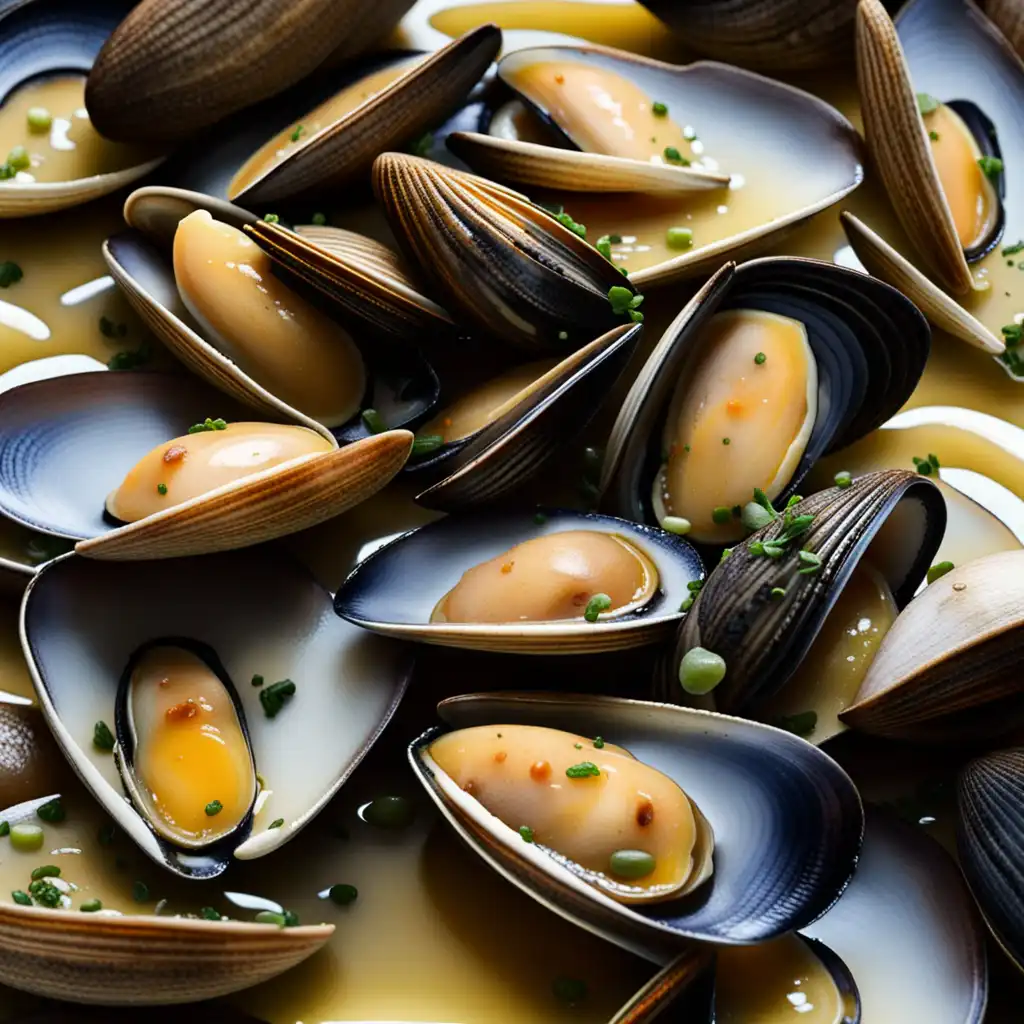
A type of small, edible clam or marine bivalve.
Mussels are often served in a white wine sauce.

ˈmʌsl
An object that looks like a mussel shell, used to remove or hold heat.
I use a mussel to hold the iron when it's hot.
音频无法加载,请稍后再试。
A mussel is a type of shellfish that lives in fresh or saltwater. It has a hard, dark-colored shell and a soft body inside. People can eat mussels, and they are often cooked in a variety of dishes such as soup, pasta, and stews. Mussels can also be used as bait for fishing. If you are talking about a mussel, you might say something like, "I had a delicious bowl of mussels in white wine sauce for dinner last night."
Abalone and mussel are two different types of shellfish.
Abalone is a type of sea snail that is commonly found along the coast of California. It has a large, ear-shaped shell and is known for its delicate, flavorful meat.
Abalone is typically eaten raw or cooked in a variety of dishes and is often considered a delicacy. It is also used in jewelry and other decorative items.
Abalone is a type of sea snail that is prized for its meat and used in both food and decoration, while mussels are small bivalve shellfish that are commonly used in cooking.
打开单词: Abalone →Bivalve refers to a type of shellfish that has a hinged shell with two parts, such as clams, oysters, and scallops. Mussel refers to a specific type of bivalve that has a similarly shaped hinged shell but is typically smaller and found in freshwater or saltwater environments.
Bivalve can refer to any shellfish with a two-part hinged shell, while mussel specifically refers to a type of bivalve that is often used in cooking and eaten as seafood.
打开单词: Bivalve →Clams and mussels are both types of shellfish. The main difference between them is their shape and where they live.
Clams have a hard, oval-shaped shell and they mostly live in sandy or muddy bottoms of ponds and rivers. They can also be found along coastlines, either in the sand or attached to rocks.
Clams are often eaten raw in dishes like clam chowder or steamed with garlic and white wine.
In summary, clams are oval-shaped and mostly found in freshwater areas while mussels are narrow and found in saltwater environments. Both are used in different types of dishes.
打开单词: Clam →Cockles and mussels are both types of shellfish, but they are different in a few ways.
Cockles are usually smaller than mussels and have a rounder, more symmetrical shape. Their shells are ridged and usually come in shades of brown, gray, or green.
Both cockles and mussels are commonly eaten, but they are prepared and consumed in slightly different ways. Cockles are often steamed or boiled and served with garlic butter or other flavorful sauces.
Overall, cockles are best suited for more delicate preparations, while mussels can stand up to more robust flavorings and cooking methods.
打开单词: Cockle →The main difference between conch and mussel is that conch is a type of marine snail with a spiral shell, while mussel is a type of marine or freshwater bivalve mollusk with a hinged shell.
Conch is usually used to refer to the large spiral shell of the marine snail, which is commonly found in tropical waters.
Conch and mussel are both types of shellfish, but conch refers to a marine snail with a spiral shell, while mussel refers to a bivalve mollusk with a hinged shell that is often used in cooking.
打开单词: Conch →Limpets and mussels are both types of shellfish, but they are different in the way they attach themselves to rocks or other surfaces.
Limpets have a conical shell and they attach themselves to rocks using their strong muscular foot. Mussels have a more elongated shell and they attach themselves to rocks using a sticky, fibrous thread called a byssus.
Limpets are typically found on rocky shorelines and are often preyed upon by other animals such as sea stars, crabs, and birds.
In terms of their culinary value, both limpets and mussels are considered to be delicacies in some parts of the world. Limpets are often eaten raw or cooked in their shells, while mussels are typically cooked and served with a variety of sauces and seasonings.
打开单词: Limpet →Mussels and oysters are both types of shellfish, but they have some differences in appearance and taste.
Oysters have a rough and bumpy shell and are often elongated in shape. They have a briny taste and are often eaten raw, but can also be fried or grilled.
Oysters are also farmed and harvested in shallow coastal waters.
In summary, mussels are smaller, have a sweeter taste, and are used in dishes like soups and pasta. Oysters are larger, have a brinier taste, and are often eaten raw or grilled.
打开单词: Oyster →Scallop refers to a type of shellfish that has a round, fan-shaped shell with distinct ridges. Scallops are often found in shallow waters and are commonly used in seafood dishes because of their sweet and delicate flavor.
The difference between mussels and scallops is their appearance, taste, and texture. Mussels are elongated and asymmetrical with a slightly sweet flavor, while scallops are round and fan-shaped with a delicate sweet flavor.
Both are used in various seafood dishes, but mussels are more commonly used in stews and soups while scallops are often served seared or grilled as a main course.
打开单词: Scallop →Snails are a type of mollusk that live on land, in freshwater, or in saltwater. They have a soft body and a spiral-shaped shell.
Some species of snails are used for food, but most are considered pests in gardens and crops.
In summary, mussels live in water and have hard shells, while snails can live on land or in water and have soft bodies with a shell.
Mussels are primarily used for food, whereas snails are less commonly consumed and can be considered pests.
打开单词: Snail →What’s so great about...
在 YouTube 上观看 ↗Life lives on life - it is cruel, but it is God's will. And it is for our good, of course, because if there weren't little animals to eat up the young mussels, our canals would be choked by those shellfish, for each mother has more than a thousand young ones at a time!
Finding Baby Seals on an...
在 YouTube 上观看 ↗Zebra mussels like to hitch a ride on boats when they're transferred from one body of water to another. It's important to make sure to thoroughly clean your boat each time it leaves the water to ensure these invasive mussels are removed and that you are not spreading them to your next location.
Harvesting Mussels In...
在 YouTube 上观看 ↗In Australia you're not allowed to go down to the beach and eat anything from the rocks. You just can't do it - help yourself to mussels and things like that because there's hardly any left and the government has now legislated against it.
The four fish we're...
在 YouTube 上观看 ↗Sometimes I feel very young, and other times I feel like the side of a ship that's got a bunch of layers of mussels and barnacles on it.
Sequencing genomes to...
在 YouTube 上观看 ↗For dinner parties, I love making an easy cioppino using shrimp, mussels, clams, and a hearty fish that won't fall apart easily.
The sharks that hunt in...
在 YouTube 上观看 ↗I can tell everything about a restaurant through their mussels. You have to work so hard to keep them perfect.
A Quest to Find Canada’s...
在 YouTube 上观看 ↗I go out and take oysters, clams and mussels every 2 weeks or so during late fall, winter and early spring. I particularly like to go out when there is a below-average ebb tide because that exposes clamming grounds and oysters that are usually under water.
What sticky sea...
在 YouTube 上观看 ↗When Cuba Gooding Jr. and I were doing 'The Trip to Bountiful,' we would always go to BXL, a Belgian restaurant/bar. It was across the street from the theater, and they have amazing mussels.
Shipwreck From Explorer...
在 YouTube 上观看 ↗I make a wicked clam chowdah, and linguine with clam sauce. Oysters I like to eat raw, and mussels in either a white wine sauce or in beer with paprika.
Saving the Creepy...
在 YouTube 上观看 ↗As a young boy growing up in New York City, we would spend our summers on the South Fork of Long Island. My dad would take me down to the beach at low tide. We would walk a mile down to the jetties, and he would lower me by my ankles into the crevices between the massive boulders to grab at huge ropes of mussels.