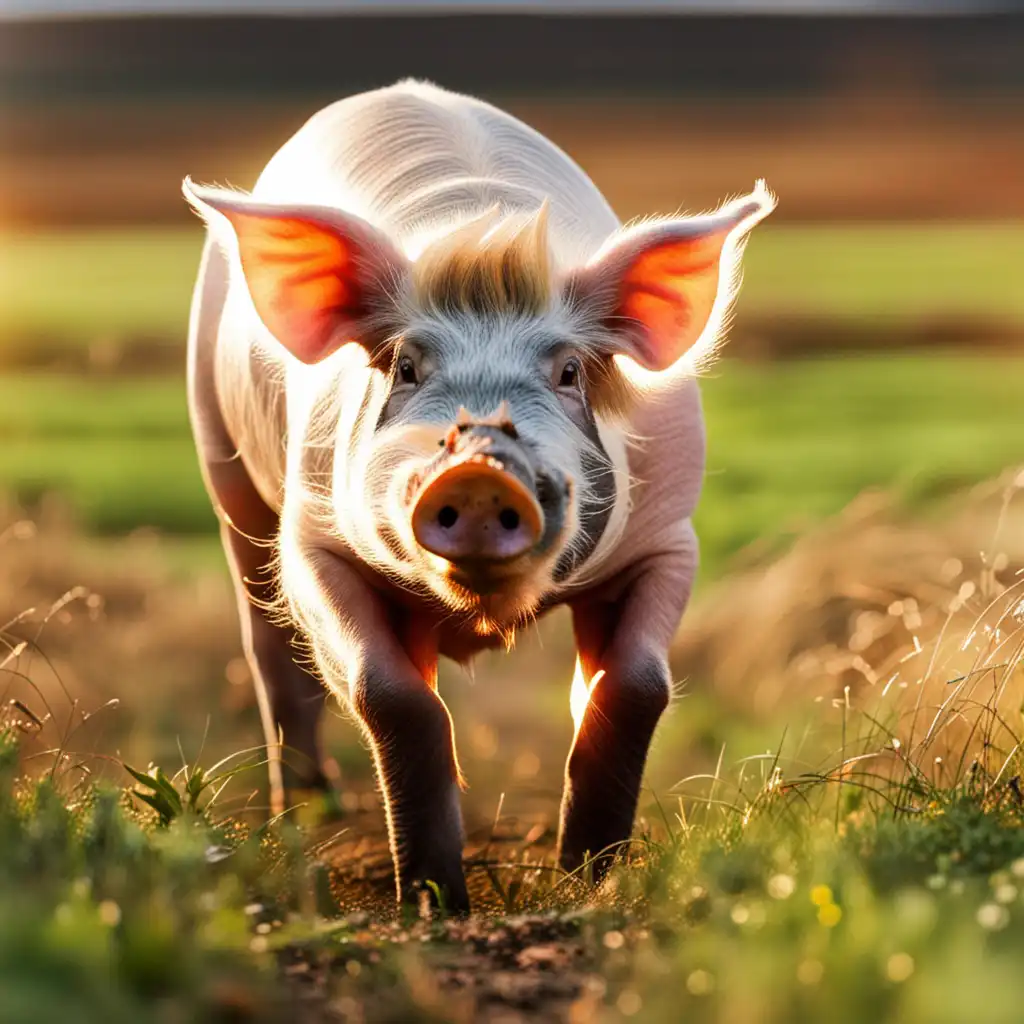
snout
noun snout
snaʊt
The long nose and area around the mouth of some animals, like pigs
The pig was eagerly sniffing the ground with its snout.
snout
snaʊt
Loading…
snaʊt
The long nose and area around the mouth of some animals, like pigs
The pig was eagerly sniffing the ground with its snout.

snaʊt
The front part of a firearm, where the bullets come out
He could see the stick, which was aimed at him, trembling at the snout.

snaʊt
The end part of a tool or an object
The snout of the vacuum cleaner was narrow enough to reach into tight corners.

snaʊt
In a disrespectful way, the human nose, especially when it is large or noticeable
She looked down her long snout at the poor man begging on the street.
Audio could not be loaded. Please try again later.
The word 'snout' is used to refer to the nose and mouth of some animals, specifically those with long, pointed noses like pigs, dogs, and anteaters. You can use it when talking about the part of an animal's face that they use to smell, breathe or eat. For example, you could say "the pig's snout was covered in mud" or "the dog sniffed around with its snout."
A beak is a hard, pointed, and curved mouthpart that birds use to grasp, pick, and eat their food. Snout refers to the elongated nose or muzzle of animals such as pigs, dogs, and certain species of mammals.
Snouts are used for sniffing, rooting, and occasionally, as a tool to help them dig. Beak is applicable to birds, while snout is applicable to mammals with elongated noses or muzzles.
Open word: Beak →Jowl refers to the jawline or cheek area of an animal or person. Snout refers to the long protruding nose or muzzle of an animal, particularly a mammal such as a pig or dog.
Jowl is applicable to animals and humans, particularly in terms of describing facial features. Snout is specific to animals, particularly those with longer noses, and describes the part of their face responsible for their sense of smell.
Open word: Jowl →The mandible is the lower jawbone that provides support for the teeth and movement for chewing. It is found in mammals, including humans.
The mandible is a bone while the snout is a feature on an animal's face. The mandible is found in mammals for chewing and the snout is used for olfactory (smelling) and tactile (touch) senses as well as physical manipulation.
Open word: Mandible →A muzzle is a covering or device placed over the mouth of an animal to prevent it from biting or eating, often used as a safety measure for dogs, horses, or other domesticated animals.
Muzzle refers to a tool that limits behavior while snout describes a physical feature of an animal.
Open word: Muzzle →Nose usually refers to the part of the face in humans and certain animals that is used for breathing and smelling.
Snout refers to an elongated or projecting nose of an animal, especially a mammal or reptile. Animals with snouts use them primarily for finding food, while the nose is used for breathing and smelling.
So, while both words refer to a part of the face used for smelling, nose is typically used for humans and certain animals like dogs, while snout is used more specifically for animals like pigs, crocodiles, and anteaters.
Open word: Nose →Proboscis and snout are both words used to describe the nose or mouth area of an animal.
Proboscis typically refers to a long, thin, and flexible nose or mouthpart, often found on insects, such as butterflies and mosquitoes.
It is generally a broader and less specialized term than proboscis, so it can refer to a wider range of shapes and sizes of animal noses.
To sum up, proboscis refers to a long and specialized nose, typically found on insects, while snout is a more general term used to describe the nose and mouth area of various animals.
Open word: Proboscis →Rostrum typically refers to a pointed structure at the front of an animal's body, like the beak or mouthparts of an insect, or the protruding nose of a dolphin or swordfish.
Rostrum also describes a podium or platform for public speaking.
In summary, while both words describe protruding parts of an animal's head, rostrum is more specific to pointed structures, while snout is more general and can refer to any type of projecting nose-like structure.
Open word: Rostrum →Trunk refers to the extended, muscular nose of elephants or any long and protruding nose of a mammal.
A snout is a shorter and more pointed nose, while a trunk is an elongated and flexible nose.
Open word: Trunk →features they lead a semi-aquatic lifestyle but are much less adapted to water their feet are less webbed and they spend more of their time on land they have rounded shorter snouts with
Watch on YouTube ↗Imagine that you are a bloodhound dog. Your whole world is about smelling. You've got a long snout that has 200 million scent receptors in it, and you have wet nostrils that attract and trap scent molecules, and your nostrils even have slits so you can take big nosefuls of air.
Watch on YouTube ↗of eye and then a long snout and that's tongue will come out of that snot there and they'll then pick it up and go back in which is absolutely amazing to see one of these is the most special thing in the whole world and so we're being so so spoiled I know it doesn't
Watch on YouTube ↗They were primarily distinguished by their smaller size and a shorter snout full of comparatively smaller teeth. But as human cultures and occupations became more diverse and specialized, so did our friends. Short stocky dogs to herd livestock by nipping their heels;
Watch on YouTube ↗tapirs are nocturnal they're solitary and they have this amazing flexible a snout that they use to grab their food and speaking of food they're herbivores
Watch on YouTube ↗the soil Kiwis are the only birds in the world to have nostrils at the tip of their bills it's more like a snout perfect for rooting around for grubs but right now the Kiwis here have something
Watch on YouTube ↗locate underground prey in the soil Kiwis are the only birds in the world to have nostrils at the tip of their bills it's more like a snout perfect for rooting around for grubs
Watch on YouTube ↗with a raise snout she signals submission to avoid attack now she slides beneath him
Watch on YouTube ↗boars that still roam forests around the world they may be smaller but today's wild hogs carry an arsenal of weapons long tusks tough shoulders like battle shields long powerful snouts that can smell an enemy up to 7 miles away
Watch on YouTube ↗as a cigar shark because of the shape of its body there are deep water species and they're really creepy looking they have large eyes funny shaped snouts and
Watch on YouTube ↗