
dissenter
noun dissenter
dɪˈsentər
A person who does not agree with others, especially the established authority or majority.
He was the solitary dissenter in the vote to increase sanctions against the country.
dissenter
dɪˈsentər
Đang tải…
dɪˈsentər
A person who does not agree with others, especially the established authority or majority.
He was the solitary dissenter in the vote to increase sanctions against the country.
dɪˈsentər
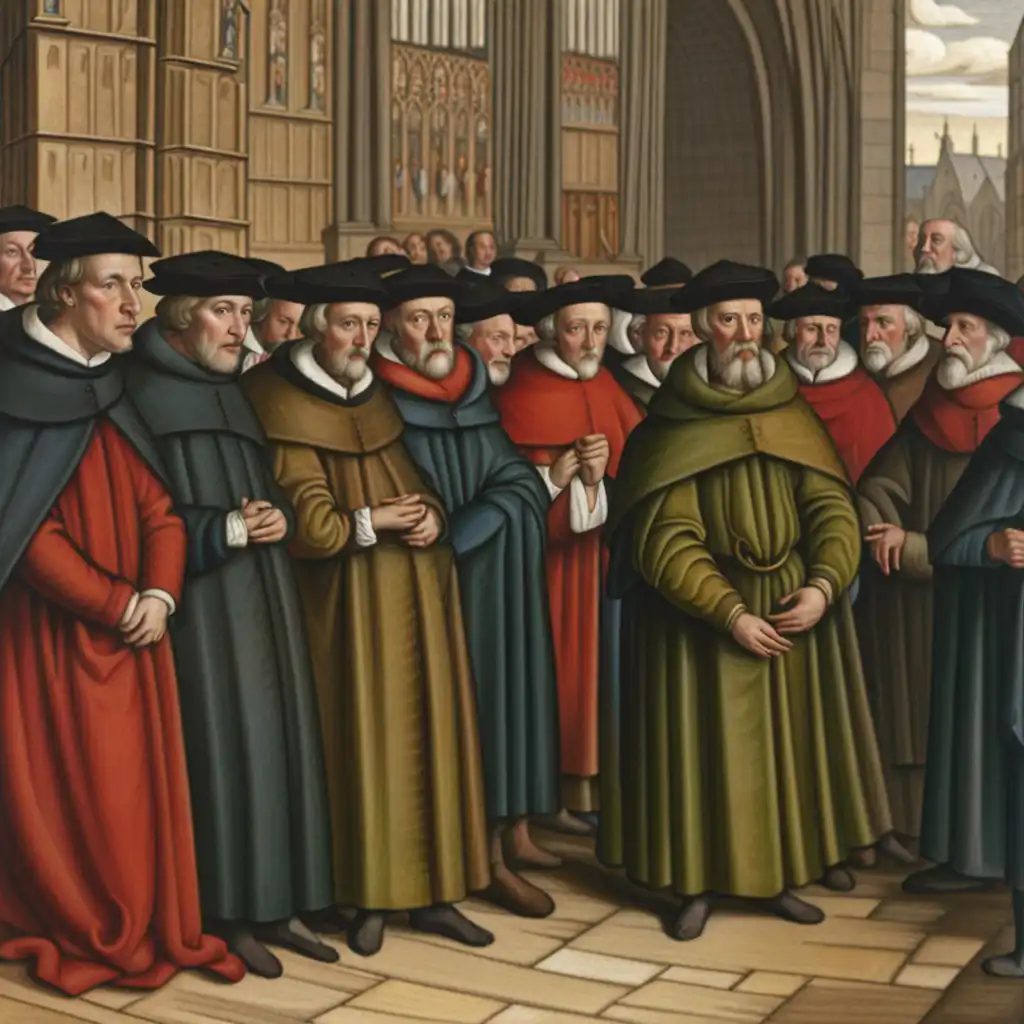
A member of a Protestant church in England in 16th-19th centuries that does not conform to the doctrines and rituals of the Church of England.
The dissenters were often penalized for their nonconformity to the Church of England.

dɪˈsentər
A member of the U.S. Supreme Court who gives a minority opinion in a case.
In the 5-4 decision, the dissenters argued that the ruling was a violation of civil liberties.
Không tải được âm thanh. Vui lòng thử lại sau.
The word "dissenter" is used to describe someone who disagrees with an established authority or religious group. For example, in history, there were people who opposed the Church of England and were called dissenters. Today, the word can be used to describe someone who disagrees with a government policy or a popular opinion. It is important to note that being a dissenter does not necessarily mean being wrong or bad, but simply having a different viewpoint.
Both dissenter and dissident refer to someone who disagrees with the views or policies of a group or government.
Dissident, on the other hand, tends to be used to describe someone who is challenging the authority or leadership of a government or political system.
Dissidents may also be called activists.
However, if you want to emphasize religious or political dissent, you would probably use dissenter; if you want to emphasize opposition to a government or political system, you would probably use "dissident."
Mở từ: Dissident →A heretic is someone who actively rejects the beliefs of a particular group or traditional teachings. They are seen as opposing the group as a whole, and their ideas are often considered dangerous or even blasphemous.
A dissenter is someone who disagrees with a particular stance but still belongs to the larger group, while a heretic is someone who actively opposes the beliefs of that group.
Mở từ: Heretic →An iconoclast is someone who actively challenges or attacks established beliefs, traditions or institutions. They seek to dismantle and overthrow the existing beliefs and practices in society.
For example, an iconoclast might seek to abolish traditional structures of power or challenge the accepted norms of art and literature.
A dissenter disagrees with a specific belief or practice while an iconoclast seeks to challenge and overthrow the entire system of beliefs and practices.
A dissenter is applicable in situations where there is disagreement within a group while an iconoclast applies to situations where there is a desire to completely change the established order.
Mở từ: Iconoclast →A maverick is someone who goes against convention and does things in their own unique way. They are independent thinkers who are not afraid to take risks, and often come up with innovative ideas and solutions that others may not have considered.
While both terms refer to individuals who challenge the status quo, a dissenter tends to focus on specific issues or beliefs, while a maverick is more concerned with overall approach or strategy.
Dissenters are more likely to be associated with organized groups or movements, while mavericks tend to be more individualistic.
A maverick might be seen in business or the arts, where they take unconventional approaches to problem-solving or expression.
Overall, both dissenters and mavericks are important contributors to progress and innovation, as they push the boundaries of what is considered acceptable or normal.
Mở từ: Maverick →A nonconformist is a person who does not conform to societal norms, traditions or conventions. This could refer to someone who dresses differently, behaves differently or holds unconventional beliefs.
For example, a nonconformist might refuse to follow traditional gender roles or religious practices.
Both terms can be applicable in a variety of contexts, but a dissenter typically challenges authority while a nonconformist challenges tradition or social norms.
Mở từ: Nonconformist →Dissenter refers to someone who disagrees with the majority or the established authority. They may express their disagreement publicly, but they do not necessarily become social outcasts.
An outcast is someone who is rejected by society and excluded from social groups due to their conduct or beliefs. Unlike a dissenter, an outcast is typically ostracized and may experience significant social, emotional, or economic consequences.
For example, someone who commits a serious crime or has an unpopular political view may be an outcast.
A dissenter is someone who expresses dissenting views, whereas an outcast has been ostracized from society.
Mở từ: Outcast →A dissenter is someone who disagrees with a particular belief or system, but they do not necessarily engage in any active opposition or rebellion against it.
A rebel is someone who actively opposes or fights against a particular system or authority. They may engage in actions that are considered illegal or violent, such as sabotage or armed resistance, to overthrow the system or authority.
A dissenter expresses disagreement peacefully while a rebel actively opposes an authority in potentially violent ways.
Mở từ: Rebel →A renegade is someone who has actively gone against the rules or authority they were expected to follow. Renegades are often seen as rebellious or traitorous, and their actions may be illegal or frowned upon by society.
For example, someone who breaks laws or goes against cultural norms and values may be considered a renegade.
A dissenter disagrees with a specific belief or opinion, while a renegade goes against the rules or authority they were expected to follow.
Mở từ: Renegade →A skeptic is someone who doubts or questions things, often requiring more evidence or proof before believing something.
They may be doubtful of claims or ideas presented to them. For example, a skeptic may require more evidence before believing in the existence of ghosts or aliens.
In general, dissenters actively oppose a belief or system they don't agree with, while skeptics are more cautious and want more evidence before accepting something as true.
Mở từ: Skeptic →History vs. Che Guevara...
Xem trên YouTube ↗Locking up dissenters does not reduce dissent - it fosters it.
Ancient Astronaut Theory...
Xem trên YouTube ↗The dissenter is every human being at those moments of his life when he resigns momentarily from the herd and thinks for himself.
We can fight terror...
Xem trên YouTube ↗The last years of fading communism provided an ideal environment for Poland's Catholic Church, which acted as an umbrella for dissenters of all sorts.
Ugly History: Witch...
Xem trên YouTube ↗Some of my ancestors were religious dissenters who came to America over three hundred years ago. Others were abolitionists in New England in the eighteen forties and fifties.
Why should you read "The...
Xem trên YouTube ↗The often cruel behavior of Christians toward unbelievers and even toward dissenters among themselves is shocking evidence of the function of that image in relation to values and behavior.
Michael Sandel: The lost...
Xem trên YouTube ↗I have always marveled that so many religions exact such revenge against dissenters. It only weakens the appeal of their faith and contradicts any claims they might have made that 'all religions are basically the same.
Creativity is a remix %\PIPE%...
Xem trên YouTube ↗When illiberal feminists aren't delegitimizing female dissenters from their worldview as fake women, they are portraying them in such a hyper-sexualized way that they are reduced to nonhuman objects.
Is civility a sham? %\PIPE%...
Xem trên YouTube ↗I'm a chronicler of Negroland, a participant-observer, an elegist, dissenter, and admirer; sometime expatriate, ongoing interlocutor.
The lost art of...
Xem trên YouTube ↗Those who begin coercive elimination of dissent soon find themselves exterminating dissenters. Compulsory unification of opinion achieves only the unanimity of the graveyard.
Safari Live - Day 118 %\PIPE%...
Xem trên YouTube ↗I have always marveled that so many religions exact such revenge against dissenters. It only weakens the appeal of their faith and contradicts any claims they might have made that 'all religions are basically the same.' If all religions were indeed the same, why not let someone be 'converted' to another religion?