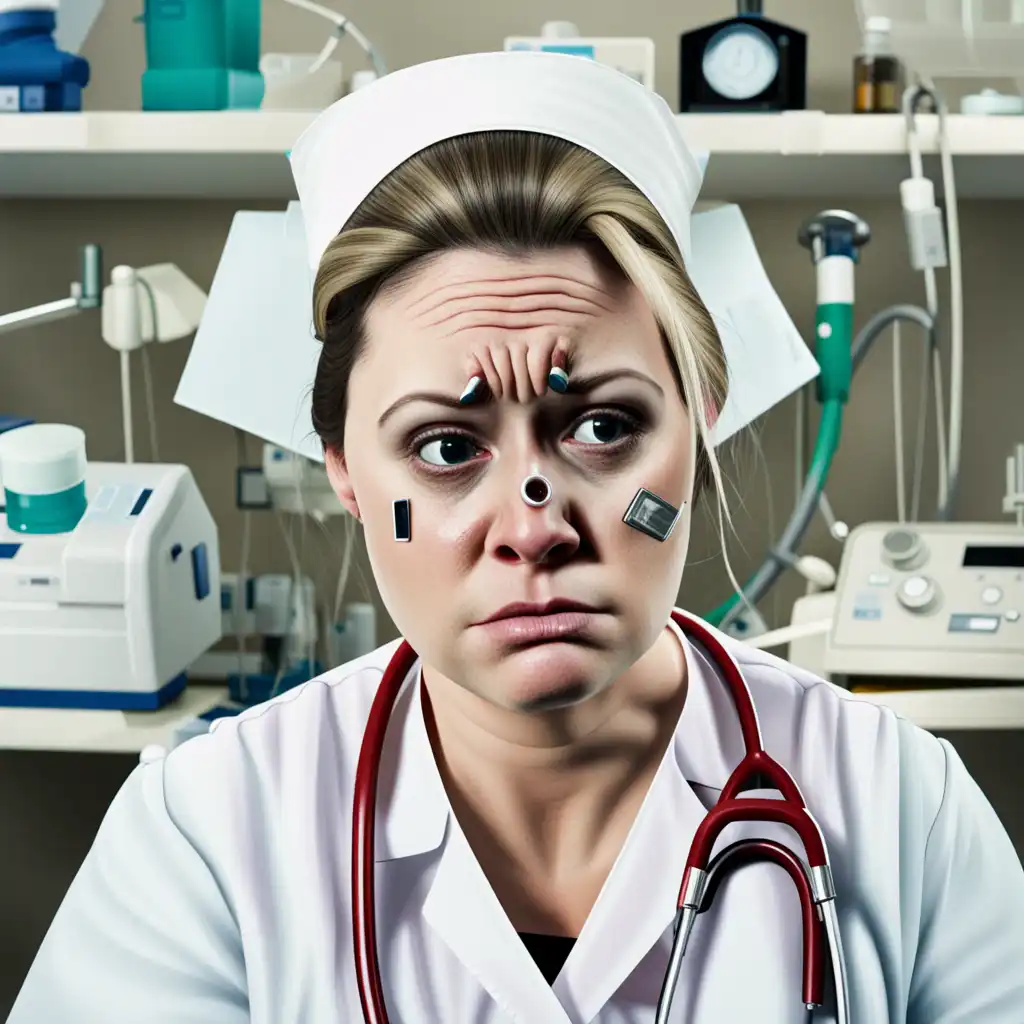
careworn
adjective careworn
ˈkerwɔːrn
Looking tired and unhappy because of prolonged worry, work, or suffering.
The careworn face of the nurse reflects the hardships of her job.
careworn
ˈkerwɔːrn
Cargando…
ˈkerwɔːrn
Looking tired and unhappy because of prolonged worry, work, or suffering.
The careworn face of the nurse reflects the hardships of her job.
No se pudo cargar el audio. Inténtalo de nuevo más tarde.
The word 'careworn' means to look tired or anxious due to worry, stress or hard work. It is often used to describe someone's appearance or facial expression. For example, a person who has been working hard all day may have a careworn look on their face. It can also be used to describe a place or thing that looks worn out or tired from use over time. For instance, a careworn chair that has been used for many years may look old and battered.
Exhaust means to use up completely, to drain or tire out.
It describes physical exhaustion, where a person feels completely drained due to physical exertion, or mentally exhausted after working on a mentally taxing task.
Careworn pertains to emotional stress and worry, while exhaust pertains to physical or mental fatigue.
Abrir palabra: Exhaust →Careworn and fatigue are both related to exhaustion or tiredness, but they are used in different contexts.
Fatigue refers to the feeling of being physically or mentally tired as a result of exertion, boredom, or illness. It is a general feeling of tiredness that affects the body and mind.
For example, if you have been working all day and feel tired and unable to concentrate, you can say that you are experiencing fatigue.
Careworn refers to the visible signs of exhaustion and worry on a person's face, while fatigue refers to the general feeling of tiredness that affects the body and mind.
Abrir palabra: Fatigue →The words careworn and haggard both describe a person's appearance.
However, careworn suggests a tired or sad expression that comes from long-term worry or stress, while haggard suggests a tired or exhausted appearance that comes from illness or lack of sleep.
Haggard usually describes someone who looks unwell or unhealthy because they are tired or haven't been sleeping.
For example, a person who has been working long hours without rest might look haggard.
Careworn describes a long-term emotional strain, while haggard describes a short-term physical tiredness.
Abrir palabra: Haggard →Strain on the other hand, refers to physical or mental stress caused by overexertion or repetitive motions.
Careworn is applicable to emotional exhaustion while strain is applicable to physical exhaustion.
Abrir palabra: Strain →Careworn describes a person's appearance, specifically looking tired or exhausted due to stress or worry over a period of time.
Stress is a noun referring to the feeling of mental or emotional strain or tension resulting from adverse or demanding circumstances.
It can also be used as a verb meaning to subject someone to stress or to put pressure on them.
Careworn describes a physical appearance, while stress describes a mental or emotional state.
Abrir palabra: Stress →Careworn means looking tired or exhausted due to stress, worry or hardship.
Tire means to become exhausted or to become in need of rest or sleep due to physical exertion or work.
Careworn describes a person's appearance, while tire describes a person's physical state.
Abrir palabra: Tire →Trouble refers to difficulties or problems that a person may face. It could refer to anything from minor issues to serious situations.
Careworn applies to a person's appearance, while trouble refers to difficult situations or problems a person may face.
Abrir palabra: Trouble →Weary suggests a feeling of physical or emotional exhaustion.
For instance, a runner who has just finished a marathon may feel weary or a person who has finished a demanding work week may feel weary.
Weary is a momentary feeling of exhaustion or fatigue that comes from a strenuous physical or emotional effort at any given time.
Abrir palabra: Weary →