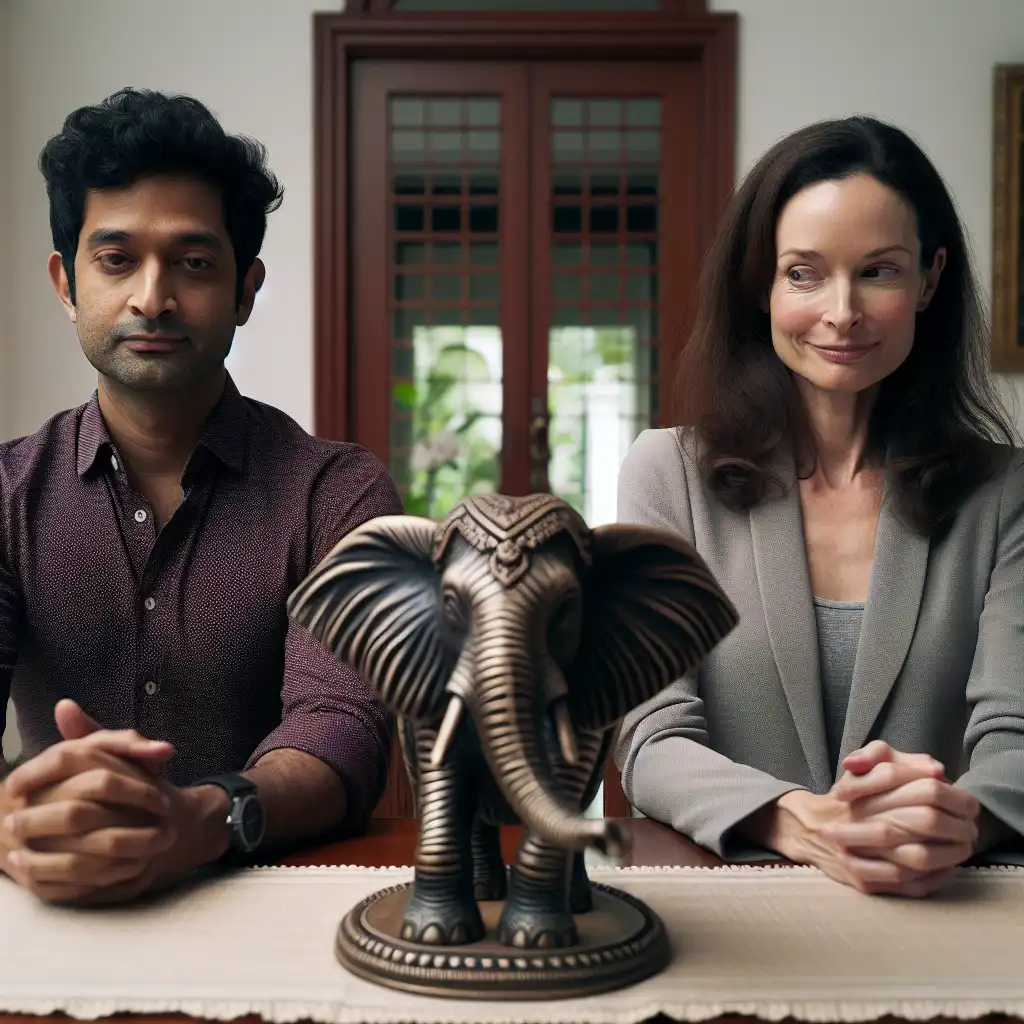
tacit
adjective tacit
ˈtæsɪt
Understood or implied without being stated openly
Our tacit agreement was to ignore the elephant in the room.
tacit
ˈtæsɪt
Loading…
ˈtæsɪt
Understood or implied without being stated openly
Our tacit agreement was to ignore the elephant in the room.
ˈtæsɪt
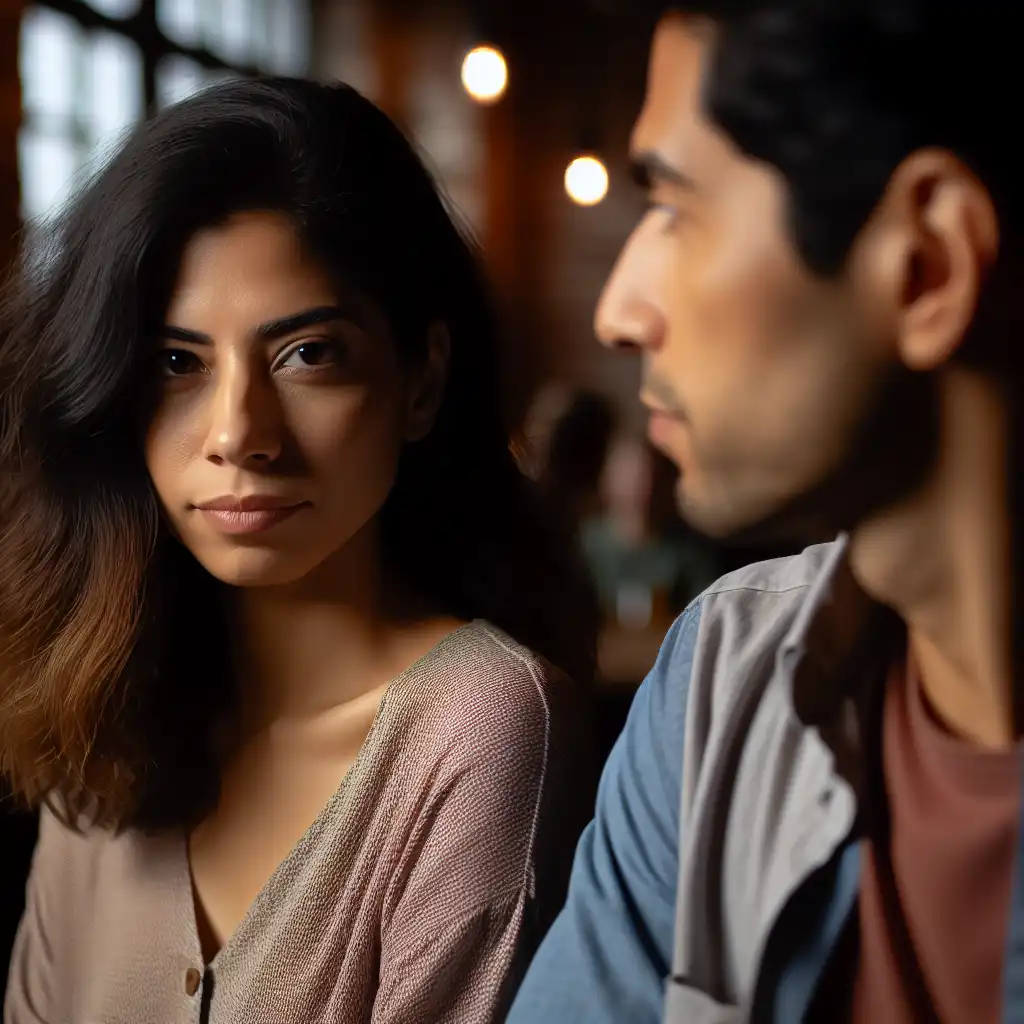
Said or done in a quiet and indirect way
Her tacit criticism was not lost on him.

ˈtæsɪt
Implied by law, but not expressly stated
Tacit consent is assumed unless expressly denied.
Audio could not be loaded. Please try again later.
The word 'tacit' is used to describe something that is learned or understood without being directly stated or explained. For example, if someone knows the unspoken rules of a particular culture or group, that knowledge is considered tacit. It is often used to describe knowledge that is gained through experience or observation, rather than through explicit teaching. To use the word 'tacit' correctly, you might say something like "He had a tacit understanding of how to navigate the social dynamics of the workplace." It is a more sophisticated word that is often used in academic or professional settings, but can be used in everyday conversation as well.
A hint is a suggestion or clue given directly in order to help someone understand something.
For example, if someone gives you a hint about the answer to a riddle, they might say something like "it's something that you put on your head." This is a clear, direct clue.
A hint is a specific suggestion while tacit is an implied understanding.
Open word: Hint →The words implicit and tacit both refer to things that are not stated directly but are understood or implied.
Implicit refers to something that is understood to be true without being openly expressed or stated. For example, if someone says, "She's a good driver" it might be implicit that he thinks she's better than him.
Implicit refers to things that are understood without being stated, while tacit refers to things that are understood without being spoken or written down, often because they are part of a shared understanding.
Open word: Implicit →Imply means to suggest something indirectly or to hint at something without directly saying it. For example, if someone says "I'm feeling really tired today," they might be implying that they want to rest or take a nap.
Imply is used when someone suggests something indirectly while tacit is applicable when something is understood without being explicitly stated.
Open word: Imply →Infer means to make a conclusion based on evidence, while the word tacit means something that is understood without being directly stated.
For example, if someone says "It's raining outside," you can infer that it's probably wet outside.
Infer is applicable when you need to make a logical deduction based on available information, while tacit is applicable when there is a nonverbal or implied understanding between two parties.
Open word: Infer →Insinuate means to suggest or imply something, usually in a negative or sneaky way.
Insinuate is about suggesting or hinting at something, while tacit is about understanding something without it being explicitly stated.
Open word: Insinuate →Speak means expressing ideas or emotions through verbal communication. It is applicable when someone wants to convey information, share their thoughts or feelings, or have a conversation with others.
Speak is used for direct verbal communication, while tacit refers to indirect communication through actions or lack of words.
Open word: Speak →Suggest means to offer an idea or opinion to someone else. It implies that one can make a recommendation or proposal.
For example, I suggest that we go out to dinner tonight.
Tacit means something that is implied or understood without being spoken or expressed directly. It suggests that something is understood without being stated clearly.
Open word: Suggest →Tacit refers to something that is implied or understood without being explicitly stated. It describes knowledge or understanding that is not openly expressed, but is understood through context or previous experience.
For example, if someone nods in agreement, it is a tacit agreement or understanding.
Understand refers to the ability to comprehend or grasp the meaning of something. It is an active process of gaining knowledge or insight about a particular subject or idea.
For example, if someone reads a book and comprehends the ideas presented, they can be said to understand the book.
Tacit is applicable in situations where there is an implicit understanding, while understand is applicable in situations where there is an effort to comprehend something.
Open word: Understand →How understanding...
Watch on YouTube ↗We may have a tacit understanding of how our solar system works, but watching the sun disappear behind the moon reminds us of the vastness of space and the enduring mysteries of the universe we inhabit.
Passivity is a tacit endorsement of evil we are too afraid to oppose actively.
The rules of friendship are tacit, unconscious; they are not rational. In business, though, you have to think rationally.
All the analysis of infinite reality which the finite human mind can conduct rests on the tacit assumption that only a finite portion of this reality constitutes the object of scientific investigation, and that only it is 'important' in the sense of being 'worthy of being known.
Unfortunately, as hate speech has proliferated, no one in Poland has been held responsible. The police take people's statements and dismiss them. This tacit consent has demoralized weakened minds.
Fosse would say that it's important to trust silence. He very much liked the use of the tacit, or silent, count, where nothing is happening. He also liked percussion. His is a world of angular movement and mystery, quiet, semi-taciturn and percussive.
There's a tacit belief that actors shouldn't write books, they're sort of allowed to direct movies but there will be a lot of skepticism, and they shouldn't do artwork or music. There are these invisible roadblocks to gain entree to these areas for actors, and you kind of have to crash through those invisible barriers.
Culture is the tacit agreement to let the means of subsistence disappear behind the purpose of existence. Civilization is the subordination of the latter to the former.
Many anthropologists work with a concept called embodied knowledge - tacit, nonscientific knowledge - and look for ways to incorporate such information into product design.
Symbolic violence is violence wielded with tacit complicity between its victims and its agents, insofar as both remain unconscious of submitting to or wielding it.