
implosion
noun implosion
ɪmˈpləʊʒn
A sudden failure or collapse of an entity from the inside.
The financial implosion of the company led to many people losing their jobs.
implosion
ɪmˈpləʊʒn
불러오는 중…
ɪmˈpləʊʒn
A sudden failure or collapse of an entity from the inside.
The financial implosion of the company led to many people losing their jobs.
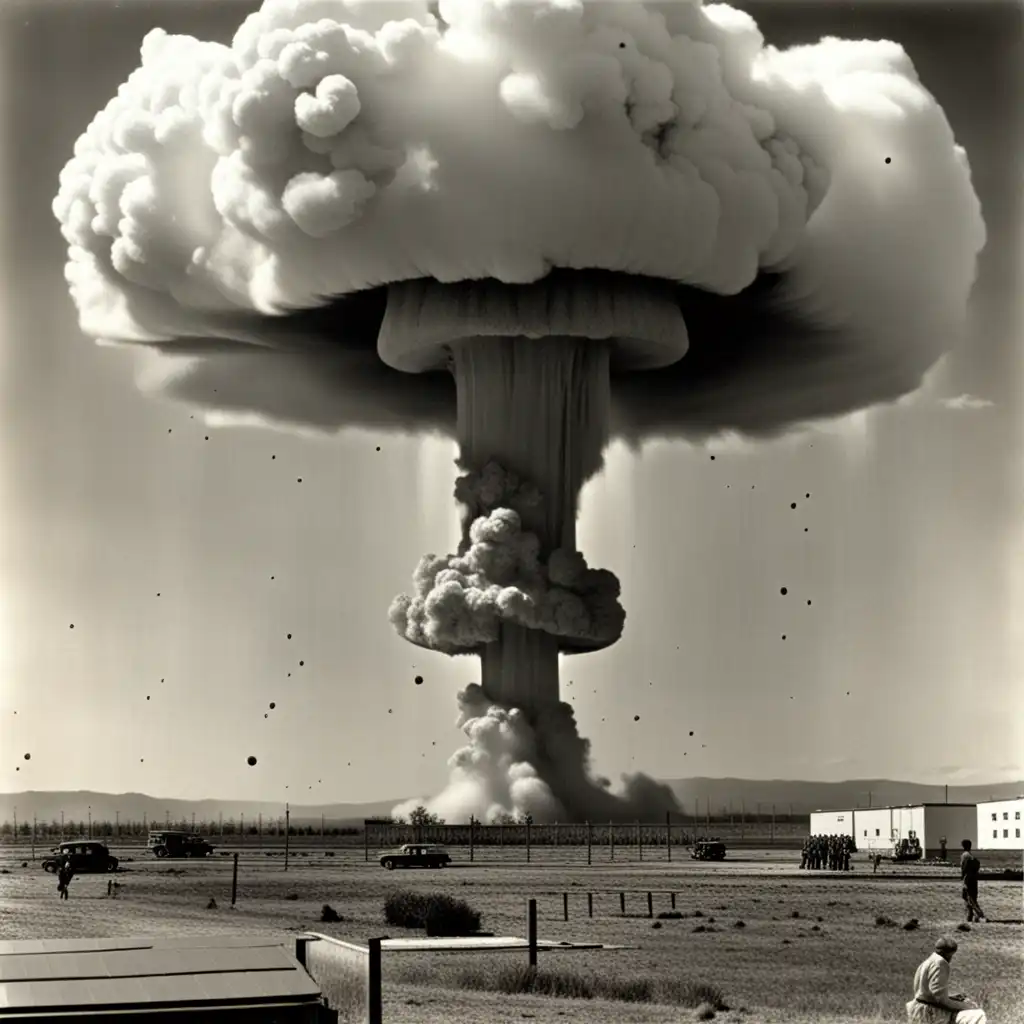
ɪmˈpləʊʒn
An instance when something violently bursts inward.
The nuclear device created an implosion that led to a large explosion.
오디오를 불러오지 못했어요. 잠시 후 다시 시도해 주세요.
The word 'implosion' means an explosion that happens inwardly, towards the center of something, rather than outwardly. It can also refer to a sudden and catastrophic collapse or failure of something, like a building or an organization. It is used in conversations to describe situations where things are falling apart and collapsing inwardly. For example, if a company is facing financial troubles and is on the verge of collapsing, it could be said that the company is facing an implosion. It can also be used to describe scientific phenomena, like the implosion of a star.
Both breakdown and implosion refer to a sudden collapse, but they are used in different contexts.
Breakdown usually refers to the failure of a system or process. For example, a car might experience a breakdown if it stops working due to mechanical failure.
Alternatively, a person might experience a breakdown if they are overwhelmed by stress or emotions and cannot function as usual.
Breakdown describes the failure of a system or person, while implosion describes the collapse of a structure or the metaphorical collapse of an organization.
단어 열기: Breakdown →Catastrophe refers to a sudden and often unexpected event that causes great harm or damage, such as a natural disaster, car accident, or terrorist attack.
Catastrophe refers to any sudden and disastrous event, while implosion specifically refers to a collapse or inward destruction caused by pressure or vacuum.
단어 열기: Catastrophe →Collapse means to fall down or give way suddenly, often as a result of structural weakness or external force.
Implosion refers to the collapse of something inward upon itself, typically as a result of a change in pressure or vacuum.
This is often seen in explosive demolition of tall buildings, where the structure is intentionally weakened so that it implodes upon itself rather than collapsing outward.
Collapse describes something falling down outwardly while implosion refers to something falling inward on itself.
단어 열기: Collapse →Defeat means to overcome an opponent or to fail in achieving a goal.
Defeat is about losing a competition or failing to achieve a goal, while implosion is about a collapse or disintegration from within due to internal factors.
단어 열기: Defeat →Destruction refers to the process of something being destroyed or completely ruined.
Destruction is a more general term for something being destroyed, while implosion is a specific type of destruction that involves collapsing inward or exploding.
Destruction can happen in various ways, while implosion typically refers to intentional demolition using explosives.
단어 열기: Destruction →Downfall refers to a sudden and dramatic collapse or failure of something, usually due to external factors such as a financial crisis or a defeat in war.
In simpler terms, downfall is when something falls apart because of outside forces, while implosion is when something falls apart because of problems within itself.
For example, the downfall of a business might be caused by changes in the market or new competition, while the implosion of a company might be caused by poor leadership or internal conflict.
단어 열기: Downfall →"Overthrow means to forcibly remove or replace a leader or government. This term is usually used in political contexts and often involves the use of violence or rebellion to achieve its goals.
So, in simple terms, implosion means something falling apart on its own, while overthrow means actively bringing something down through force.
단어 열기: Overthrow →Ruin generally refers to a state of decay, destruction, or disrepair that develops over time. For example, if a building is allowed to fall into disrepair and ultimately becomes uninhabitable, it could be described as a ruin.
Implosion implies a sudden and dramatic collapse, while ruin suggests a gradual and ongoing decline. Both can refer to buildings or structures, but in different contexts.
단어 열기: Ruin →any of the housing is protecting our cameras our lights fail they go off like a bomb causing an instant implosion that sends off a shockwave damaging everything around it
YouTube에서 보기 ↗They say that wrestlers are actors, and they couldn't be more wrong. The truth is wrestling and acting could not be more opposite. Wrestling is explosion, and acting is implosion.
temperature of the Sun this implosion causes a shock wave that stands
YouTube에서 보기 ↗The hands of every clock are shears, trimming us away scrap by scrap, and every time piece with a digital readout blinks us towards implosion.
could be talking about things like this where is what I talked about fusion and what I saw was this a geometric timed implosion that would get the atoms close enough together so that they could fuse
YouTube에서 보기 ↗Maybe it's time to go back 2,000 years for a spiritual renaissance. If not, our days may be numbered and a terrible implosion is coming. There is no more middle ground. It is one or the other.
"How is it that this implosion can be reversed into an explosion?" There's a huge amount of debate in the field, but we all agree that neutrinos,
YouTube에서 보기 ↗When I came to the Senate in 1997, the world was being redefined by forces no single country controlled or understood. The implosion of the Soviet Union and a historic diffusion of economic and geopolitical power created new influences and established new global power centers - and new threats.
Even though I resigned as Papandreou's adviser early in 2006 and turned into his government's staunchest critic during his mishandling of the post-2009 Greek implosion, my public interventions in the debate on Greece and Europe have carried no whiff of Marxism.
Labour was always aligned with the U.S. during the Cold War, but the ignominious implosion of communism reinforced the belief that no alternative to the prevailing common sense was possible.