scabby
adjective scabby
ˈskæbi
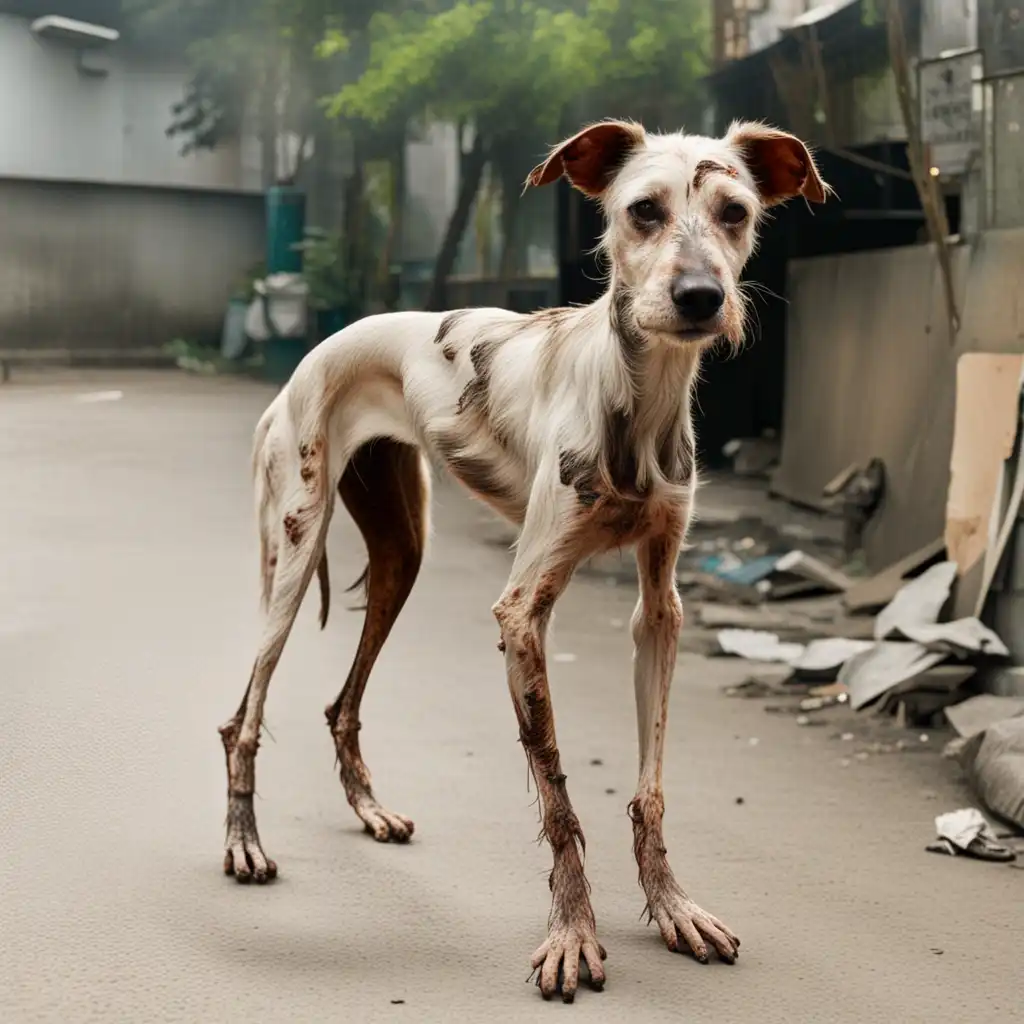
Covered with scabs, dry, rough patches on the skin.
The stray dog was thin and scabby.
scabby
ˈskæbi
लोड हो रहा है…
ˈskæbi
Covered with scabs, dry, rough patches on the skin.
The stray dog was thin and scabby.

ˈskæbi
Not good quality; shabby or mean.
He always picks up scabby furniture from the flea market.
ऑडियो लोड नहीं हो सका। कृपया बाद में फिर कोशिश करें।
The word 'scabby' is often used to describe something that is dirty, rough or covered in scabs. For example, a person might describe a piece of fruit as scabby if it has a rough, bumpy texture on the outside. Similarly, a person might describe a wound or a skin condition as 'scabby' if it is covered in scabs or rough, crusty patches. The word 'scabby' can also be used to describe a person who is unkempt or dirty-looking, often suggesting that they need to clean themselves up. Overall, 'scabby' is a negative term that is used to describe something that is unattractive or unclean.
Both crusty and scabby refer to a dry, hardened surface that forms over a wound or lesion.
However, crusty usually describes a dry or dirty surface, often associated with food or dirt, whereas scabby has a more medical connotation and refers to the hard, dry surface that forms over a healing wound.
In simpler terms, if you were to describe a piece of bread with a hard exterior as crusty, that would be correct. But if you were to use scabby to describe the same thing, it wouldn't quite make sense in this context.
If you were to describe a wound as scabby, that would be appropriate, but calling it crusty would not be medically appropriate.
शब्द खोलें: Crusty →Inferior means something that is of lesser quality, importance or value compared to something else. For example, you might say that a generic brand of cereal is inferior to a well-known brand.
Inferior describes things that are of lesser quality or value compared to something else, while scabby describes something that is covered in scabs, or as an insult to describe someone negative or untrustworthy.
शब्द खोलें: Inferior →Both leprous and scabby describe a medical condition affecting the skin.
However, leprous specifically refers to the skin disease leprosy, which is a chronic bacterial infection that causes disfiguring skin sores, nerve damage, and muscle weakness.
Leprous is used in medical contexts to describe a specific disease, whereas scabby is used more broadly to describe a range of skin conditions, both in humans and animals.
शब्द खोलें: Leprous →Mangy is typically used to describe an animal that is sick and covered with rough, patchy fur. It is also commonly used to describe something that is shabby or worn out.
Mangy describes something that is unkempt or shabby, while scabby describes something that has a rough, crusty texture.
शब्द खोलें: Mangy →Rough means uneven, irregular, or coarse to the touch.
It can refer to surfaces, textures, or edges that are not smooth. For example, rough hands, rough ground, or a rough draft.
Scabby means having scabs or rough crusts on the skin, resulting from healing wounds. Scabby is generally used in reference to skin and is not applicable to other surfaces or textures.
शब्द खोलें: Rough →Scabrous means rough, harsh, or coarse in texture or speech.
Scabby describes a physical condition while scabrous describes behavior or language.
शब्द खोलें: Scabrous →Scaly refers to something that has scales, which are bony or horny plates covering the skin of some animals or fish.
Scabby is applicable to skin conditions with scabs, while scaly describes dry or rough patches of skin or a condition with scales.
शब्द खोलें: Scaly →Shabby refers to something that is worn out, old and in poor condition. For example, someone might say "Her clothes look shabby and ripped" or "The house is shabby and needs a lot of repairs.".
Scabby refers to something with scabs on it caused by an infection or disease, while shabby refers to something that is worn out, old and in poor condition.
शब्द खोलें: Shabby →