
echelon
noun echelon
ˈeʃəlɑːn
A level or rank in an organization, a profession, or society
She has reached the upper echelons of the business world.
echelon
ˈeʃəlɑːn
Chargement…
ˈeʃəlɑːn
A level or rank in an organization, a profession, or society
She has reached the upper echelons of the business world.

ˈeʃəlɑːn
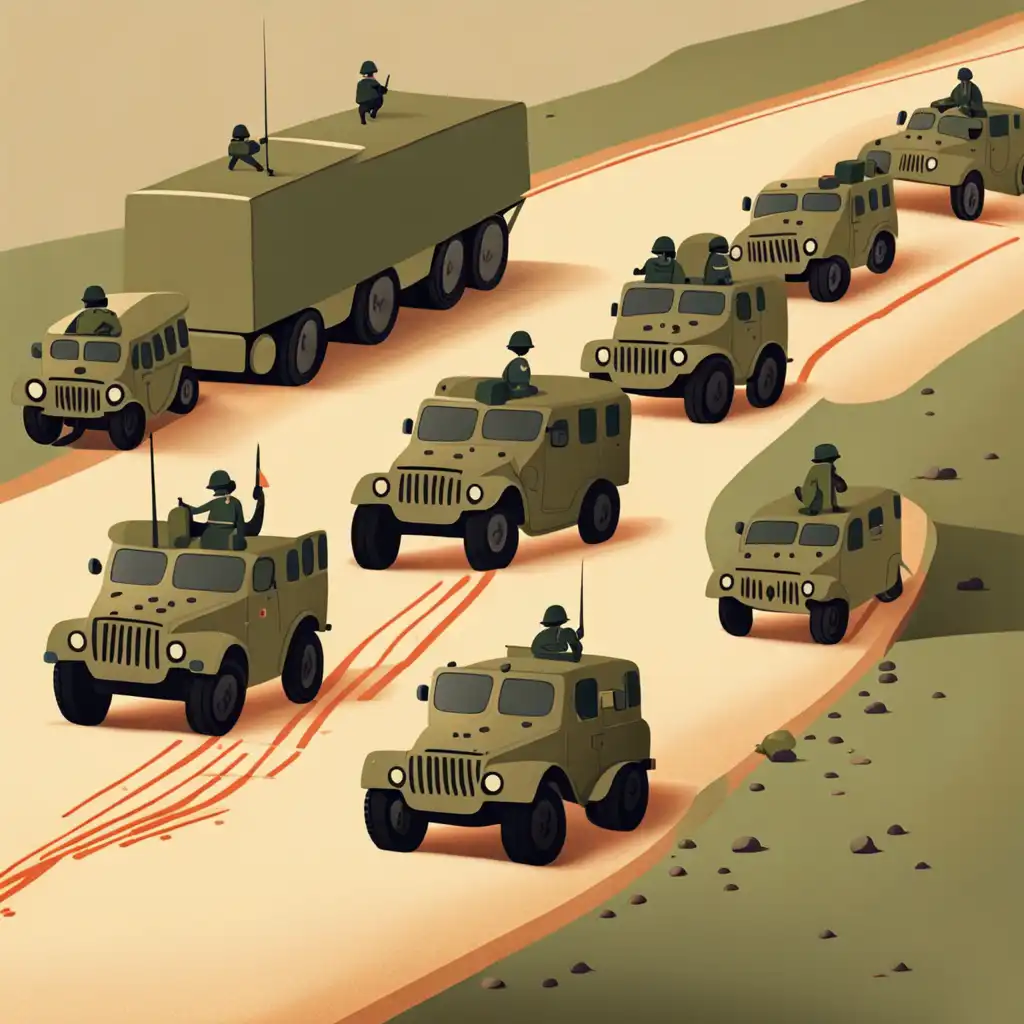
A formation of troops, ships, aircraft, or vehicles in parallel rows
The planes flew in an echelon formation.

ˈeʃəlɑːn
A step-like formation or arrangement of things or people
The audience was seated in an echelon.
ˈeʃəlɑːn
A unit of military forces smaller than a division
Enemy echelons are moving towards our borders.
Impossible de charger l’audio. Réessayez plus tard.
The word "echelon" means a level or rank in any organized system of authority or society. It is typically used when talking about people or things that are arranged in a hierarchical order. For example, a company may have different echelons of management, with the top echelon being the highest level. In military terms, an echelon refers to a formation of troops or vehicles arranged in a staggered pattern. The word echelon can also be used to describe a group of people who have achieved success or status in a particular field, like the echelon of top scientists in a certain discipline.
Degree refers to a measurement of something, in particular an angle or level of education. For example, one might have a degree in biology, which means they have completed a specific program of study at a university.
Degree is used to measure something, while echelon describes a hierarchical level or rank within an organization.
Ouvrir le mot: Degree →Grade refers to a level of quality or performance, such as a letter grade on a test or a numerical rating for a product.
Both words are applicable in different contexts. Echelon is mainly used in organizational or military settings, while grade is used more broadly to describe levels of performance, quality, or inclination.
Ouvrir le mot: Grade →Echelon and hierarchy both refer to the ranking order of people or things, but echelon specifically refers to a level or group of people, while hierarchy refers to the overall ranking structure.
The hierarchy of the company would include all of these levels in a ranking order, with the CEO at the top and entry-level employees at the bottom.
In everyday conversation, people may use the words interchangeably, but technically, echelon refers to a specific level, while hierarchy refers to the entire structure.
Ouvrir le mot: Hierarchy →Level generally refers to a specific height or position that is the same across an area or object. For example, a flat surface could be described as being level if it is entirely even throughout.
In simpler terms, level refers to a flat surface or even surface, while echelon is more about a specific kind of arrangement where things are staggered, like stairs or military formations.
Ouvrir le mot: Level →Echelon refers to a level or tier of authority, whereas rank refers to a person's position in a hierarchy.
For example, in the military, an officer can be of a certain rank, such as a Lieutenant or Captain, while also being part of a higher echelon, such as the General Staff.
Echelon is applicable when referring to levels of authority or hierarchy, while rank refers to an individual's position within that hierarchy.
Ouvrir le mot: Rank →Stage refers to a particular point in a process or development.
Echelon describes hierarchical structures, while stage describes phases or steps in a process.
Ouvrir le mot: Stage →Step refers to a single movement of lifting one's foot and putting it down in order to move forward.
In simpler terms, echelon describes levels within an organization while step describes the act of moving forward or progress.
Ouvrir le mot: Step →Stratum refers to a layer or level of something, such as a layer of rock or a social class. For example, someone might be said to be from a higher stratum of society if they are wealthy and well-educated.
Echelon is used more in the context of hierarchy or authority, while stratum is used more in the context of layers or levels of something.
Ouvrir le mot: Stratum →Tier refers to a level or layer within a structure or system, such as in a cake or computer program.
Echelon describes a hierarchical system of authority or power, while tier describes a system that is organized in layers or levels.
Ouvrir le mot: Tier →can I create an unparalleled sound to make you the listener believe that you're actually listening to a higher echelon of sound if you're not a musician and you just listen to classical music understanding how the sound is created can better help you
Voir sur YouTube ↗The commander in the field is always right and the rear echelon is wrong, unless proved otherwise.
The financial incentives and fame and glory afforded elite athletes skyrocketed, and it tipped toward the tiny upper echelon of performance. It accelerated the artificial selection for specialized bodies. And if you plot a data point for these same two dozen sports today it looks like this. The athletes' bodies have gotten
Voir sur YouTube ↗Celebrities become excluded from everyday life, kind of in exile in an echelon that is deemed better, anyway: Life of celebrity, all the fame and glamor.
break through he had wanted to be tapped for a senior society like Skull and Bones he actually hoped to be tapped for skull and bones and wasn't and he felt that later on the fact that he hadn't been part of that upper echelon of already elite University stopped him
Voir sur YouTube ↗Even though I felt, at times, 'My goodness, you're among the upper echelon,' there is still a huge void there. A huge void. It is about self-esteem. That's a thing that has always been a real complex part of my life.
I would say that many of the characters in my stories do not live in true poverty - they are not out on the street; they are not wondering if there will be anything to eat in the next week. They are people who are at the lower echelons of the economic strata.
I'm drawn as well to the lower echelons of things because it struck me a long time ago that it didn't really matter on what level people were working on anything; it was just as important to them as the people working on what's perceived as a higher level.
How many black people are there in the higher echelons of any industry? We can talk about journalism, we can talk about politics. So why should football be any different?
Most organisations do not actively seek out input from their lower echelons.
If you want to win, when you want to get to the upper echelons of this league, everybody on the roster is going to sacrifice.
All the guys in the upper echelon of this sport, if one guy's feeling at his best, and one guy's feeling a little under the weather, not at his best that month or that day, you could see drastic changes in performances and victories and losses.
Football spectators appreciate a bit of loyalty, and we're seeing that less and less. There are echelons of football, as in society, where some players are clearly mercenaries. I regret in a way that somehow the local identification, the local bonding between the community and its football team has been commercialised to such an extent.