
relic
noun relic
ˈrelɪk
An object, tradition, or system from the past that continues to exist
The ancient monuments are relics of a time when the area was a thriving civilization.
relic
ˈrelɪk
불러오는 중…
ˈrelɪk
An object, tradition, or system from the past that continues to exist
The ancient monuments are relics of a time when the area was a thriving civilization.
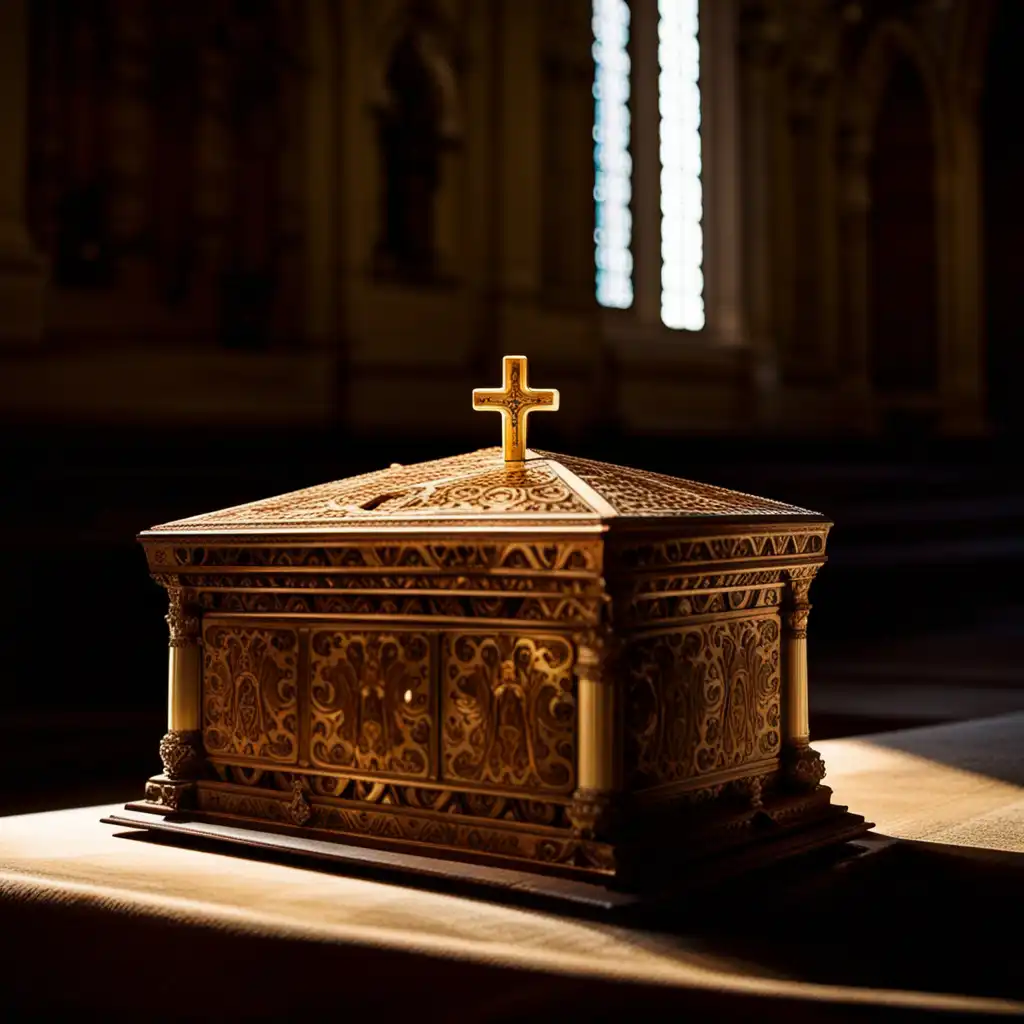
ˈrelɪk
In religion, a part of the body or clothing of a holy person, or a thing closely connected with their life, that is kept and honored
The monastic church possesses a sacred relic, said to be a bone from the finger of Saint Catherine.
오디오를 불러오지 못했어요. 잠시 후 다시 시도해 주세요.
The word 'relic' is used to refer to something that is very old and has cultural, historical, or religious value. It could be an object or a building that is ancient and is considered important for some reason. For example, a religious relic could be a bone, piece of clothing, or other object that is associated with a saint, and is believed to have special religious significance. A building, monument or structure could also be considered a relic if it is ancient and has cultural or historical significance. The word 'relic' is often used in museums, historical sites, and places of worship to describe items that are considered valuable and worth preserving for future generations to see and learn about.
An artefact is an object made by humans, usually it has some cultural, historical or archaeological value. For example, pottery, tools, jewellery, and weapons are all artefacts.
A relic is an artefact that has religious or spiritual importance.
However, the term artefact is used more broadly, while the term relic is specific to religious or spiritual contexts.
단어 열기: Artefact →A memento is an object that serves as a reminder of a person or experience, often something small and easily transportable like a keychain or a photo.
A memento is a personal reminder while a relic is a significant object with religious or historical importance.
단어 열기: Memento →Memorabilia refers to objects or items that are kept or collected because they hold personal or sentimental value or special memories.
Memorabilia is personal or sentimental, while relics are historically, religiously, or culturally significant objects.
단어 열기: Memorabilia →Remain refers to something that is left over or still existing after parts have been removed, used, or destroyed.
For example, the remains of a building after it has been demolished, or the remains of a meal after it's been eaten.
Relic refers to something old and historically valuable, while remain refers to something left over or remaining after something else has been removed or destroyed.
단어 열기: Remain →A remnant refers to a remaining part or portion of something that has been destroyed or lost. It is a surviving piece of something that is no longer intact or complete.
For example, a remnant of a tapestry that has been torn or a piece of a building that has not been destroyed.
In summary, relics are significant items of historic or cultural value, while remnants are surviving pieces of something that is no longer complete.
단어 열기: Remnant →A souvenir is a small object that is bought as a reminder of a trip or a place.
It can be something like a keychain, a t-shirt, or a magnet with the name of a city or a landmark on it. Souvenirs are often sold in gift shops or tourist destinations.
The difference between the two words is that a relic is old and valuable and has historical or religious significance, while a souvenir is a small item that serves as a memory of a trip or a place.
단어 열기: Souvenir →A trace refers to a sign or indication that something existed or happened, but which is not itself a physical object. For example, footprints in the sand would be considered a trace.
Relics are usually physical objects that have been preserved or recovered from the past, while traces are more intangible signs that something may have taken place.
Both words are applicable in different contexts. Relics are often associated with religion or history, while traces are often used in forensic or scientific contexts to track the movements or behaviour of people or animals.
단어 열기: Trace →Vestige refers to a trace or remnant of something that no longer exists or is disappearing. It is a less tangible or obvious reminder of something that once was.
For example, a scar on a landscape that was caused by a glacier during the ice age can be considered a vestige.
A relic is a physical artifact while a vestige is a trace or remnant of something that existed in the past. Relics are applicable in history, archaeology, and cultural studies, while vestiges can be applicable in natural sciences and landscapes.
단어 열기: Vestige →Anatomical structures, or physiological mechanisms with no apparent purpose present challenges to evolutionary biologists. Do such structures serve some hidden function that hasn't yet been discovered? Or are they relics of our evolutionary past, having once served some important purpose
YouTube에서 보기 ↗Contracts are not a holy relic in football. You can like this attitude or not, but it's the truth. Sometimes you have to think about if it is meaningful to try out a new impulse.
when the crown is put on public display people from all over the world come to attend mass and get close to the relic
YouTube에서 보기 ↗Madly, futilely, I wrote novel after novel, eight in all, that failed to find a publisher. I persisted because for me the novel was the supreme literary form - not just one among many, not a relic of the past, but the way we communicate to one another the subtlest truths about this business of living.
And it turns out that trying to understand the darkness is something that's fascinated humans for thousands of years maybe forever. And we know this because we find their ancient relics of their attempts to map the sky.
YouTube에서 보기 ↗Try as you will, you cannot annihilate that eternal relic of the human heart, love.
this bizarre-looking creature is a relic from a time before dinosaurs in most parts of the world competition from crocodiles has driven these magnificent amphibians to extinction but here the
YouTube에서 보기 ↗I'm kind of like a relic from another era.
because people came to these they got connected - the idea passionately connected to the concept felt like they could add value to that nonprofit as opposed to just dumping money in it we do it around ideas and problems there are even relic
YouTube에서 보기 ↗Relics are treasured as something close to the divine.
Though the ancient texts there were regarded by some as irrelevant relics of the past, Confucius was inspired by them. Through study and reflection, Confucius came to believe that human character is formed in the family and by education in ritual literature and history.
YouTube에서 보기 ↗Surveillance induced morality: relics of cultural retardation.
human skeletons, ancient runic texts, and artifacts from the New World. In other curiosity cabinets, you could find genetic anomalies, precious stones, works of art, and religious and historic relics.
YouTube에서 보기 ↗I'm in a museum. I'm a relic.
Unfortunately it didn’t help. Not only was his army defeated, but as they fled, the Emperor was stabbed in the buttocks. To make matters worse a strong wind made the relic too heavy to carry, so he stashed it in some bushes as he escaped. But even as he fled,
YouTube에서 보기 ↗Any relic of the dead is precious, if they were valued living.
but while universes in eternal inflation are isolated brane universes could bump into each other. An echo of such a collision may appear in the cosmic microwave background —a soup of radiation throughout our universe that’s a relic from an early Big Bang era.
YouTube에서 보기 ↗We could imagine nothing pleasanter than to spend all of our lives digging for relics of the past.
and showing you some of the designs that we have in nature. And so I have my first slide to talk about the dawning of the universe and what I call the cosmic scene investigation that is looking at the relics of creation and inferring what happened at the beginning,
YouTube에서 보기 ↗Memorials become relics if they do not stir our modern conscience.