probability
noun probability
ˌprɑːbəˈbɪləti
The chance that a specific event will happen
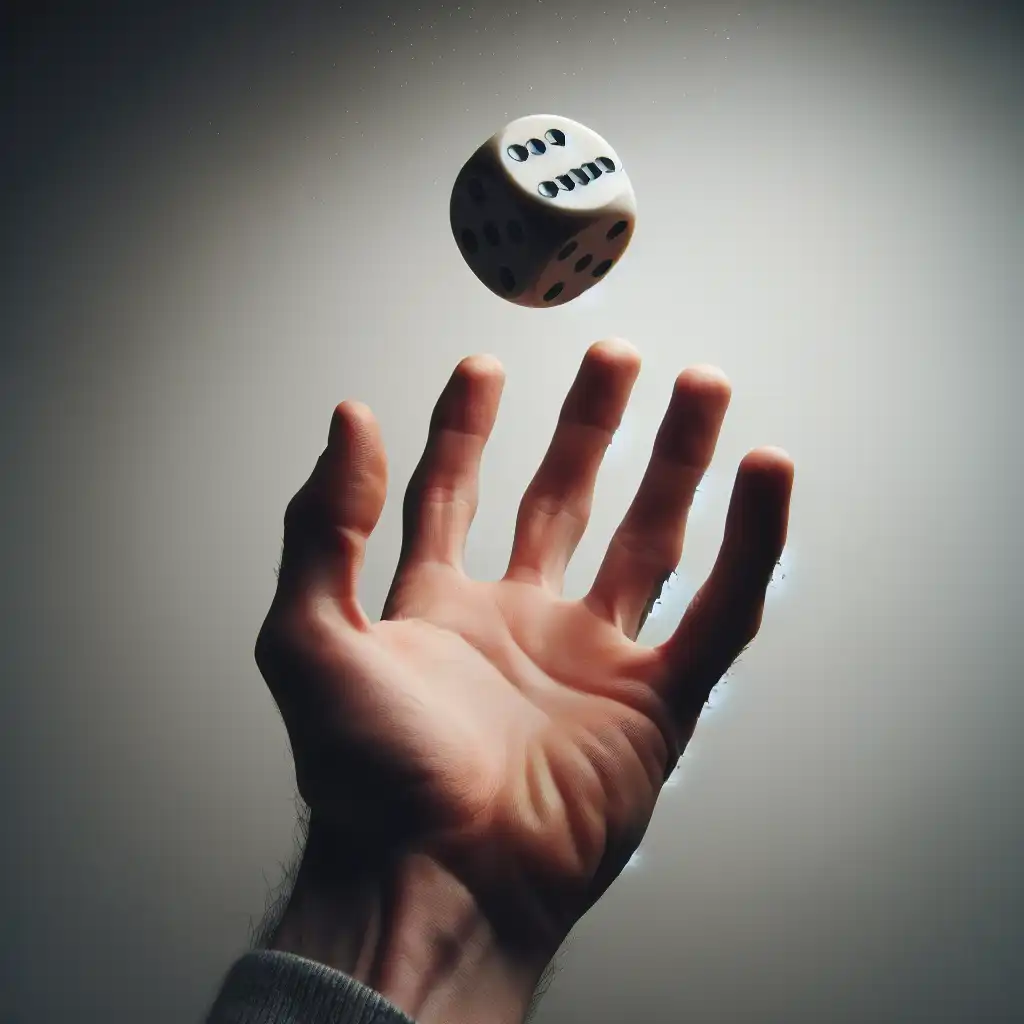
The probability of getting a six when you throw a die is one in six.
probability
ˌprɑːbəˈbɪləti
Cargando…
ˌprɑːbəˈbɪləti
The chance that a specific event will happen
The probability of getting a six when you throw a die is one in six.

ˌprɑːbəˈbɪləti
A field of math that deals with hot likely certain events are to happen
In probability, we study the likelihood of an event's occurrence.
ˌprɑːbəˈbɪləti
The relative frequency of occurrence of an event
The empirical probability of an event is calculated from the observations.
No se pudo cargar el audio. Inténtalo de nuevo más tarde.
Probability is the likelihood or chance of something happening. It can be used in many different situations, such as predicting the weather, the outcome of a sports game, or the likelihood of getting a certain job. For example, if someone says there is a high probability of rain today, it means there is a high chance that it will rain. If someone says there is a low probability of winning the lottery, it means that it is not likely that they will win. Probability is important in many areas of life, including mathematics, science, and economics.
Anticipation means expecting or looking forward to something happening in the future, while probability refers to the likelihood or chance that something will happen.
Anticipation is applicable when someone is excited about and expecting something to happen in the future, such as a vacation or a concert.
Anticipation is feeling excited or hopeful about something while probability is the likelihood or chance that something will happen.
Abrir palabra: Anticipation →Chance refers to the possibility of something happening or not happening.
- Winning the lottery is a matter of chance because it is unpredictable and influenced by external factors.
- However, the probability of rolling a dice and getting a certain number is predictable because there are only six possible outcomes and each has an equal chance of occurring.
Generally, chance is more applicable in situations where multiple outcomes are possible and uncertainty is involved, while probability is more applicable in settings where outcomes can be predicted with relative accuracy based on previous data or evidence.
Abrir palabra: Chance →Expectancy refers to the anticipated outcome or result of a specific event or situation.
It is often based on past experiences or knowledge. For example, you can have an expectancy of receiving a good grade on a test if you studied hard and did well on similar tests in the past.
Expectancy refers to what we expect to happen based on prior knowledge, while probability refers to the statistical measure of the likelihood that something will occur.
Expectancy is more applicable in cases where past experiences are taken into account, while probability is more applicable in mathematical or statistical contexts.
Abrir palabra: Expectancy →Improbability refers to the opposite – the unlikelihood or impossibility of something happening. For example, it's highly improbable that a person can jump from the ground to the top of a building with just one leap.
Probability refers to the chances of something happening, while improbability refers to something that is unlikely or almost impossible to happen.
Abrir palabra: Improbability →Both likelihood and probability are related to the chance of an event occurring.
Likelihood refers to the possibility of an event occurring based on available information or evidence.
It is often used in statistical analysis to describe the chance of a hypothesis being true based on observed data. For example, a scientist may calculate the likelihood of a certain treatment being effective based on the results of a clinical trial.
Probability is used to calculate the chance of an event occurring based on the number of possible outcomes, while likelihood describes the possibility of an event occurring based on observed data.
Abrir palabra: Likelihood →Odd refers to something unusual or uncommon, while probability refers to the likelihood of something happening.
Odd is applicable when describing something that is not expected or typical, such as an odd-shaped object or an odd behavior.
Abrir palabra: Odd →Possibility refers to the existence or occurrence of something that may or may not happen. It may have a chance of happening or not.
In simpler terms, possibility is whether something can happen or not, while probability is the measure of how likely it is to happen.
Possibility is applicable when discussing all potential outcomes, while probability is used when discussing the likelihood of specific outcomes.
Abrir palabra: Possibility →Risk refers to the potential for harm or loss that may result from a particular action or decision. For example, driving a car carries a risk of getting into an accident.
While probability deals with numbers and statistics, risk involves more qualitative assessments and factors such as safety, security, and potential consequences.
Both probability and risk are applicable in many areas of our lives. We use probability to make predictions and decisions based on data, while we use risk management to assess and minimize potential harm or loss.
Abrir palabra: Risk →the frequency of a specific outcome like a player two win, will approach its theoretical probability, that value we got by writing down all the possibilities and counting up the ones for each outcome. So if you sat on that desert island playing dice forever,
Ver en YouTube ↗We think that life develops spontaneously on Earth, so it must be possible for life to develop on suitable planets elsewhere in the universe. But we don't know the probability that a planet develops life.
So the question is, how far are we from being able to match those tricks? A couple of years ago, we did a survey of some of the world's leading A.I. experts, to see what they think and one of the questions we asked was, "By which year do you think there is a 50 percent probability
Ver en YouTube ↗I'm trying to construct a world that maximises the probability that SpaceX continues its mission without me.
miraculous well no as you said before it's just a random set of cards what if it was first six digits of your social security number what if it were the last six digits of your social security number the first six digits of your phone number sometimes it's not actually miraculous sometimes it's just probability playing its tricks on you
Ver en YouTube ↗But to us, probability is the very guide of life.
higher probability of those cells mutating and becoming cancerous and that's why we associate cancer with older age today but in the past we're finding that a high number of middle-aged adults for developing cancer and this raises some interesting questions to answer questions like these
Ver en YouTube ↗Life is a school of probability.
there was quite a backlash from mainstream climate science to be talking about these high impact events possibly because many people assume they were be of low probability but there's a lot more interest in them now
Ver en YouTube ↗It would be so weird if we knew just as much as we needed to know to answer all the questions of the universe. Wouldn't that be freaky? Whereas the probability is high that there is a vast reality that we have no way to perceive, that's actually bearing down on us now and influencing everything.
The point is that information affects probability. And conditional probability isn't just the stuff of abstract mathematical games. It pops up in the real world as well. Computers and other devices use conditional probability
Ver en YouTube ↗One important measurement issue concerns the fat tails problem that I mentioned earlier. VAR is concerned with extreme outcomes. If the tails of the probability distributions we are using are too thin, our VAR measures are likely to be too low.
Because of these interactions, knowing both parents' blood types lets us predict the relative probability of their children's blood types. Why do blood types matter? For blood transfusions, finding the correct one is a matter of life and death.
Ver en YouTube ↗Hope is not the basis for policy. Wise policymakers analyze major issues such as immigration carefully and look at facts and probabilities instead of just hoping for the best.
We can clearly identify features of the wave pattern as a whole, most importantly its wavelength, which is the distance between two neighboring peaks, or two neighboring valleys. But we can't assign it a single position. It has a good probability of being in lots of different places.
Ver en YouTube ↗They were being driven to a prison, through no fault of their own, in all probability for life. In comparison, how much easier it would be to walk to the gallows than to this tomb of living horrors!
These days scientists know how you inherit characteristics from your parents. They're able to calculate probabilities of having a specific trait or getting a genetic disease according to the information from the parents and the family history. But how is this possible? To understand how traits pass from one living being to its descendants,
Ver en YouTube ↗The nice thing about baseball is that all of the possible outcomes are known - it's not quite as messy as the real world. That makes the game an excellent playground for probability.
Recent studies have also found a link between obesity and variations in the bacteria species that live in our digestive systems. No matter the cause obesity is an escalating global epidemic. It substantially raises the probability of diseases, like diabetes, heart disease,
Ver en YouTube ↗We don't know the probabilities of future events. Still, you have to take action, and so you do it on gut feeling. That's the world we live in.