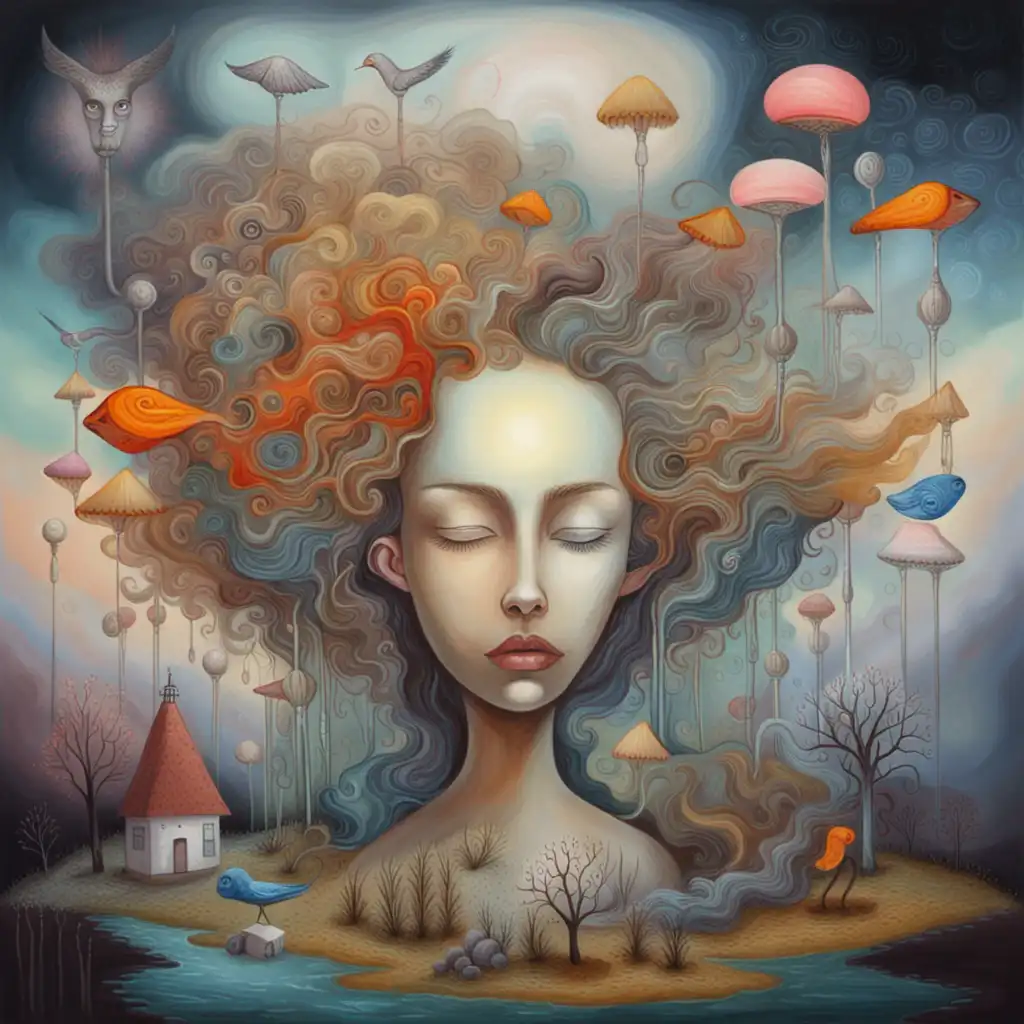
surrealist
noun surrealist
səˈriːəlɪst
A person who follows or practices surrealism.
The surrealist used unusual, dreamlike images in his artwork.
surrealist
səˈriːəlɪst
Đang tải…
səˈriːəlɪst
A person who follows or practices surrealism.
The surrealist used unusual, dreamlike images in his artwork.
səˈriːəlɪst
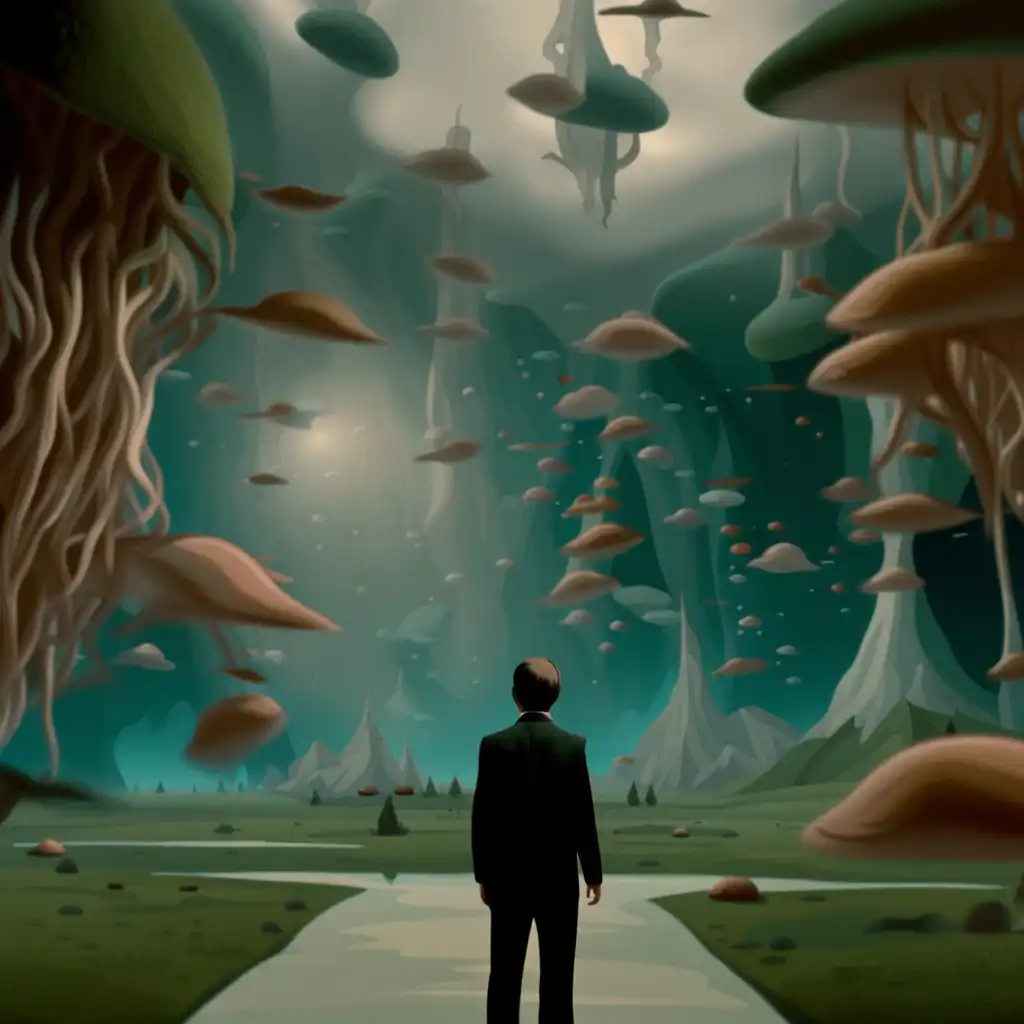
Related to or characteristic of surrealism, an art and literature movement that seeks to express the subconscious and non-rational aspects of humanity by using fantastical, dreamlike imagery.
The film had a surrealist style, blending dreams and reality in an illogical way.
Không tải được âm thanh. Vui lòng thử lại sau.
The word "surrealist" is usually used to describe art, literature, or movies that are strange and dreamlike in a way that doesn't make sense in the real world. For example, Salvador Dali was a famous surrealist painter who created images of imaginary creatures and landscapes that looked like they were from another world. You can also use "surrealist" to describe a situation or event that is weird or unexpected in a way that seems impossible or illogical. So, if something seems strange and makes you feel like you're in a dream or a fantasy, you can say it's surrealist.
Both absurd and surrealist describe things that are unusual or weird, but they have different meanings.
Absurd is used when something does not make sense or is illogical in a way that seems silly or ridiculous. For example, if a movie had a plot where a talking pineapple saved the world from aliens, that would be considered absurd.
Absurd refers to things that are illogical or ridiculous, while surrealist refers to things that are dreamlike or fantastical.
Mở từ: Absurd →Bizarre refers to something that is strange, unusual or unexpected. It often refers to things that are weird or perplexing because they don't fit our understanding of how things should be.
For example, seeing a giant chicken walking down the street would be considered bizarre.
Bizarre refers to things that are strange or unexpected, while surrealistic refers to things that are dreamlike or fantasy-like.
Mở từ: Bizarre →Conventional means ordinary, typical, or commonly accepted. It refers to things that follow traditional or established practices and ideas.
For instance, conventional clothing would be what most people wear in day-to-day life.
Conventional is used when something is considered normal or standard, while surrealist is used when something is unusual or unexpected.
Mở từ: Conventional →Dreamlike refers to a state or feeling similar to a dream, where things seem hazy, fluid or hard to comprehend, like a sense of being lost in a dream-like state.
Dreamlike is a feeling or state, while surrealist is a type of art or artistic expression. Dreamlike is applicable when describing a state of mind or atmosphere, while surrealist is applicable in describing an artistic style or genre.
Mở từ: Dreamlike →Fantastic means amazing, wonderful, or imaginative in a positive way. Example: "The view from the top of the mountain was fantastic.".
Fantastic describes something that is impressive or enjoyable, while surrealist describes creative works that challenge our understanding of reality.
Mở từ: Fantastic →Imaginative means someone who has a lot of imagination, they can think of creative and unique ideas or things.
Mở từ: Imaginative →Real refers to things that actually exist and can be seen, touched, heard or felt. For example, a chair is a real object that we can touch and sit on.
Surrealist refers to things that are bizarre, dreamlike or surreal, and might not exist in reality. For example, a painting of a melted clock or a flying elephant might be described as surrealist.
Real is used to refer to things that are straightforward and concrete, while surrealist describes things that are more abstract, unusual or imaginative.
Mở từ: Real →Whimsical, on the other hand, refers to something that is playful, fanciful and lighthearted. It often involves elements of humor or gentle satire, with a focus on the creative and imaginative aspects of life.
Surrealist describes something that is bizarre and dreamlike, while whimsical describes something that is playful and fanciful.
Mở từ: Whimsical →The poet who painted...
Xem trên YouTube ↗I spend several days at a time without enough sleep. At first, normal activities become annoying. When you are too tired to eat, you really need some sleep. A few days later, things become strange. Loud noises become louder and more startling, familiar sounds become unfamiliar, and life reinvents itself as a surrealist dream.
Titus Kaphar: Can beauty...
Xem trên YouTube ↗I would love to have been a painter in the tradition of the surrealist painters who I admire so much.
I was influenced by surrealist poetry and painting as were thousands of other people, and it seems to me to have become a part of the way I write, but it's not.
My son got me into 'The Mighty Boosh.' I just love that surrealist humour.
I like Dali and Magritte. I also like the Scottish artist John Byrne, another surrealist.
Really, I do not know whether my paintings are surrealist or not, but I do know that they are the frankest expression of myself.
The violent quarrel between the abstractionists and the surrealists seems to me quite unnecessary. All good art has contained both abstract and surrealist elements, just as it has contained both classical and romantic elements - order and surprise, intellect and imagination, conscious and unconscious.
To be a surrealist means barring from your mind all remembrance of what you have seen, and being always on the lookout for what has never been.
The Big Sleep' is an unsentimental, surrealist excitement in which most of the men in Hollywood's underworld are murdered and most of the women go for an honest but not unwilling private sleuth (Humphrey Bogart).
The last hundred years have been retinal; even the cubists were. The surrealists tried to free themselves, and earlier so had the dadaists, but unfortunately, these latter were nihilists and didn't produce enough to prove their point, which, by the way, they didn't have to prove - according to their theory.