capillary
noun capillary
ˈkæpəleri
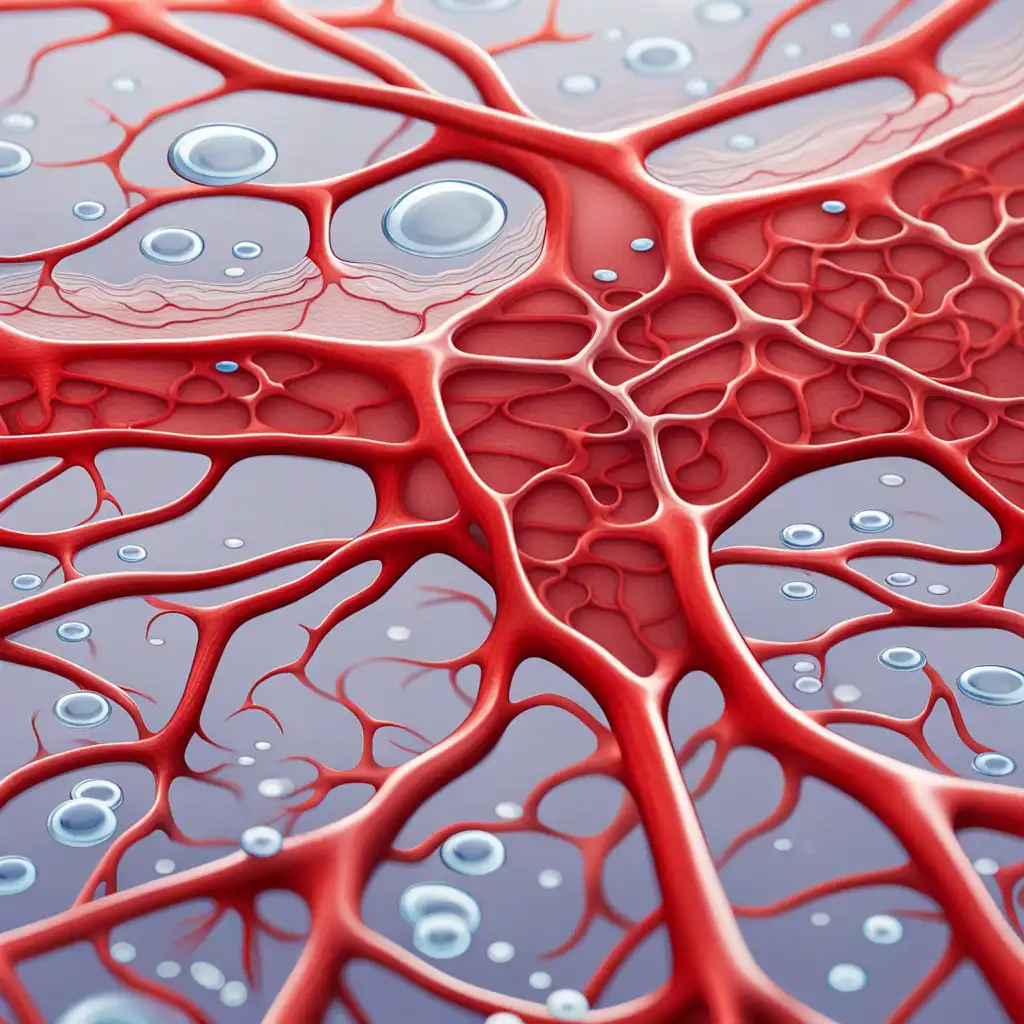
Small, thin blood vessel that connects veins with arteries
Oxygen is delivered to the body cells through capillaries.
capillary
ˈkæpəleri
読み込み中…
ˈkæpəleri
Small, thin blood vessel that connects veins with arteries
Oxygen is delivered to the body cells through capillaries.

ˈkæpəleri
Relating to or in the form of capillaries
Capillary action allows water to move up through small spaces in the ground.
ˈkæpəleri
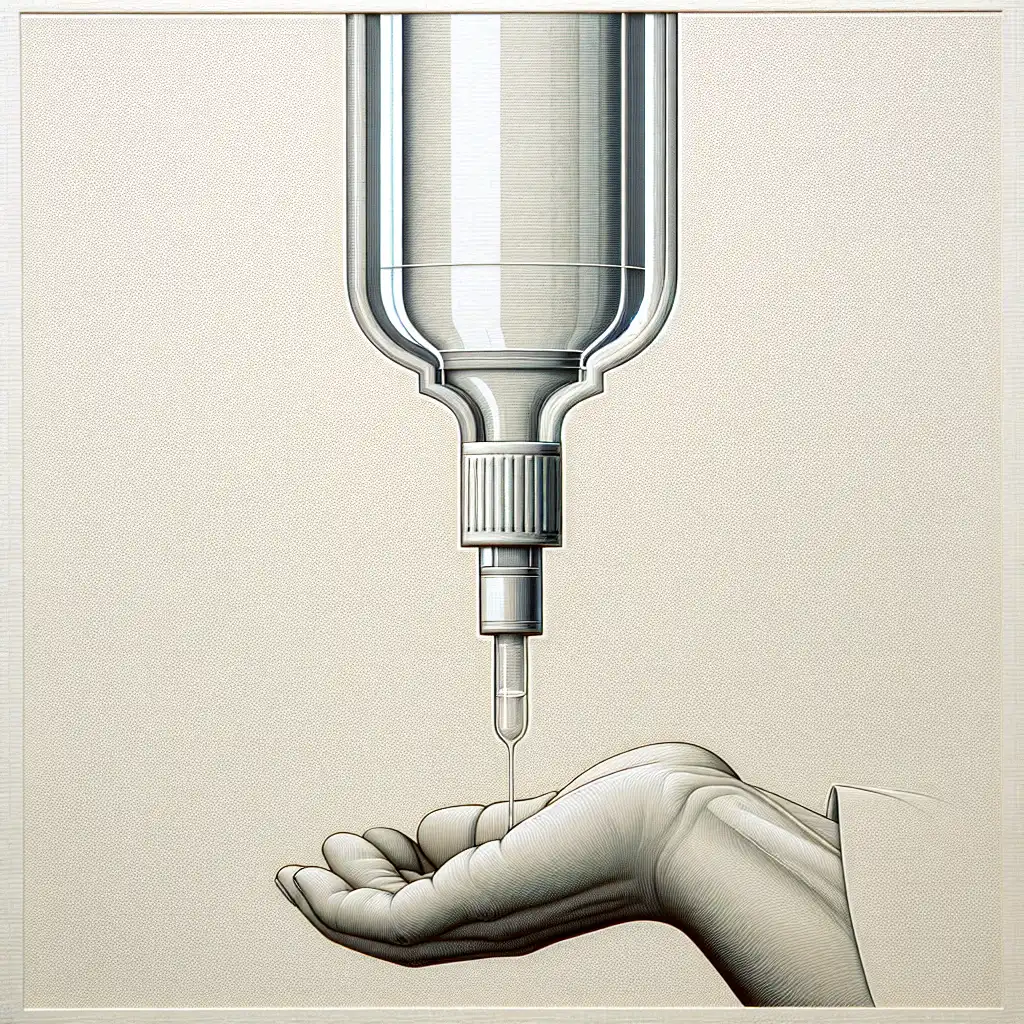
A tube that has an internal diameter of hairlike thinness
He carefully inserted the medicine through the capillary tube.
音声を読み込めませんでした。しばらくしてからもう一度お試しください。
Capillary is a medical term used for the small and thin blood vessels in our body that carry blood from our heart to different organs and tissues. These vessels are called capillaries because they are very small, just like the size of a hair. Capillaries are very important for our body's overall health, as they provide nutrients and oxygen to different parts of our body. The use of the word "capillary" is usually limited to biology and medical contexts.
It describes a narrow tube or passage. Delicate refers to something that is fragile or easily broken, like a delicate piece of ceramic or glass.
To summarize, capillary is applicable to describe something that is narrow or small in size, while delicate is applicable to describe something that requires careful handling and is easily broken.
単語を開く: Delicate →Fine generally means something that is thin, delicate or small in size. It has a broader use and is applicable in everyday language.
For example, you might use the word capillary when talking about the circulatory system or medical procedures, while you might use the word fine to describe a piece of artwork, a strand of hair, or the texture of a fabric.
単語を開く: Fine →Minute refers to something very small or tiny.
Capillary is a medical term used to describe a specific part of the body, while minute is a general term used to describe something that is small.
単語を開く: Minute →It is typically used in medical and scientific contexts. Narrow simply means not wide and can describe a wide range of things, such as a narrow road or a narrow hallway.
単語を開く: Narrow →Slender describes something that is thin and delicate in appearance or build, such as a slender tree trunk or a person with a slender figure.
Both words are applicable in different contexts. Capillary is mostly used in the field of biology and medicine to refer to the smallest blood vessels in the body, while slender is used in describing physical appearance or composition of objects, such as trees or buildings.
Capillary describes a narrow tube-like structure, while slender describes something thin and delicate in appearance or build.
単語を開く: Slender →Small refers to the general size of an object or organism, while capillary refers to a specific type of blood vessel that is very small and narrow.
Small can be used in many contexts, such as describing the size of a toy or the portion size of a meal. Capillary is used specifically in biology and medicine to describe the tiny blood vessels that deliver oxygen and nutrients to our body's tissues.
Small refers to size in general, while capillary refers to a specific type of very small blood vessel.
単語を開く: Small →Capillary refers to a small, thin blood vessel in the body that carries blood to the cells. It is a specific term used in biology and medicine.
Thin refers to something that has a small width or thickness in comparison to its length or size. It is a general term that can describe anything that is not thick or substantial.
Capillary is applicable in the context of biology and medicine when discussing blood vessels. Thin is applicable in any context when describing something that is not thick or substantial.
単語を開く: Thin →Tiny on the other hand, is a general term used to describe something that is very small in size.
So, while capillary is more specific and medical, tiny is a more general term that can be used in any context to describe something small.
単語を開く: Tiny →Oxygen’s surprisingly...
YouTube で見る ↗I found it possible to observe at least the superficial capillaries of muscles both in the frog and in mammals through a binocular microscope, using strong reflected light as a source of illumination. Resting muscles observed in this way are usually quite pale, and the microscope reveals only a few capillaries at fairly regular intervals.
Can we eat to starve...
YouTube で見る ↗Games is like hardwired plumbing in the house of pop. It's not pop itself, its sort of like the behind-the-scenes arteries and capillaries of pop music.
Pink Dolphins? %\PIPE% Weird...
YouTube で見る ↗Dead bodies do get a grayish blue/purple hue because blood pools in the capillaries and the body starts to decompose. It's not smurf blue, but it's not a pleasant shade.
Encouraging curiosity-dri...
YouTube で見る ↗Every glass thermometer has subtle variations in the size and shape of the bulb at the bottom and the capillary tube inside, as well as variations in the width of gradations on the side. The compounded effect of these uncertainties is that each thermometer reads temperature slightly differently.
Why do we itch? - Emma...
YouTube で見る ↗Since muscular contractions are usually more or less regularly alternated with relaxations, the system of valves makes of the veins of every muscle a very effective pump, capable of maintaining a low pressure in the muscle capillaries.
How tall can a tree...
YouTube で見る ↗Elephant Guts %\PIPE% National...
YouTube で見る ↗The Exhilarating Peace...
YouTube で見る ↗See How Cracked Skin...
YouTube で見る ↗Nina Tandon: Caring for...
YouTube で見る ↗