polyphonic
adjective polyphonic
ˌpɑːliˈfɑːnɪk
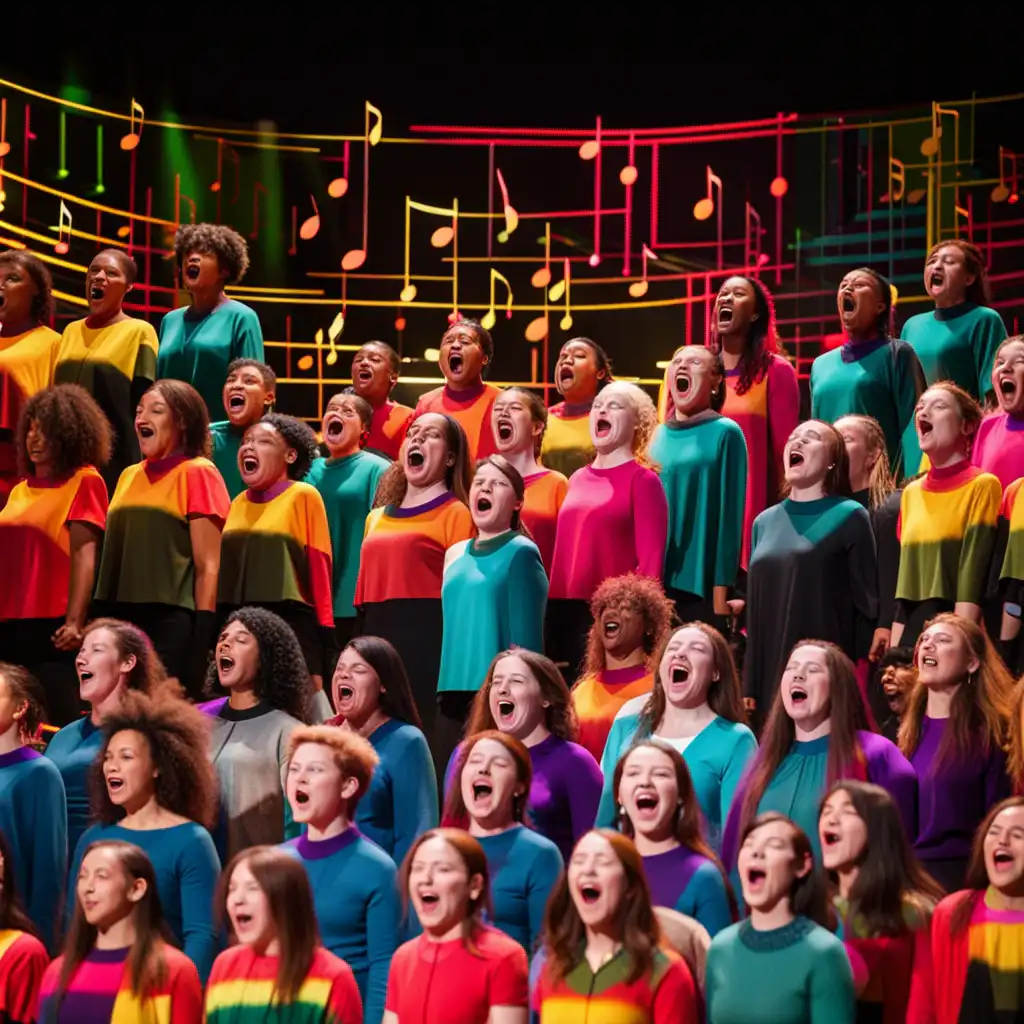
Involving or having many different musical tones or voices at the same time.
The choir's polyphonic music was both complex and beautiful.
polyphonic
ˌpɑːliˈfɑːnɪk
Cargando…
ˌpɑːliˈfɑːnɪk
Involving or having many different musical tones or voices at the same time.
The choir's polyphonic music was both complex and beautiful.

ˌpɑːliˈfɑːnɪk
In computing, having the capacity to produce or handle more than one sound or voice at the same time.
The polyphonic synthesizer played several notes simultaneously.
No se pudo cargar el audio. Inténtalo de nuevo más tarde.
Polyphonic is a word used to describe music where multiple melodies are happening at the same time. It's like listening to different instruments playing different tunes, but they all come together to make a beautiful song. This word is often used when talking about classical music or choral arrangements, but can also be used to describe other genres. For example, a polyphonic ringtone would have several different sounds playing simultaneously.
Complex generally means something that is made up of various interconnected parts or aspects. It is applicable in many contexts, such as a complex piece of machinery, a complex math problem, or a complex relationship between two people.
Complex can be used in many different contexts to describe something with multiple interconnected parts, while polyphonic is a term specific to music with multiple independent melodies.
Abrir palabra: Complex →Both contrapuntal and polyphonic refer to the use of multiple melodies at the same time in a piece of music.
Contrapuntal refers specifically to the use of melodies that are written to complement each other and create harmonic tension and resolution.
So, in short, polyphonic refers to multiple melodies happening at the same time, while contrapuntal refers to the use of melodies that complement each other to create harmonies.
Abrir palabra: Contrapuntal →Harmonizing refers to creating a pleasing combination of musical tones that sound good together. It involves adding different notes or chords to a main melody to create a richer, fuller sound.
So, while harmonizing is a technique used to enhance a single melody, polyphony involves multiple melodies that are meant to be heard at the same time.
Harmonizing is applicable in almost any genre of music, while polyphonic textures are particularly common in classical and choral music.
Abrir palabra: Harmonize →Intricate refers to something that is highly complex or detailed, often with many interconnected parts.
Intricate refers to something complex and detailed, while polyphonic refers specifically to music with multiple voices or melodies.
Abrir palabra: Intricate →A layer refers to multiple tracks or elements stacked on top of each other, whereas polyphonic refers to multiple simultaneous notes or melodies being played at the same time.
When you layer sounds, you are creating a thicker, fuller sound by adding different elements together. For example, in electronic music production, you might have a layer of drums, a layer of synths, and a layer of vocals all playing at the same time to create a cohesive track.
In short, layering is applicable in music production when you want to create a fuller sound, and polyphonic is applicable when you want to create multiple melodies or harmonies working together.
Abrir palabra: Layer →the men pound out a cloth out of a special tree, and the women who are also the praise singers, paint interweaving patterns that are the same in structure as the polyphonic structures that they use in their singing --
Ver en YouTube ↗The guitar is a small orchestra. It is polyphonic. Every string is a different color, a different voice.
that's why look at the cookies Cub I'm starting to feel like I could download a polyphonic ringtone he was taking us
Ver en YouTube ↗In 'Where the Air is Clear', Carlos Fuentes composed a polyphonic portrait of Mexico City amid the growth and modernization brought on by the economic boom of the 1950s. The novel can be read as a jazz interpretation - free and in a Mexican key - of John Dos Passos' 'Manhattan Transfer'.