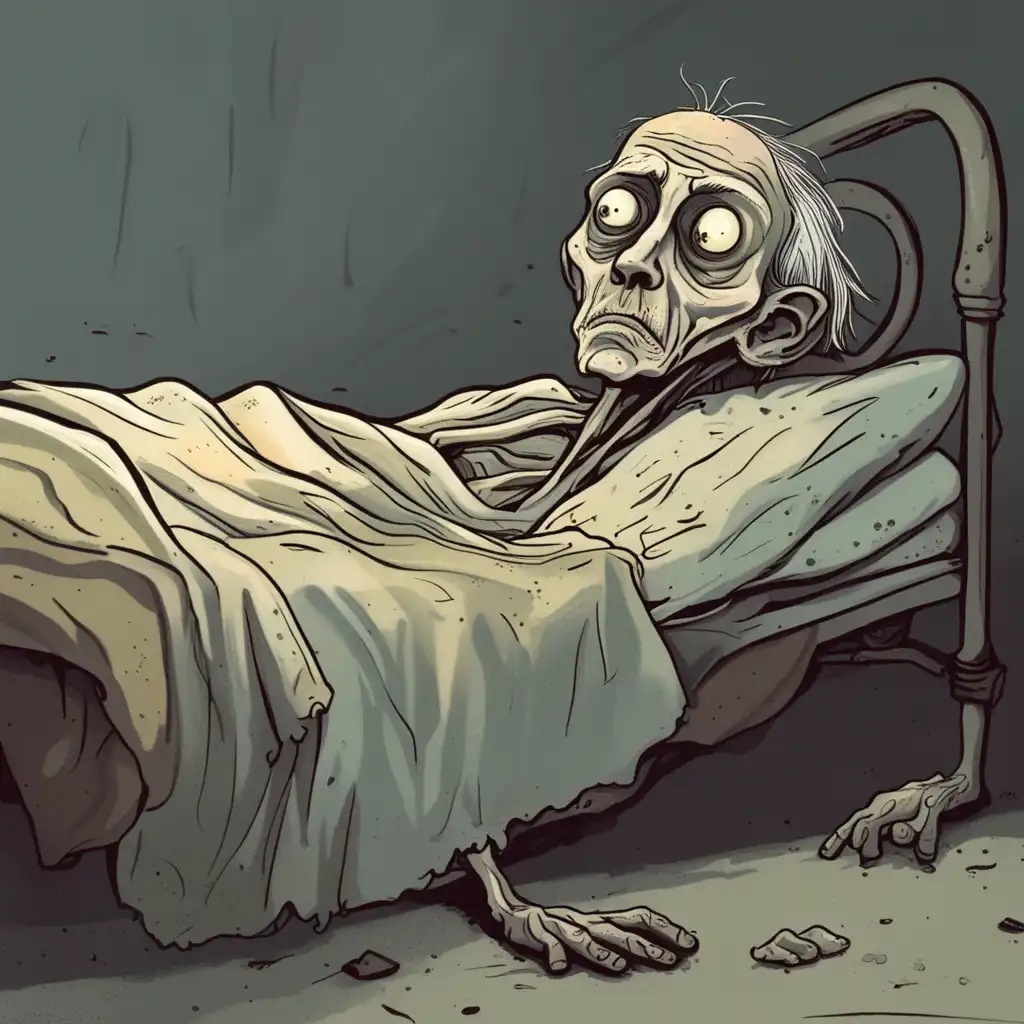
gaunt
adjective gaunt
ɡɔːnt
Very skinny, especially because of sickness or hunger.
His illness had left him rather gaunt.
gaunt
ɡɔːnt
Đang tải…
ɡɔːnt
Very skinny, especially because of sickness or hunger.
His illness had left him rather gaunt.

ɡɔːnt
Sad, gloomy.
His face had a gaunt expression after hearing the bad news.
Không tải được âm thanh. Vui lòng thử lại sau.
The word 'gaunt' is used to describe someone who is very thin and frail, usually because they have been ill or are not eating enough. It can also be used to describe a building or landscape that is bleak or barren. For example, "Her face looked gaunt after being sick for weeks," or "The abandoned house was gaunt and eerie."
Bony describes someone or something that has a lot of bones showing or has a skeletal appearance. It usually implies that the person or animal is thin, but it doesn't necessarily mean that they are unhealthy or unattractive.
If you want to describe someone who is thin but still looks healthy and attractive, you might use the word "bony." But if you want to describe someone who looks thin and unhealthy, you might use the word "gaunt."
Mở từ: Bony →Emaciated refers to someone or something that is extremely thin or weak because of illness or lack of food. It suggests a state of extreme physical weakness or exhaustion.
In simpler terms, emaciated suggests a state of extreme thinness and weakness due to lack of nutrition, while gaunt suggests thinness with a bony and haggard appearance due to various factors such as illness or aging.
Mở từ: Emaciated →Both gaunt and haggard describe a person's appearance.
Haggard, on the other hand, describes someone who looks exhausted or worn-out. It often suggests a lack of sleep or stress.
Haggard people may have dark circles under their eyes or look unwell due to exhaustion.
The main difference between these two terms is that gaunt focuses on physical appearance, while haggard focuses on the state of exhaustion or extreme tiredness.
Mở từ: Haggard →This can be due to illness, malnourishment, or age. Lank, on the other hand, refers to being tall or long-limbed, with a somewhat thin or slender build.
This can also imply a lack of muscle tone or definition. Both words can describe someone's appearance, but gaunt is more often used to indicate extreme thinness and a possibly unhealthy state, while lank describes thinness or slenderness in a less dramatic way.
Mở từ: Lank →Lean means slender, but in a healthy way. It refers to someone who has a slim, toned, and attractive appearance.
This term describes a person who maintains a fit and active lifestyle. For example, someone who exercises regularly and eats healthily may have a lean physique.
Mở từ: Lean →It may be due to illness, lack of food or physical activity, or old age. Scrawny suggests thinness that is associated with undernourishment or lack of muscle development.
It is often used to describe a person who is thin and weak with thin and bony limbs. Gaunt is more appropriate for describing a person with a thin face, while scrawny is more suitable for describing a person with a frail or extremely lean body.
Mở từ: Scrawny →Gaunt and skeletal both refer to someone who is very thin and bony, but they are used in different situations. Gaunt means someone who is thin or bony, usually because they are sick or haven't been eating enough, but they still look healthy.
Skeletal means someone who is extremely thin to the point where their bones are visible and they look unhealthy. It implies a severe lack of nutrition or illness.
Mở từ: Skeletal →Skinny, on the other hand, simply means a person who is very thin, but without any indication of poor health or malnourishment.
Skinny can be used in a neutral or positive context, while gaunt is usually used in a negative context.
Mở từ: Skinny →Gaunt describes a very thin person who looks unhealthy and tired. This thinness is often due to illness, starvation, or extreme weight loss.
Thin is just a word used to describe a person who is not overweight, but not necessarily unhealthy or emaciated.
It is applicable when describing a lean, fit or slender person. Gaunt implies unhealthy weight loss, while thin implies simply being at a healthy weight.
Mở từ: Thin →The tale of the doctor...
Xem trên YouTube ↗At my age, you can go either fat or gaunt. I've gone gaunt.
A tale of mental illness...
Xem trên YouTube ↗The gaunt, unhealthy vegan is the muffin vegan. Bread and fries and processed veggie dogs. It's like, 'Hello? Did you eat your vegetables?
I can usually tell when a woman is going through a divorce because they look so gaunt and tired and sad. It's just a huge sadness. It's horrible. It's like death. You mourn, but the person's still there.
I don't think I'm too thin at all. I understand when people say, 'Well your face gets gaunt,' but to get your bottom half to be the right size, your face might have to be a little gaunt. You choose your battles.
I aspire to be an icon in a womanly, healthy way. I don't want to be some skinny, gaunt model nobody can relate to.
When you are just muscle, you end up being gaunt in the face, and that makes you look older by 5 or 10 years. I don't think of getting older as looking better or worse; it's just different. You change, and that's OK.
When I first went on Strictly' I had a little phase at the beginning, you know, when I was sat next to this really beautiful lady, Darcey Bussell - this ballerina, this Snow White beauty - that I stopped eating until I looked at myself and realized I looked so gaunt.
They had both noticed that a life of dissipation sometimes gave to a face the look of gaunt suffering spirituality that a life of asceticism was supposed to give and quite often did not.
When I see a woman who is all gaunt and emaciated, I don't think she's beautiful. She reminds me of a Chihuahua that's freezing and shaking.
The first proper mystery novel that I read was 'Murder On the Orient Express' with a gaunt David Niven and a cherubic Peter Ustinov on the cover. 'Orient Express,' you'll recall, is the one where everyone did it, which delighted me no end, and I was immediately hooked.