filthiness
noun filthiness
ˈfɪlθinəs
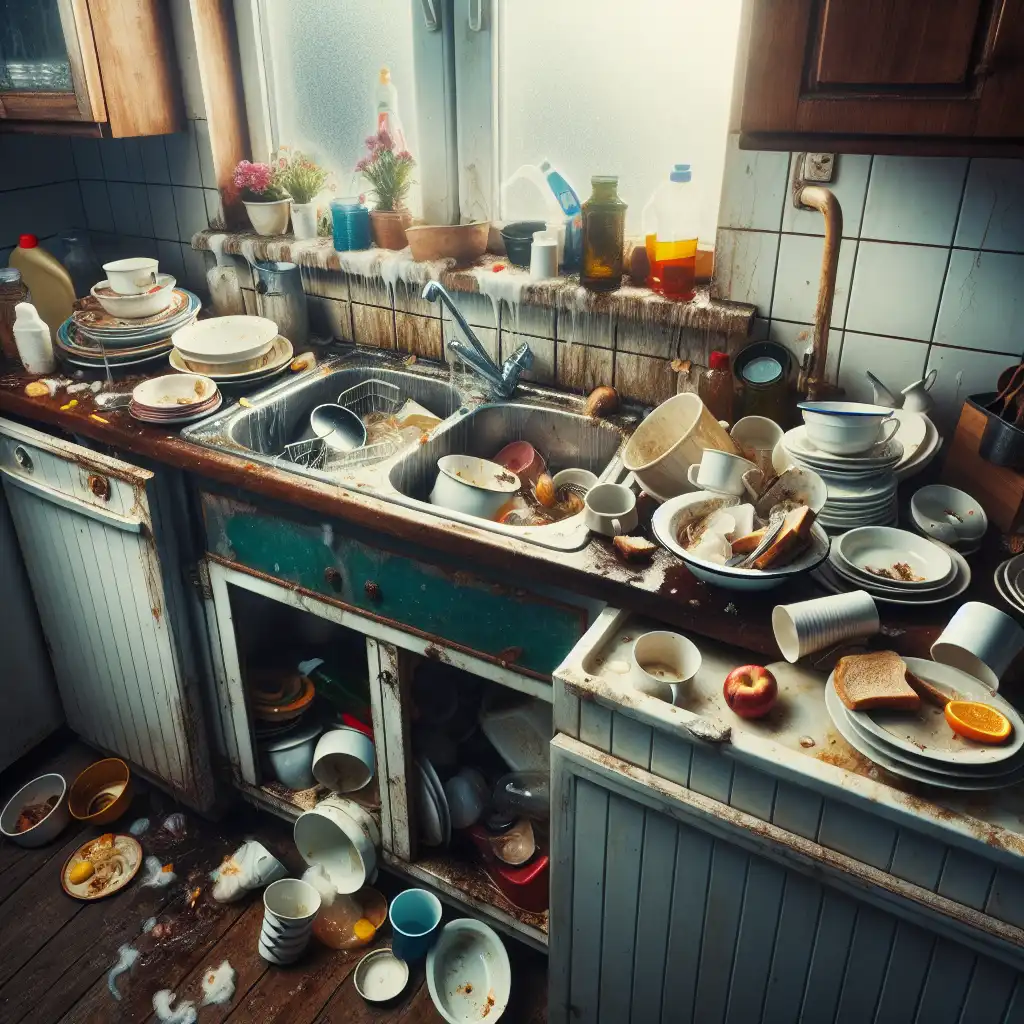
The state or condition of being dirty or unclean.
The kitchen was in a state of filthiness, with dishes piled up in the sink and dirt-covered counters.
filthiness
ˈfɪlθinəs
Đang tải…
ˈfɪlθinəs
The state or condition of being dirty or unclean.
The kitchen was in a state of filthiness, with dishes piled up in the sink and dirt-covered counters.

ˈfɪlθinəs
Disgusting or immoral behavior or thoughts.
His soul was filled with filthiness, filled with thoughts of revenge and hatred.

ˈfɪlθinəs
Crudeness or vulgarity in speech or language.
He was ashamed of his filthiness of language during the argument.
Không tải được âm thanh. Vui lòng thử lại sau.
The word 'filthiness' is used when something is very dirty or unclean. It can be used for a place, such as a dirty house or a filthy bathroom, or for a person, such as someone who doesn't wash themselves regularly. It is also used to describe immoral or disgusting behavior. It's not a polite word, so it's better to avoid using it in polite conversation.
Dirty is a general term used to describe something that is not clean or has some level of grime or dirt on it.
It can be used for anything from a dirty shirt to a dirty room.
Filthiness tends to be used to describe something that is extremely dirty or revolting. For instance, a room that has a lot of garbage and sewage might be described as "full of filthiness.".
Dirty is a milder term, while filthiness suggests a more severe or disgusting level of uncleanliness.
Mở từ: Dirty →Foulness refers to something that has a bad smell or taste, or is offensive in some way. For example, a dish of food may have gone bad and have a foul smell, or someone's behavior may be described as foul if it is immoral or offensive.
Filthiness is more commonly used to describe physical dirtiness or uncleanliness, while foulness can refer to both physical and non-physical qualities that are unpleasant or offensive.
Mở từ: Foulness →Grime refers to a layer of dirt, usually sticky, that sticks to surfaces and is difficult to remove. It is applicable in situations such as a greasy kitchen stove, a grimy bathroom floor, or a dirty car interior.
Filthiness is a broader term that refers to general dirtiness, while grime is a specific type of dirt that is sticky and hard to clean.
Mở từ: Grime →Impurity refers to anything that is not clean or wholesome.
It can refer to physical impurities such as chemicals in water or air, or to moral impurities such as greed, lust or dishonesty.
Both words are used to describe something that is not clean or pure, but filthiness usually refers to something that is physically dirty or morally corrupt, while impurity refers to anything that is not wholesome or pure.
Filthiness is applicable to situations where something is especially dirty or unclean, while impurity can refer to anything that is not clean, wholesome, or pure.
Mở từ: Impurity →Muck generally refers to a type of soil that is wet, slimy, muddy, or sticky.
Filthiness deals with dirt that is unclean and can be dangerous, while muck refers to a type of dirt that is slimy or sticky.
Mở từ: Muck →Both filthiness and nastiness mean something that is dirty or unpleasant.
However, filthiness usually refers to something that is physically dirty, while nastiness can refer to something that is morally or socially unpleasant.
For example, filthiness could refer to a dirty bathroom, while nastiness could refer to someone's mean behavior. Both words are used in different contexts, but the important thing to remember is that filthiness refers to physical dirtiness and nastiness refers to unpleasantness in general.
Mở từ: Nastiness →Filthiness refers to something that is dirty or unclean, while pollute means to contaminate or make something impure.
Filthiness is applicable to physical objects such as clothes, dishes, or a room that needs cleaning. Pollute is applicable to more abstract things like air, water, or the environment, for example, throwing trash in a river or factories releasing harmful chemicals into the air can pollute the environment.
In essence, filthiness refers to something that is physically dirty while pollute refers to something that is harmful to the environment or nature.
Mở từ: Pollute →It can be applicable to various things like a room or a person's appearance. Squalor refers to a state of extreme dirtiness and poverty.
In simpler terms, filthiness is about being dirty, while squalor is about living in extreme dirtiness and poverty.
Mở từ: Squalor →The starting point of sanctification is the filthiness, corruption, or stain of sin.
I've been victimized by general filthiness on multiple occasions... I received a nasty staph infection... I was told to wait it out... a few days later I literally thought I was going to die... I ended up being on antibiotics for five weeks and, as a result, I had to back out of the fight against Machida.