
genuflect
verb genuflect
ˈdʒenjuflekt
to bend the knee or touch one knee to the floor in respect
He genuflected before the altar in the church.
genuflect
ˈdʒenjuflekt
Loading…
ˈdʒenjuflekt
to bend the knee or touch one knee to the floor in respect
He genuflected before the altar in the church.
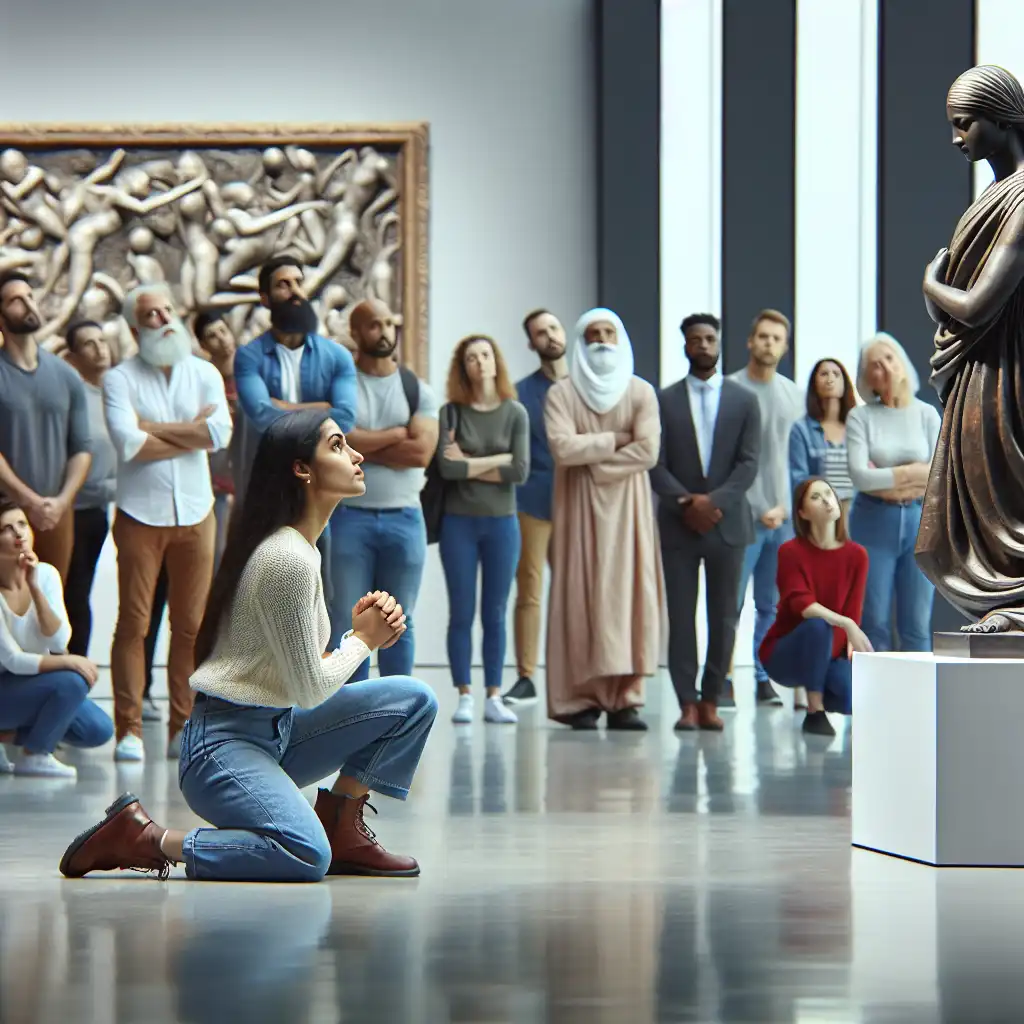
ˈdʒenjuflekt
to show a lot of respect or admiration for someone or something, often too much
The art world seemed to genuflect before his talent.
Audio could not be loaded. Please try again later.
Genuflect means to bend one knee down to the ground as a sign of respect or worship. People often do this in religious settings, such as when entering or leaving a church or at certain points during a service. It can also be done as a gesture of respect towards a person in authority or as a sign of submission.
Adore means to love and admire someone deeply, while genuflect means to show deep respect or reverence by bending one or both knees to the ground.
Adore can describe a feeling of love and admiration for someone or something, such as "I adore my grandmother" or "I adore the ocean." It is a more commonly used word in everyday conversation.
Open word: Adore →Both words, bow and genuflect refer to a gesture of respect, but they differ in the context and the degree of formality.
A bow is a simple inclination of the head or body, usually accompanied by a handshake, such as when meeting someone formally or showing appreciation.
In general, one would bow to show respect in less formal situations, while genuflecting is typically reserved for more solemn, traditional or religious situations.
Open word: Bow →Kneel means to bend both knees and rest on them, typically as an act of humility, reverence, or supplication. This position can be used in both religious and non-religious contexts, such as proposing marriage or begging for forgiveness.
The main difference is that genuflecting involves only one knee and is often associated with religious worship, while kneeling involves both knees and is more commonly used as a general sign of respect or submission.
Open word: Kneel →Prostrate means to lie face down on the ground, typically as an act of submission or respect in different contexts. For example, Muslims prostrate themselves during prayers, and ancient cultures would prostrate themselves before their monarchs.
Genuflect involves kneeling and touching the ground with one or both knees, primarily in a Christian context, while prostrate involves lying face down on the ground, in a range of contexts.
Open word: Prostrate →Respect means to hold someone or something in high regard and treat them with consideration and appreciation.
It is applicable in various situations, such as showing respect to elders, authority figures, and cultures different from our own.
Genuflect means to kneel on one knee as a sign of deep respect or submission, often in a religious context. It is more specific than respect in terms of its application, and is usually used in a religious setting to pay homage or show reverence to a deity or revered personage.
Respect is a general term used to describe the way that we treat others, while genuflect is a more specific term, used to describe a particular physical action or act of devotion.
Open word: Respect →Genuflect means to bend your knee as a sign of respect, especially in a religious context. It is applicable when you want to show deep respect or reverence to a holy or divine figure.
Reverence means deep respect and admiration towards someone or something that is held in high regard. It is applicable in any context where you want to express respect, such as towards a mentor, a cultural institution, or an accomplishment.
Genuflect is a specific act of showing respect, while reverence is a general feeling of deep respect and admiration.
Open word: Reverence →Submit is a verb meaning to yield to authority or to give in to another's control. It implies a loss of power or autonomy.
Genuflect is a physical gesture of respect, while submit is a verb implying a loss of power or autonomy.
Open word: Submit →Worship is a broader concept that encompasses a wide range of attitudes and behaviors toward a deity, such as prayer, praise, sacrifice, and obedience.
Worship is applicable in any context where one wants to express devotion, whether it's toward a god, a hero, a cause, or a beloved person.
In summary, genuflecting is a specific act of physical reverence, while worship is a general term for the various ways we show reverence and devotion.
Open word: Worship →Barton Seaver:...
Watch on YouTube ↗There's a myth out there that you have to genuflect at the altar of quarterly earnings. But it's a false choice that you can either be a good fiduciary or promote values such as environmental sustainability.