
tsarina
noun tsarina
zɑːˈriːnə
The wife of a Russian tsar (emperor).
After marrying the tsar, she became the tsarina of all Russia.
tsarina
zɑːˈriːnə
Cargando…
zɑːˈriːnə
The wife of a Russian tsar (emperor).
After marrying the tsar, she became the tsarina of all Russia.
zɑːˈriːnə
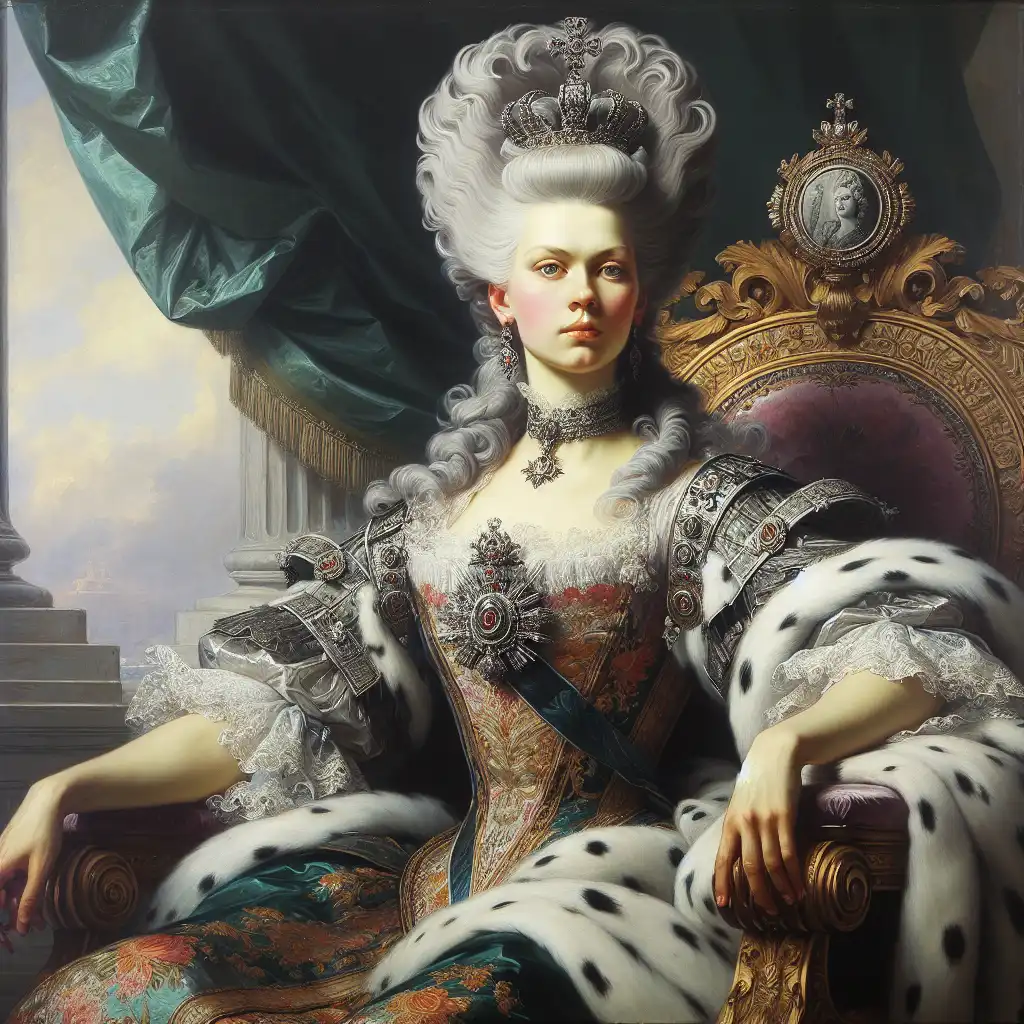
A female ruler or the wife of a male ruler in Russia, before 1917.
Catherine the Great was a powerful tsarina.
No se pudo cargar el audio. Inténtalo de nuevo más tarde.
The word 'tsarina' is used to refer to a female ruler in Russia. It is used in the context of the olden times when Russia was ruled by a powerful monarch known as a Tsar or a Tsarina. The word is still used in historical literature, but it is not commonly used in modern times. If you are talking about a powerful queen in Russian history, you could use the word 'tsarina'.
Consort commonly refers to the spouse of a monarch, while tsarina specifically refers to the wife of a tsar (an emperor or king) in Russia.
The term consort can be used in any monarchy, while tsarina is only applicable in the context of Russian history or monarchy.
Abrir palabra: Consort →Both empress and tsarina refer to a female ruler, but there are some differences between the two terms. Empress typically refers to a female monarch who rules over an empire, while tsarina specifically refers to a female ruler of Russia (or a wife of a Russian tsar).
An empress could rule over any sort of empire, whereas a tsarina would only be applicable in the specific context of Russian history.
Abrir palabra: Empress →Leader is a broad term that can refer to anyone who directs and guides others towards a common goal or objective.
Tsarina refers specifically to a female leader in the context of Russian or Slavic history. Tsarina was the title given to the wife of a Tsar, which was the ruler of the Russian Empire from the 16th to the early 20th century.
Leader is a general term that can describe anyone who leads or guides others, while tsarina is a more specific term that refers to a female leader in the context of Russian history.
Abrir palabra: Leader →Monarch refers to a sovereign ruler, usually a king or a queen, who inherits their position and has absolute power over their country.
This term is applicable to any country with a monarch.
Tsarina specifically refers to a female monarch in the Russian Empire. This term is only applicable to the Russian Empire and is not used in other countries.
Monarch is a general term for any sovereign ruler, while tsarina is a specific term for a female monarch in the Russian Empire.
Abrir palabra: Monarch →Potentate refers to a powerful ruler or monarch who has a lot of authority and control over a certain area or country.
Potentate is a broad term for any powerful ruler, while tsarina specifically refers to a female ruler in Russia.
Abrir palabra: Potentate →Ruler is a generic term that refers to a person who rules over a certain territory or country.
Tsarina refers specifically to a female monarch who rules over the Russian empire. It is derived from the word 'tsar', which was the title given to the male rulers of Russia.
Ruler can describe any leader, whereas tsarina specifically refers to a female monarch who rules the Russian empire.
Abrir palabra: Ruler →Sovereign refers to a monarch, a ruler of a country who has supreme power and authority over their territory. The term can be used for both male and female rulers.
So, while sovereign can refer to any monarch regardless of country or gender, tsarina is more specific to female rulers of Russia or other Eastern European countries.
Abrir palabra: Sovereign →