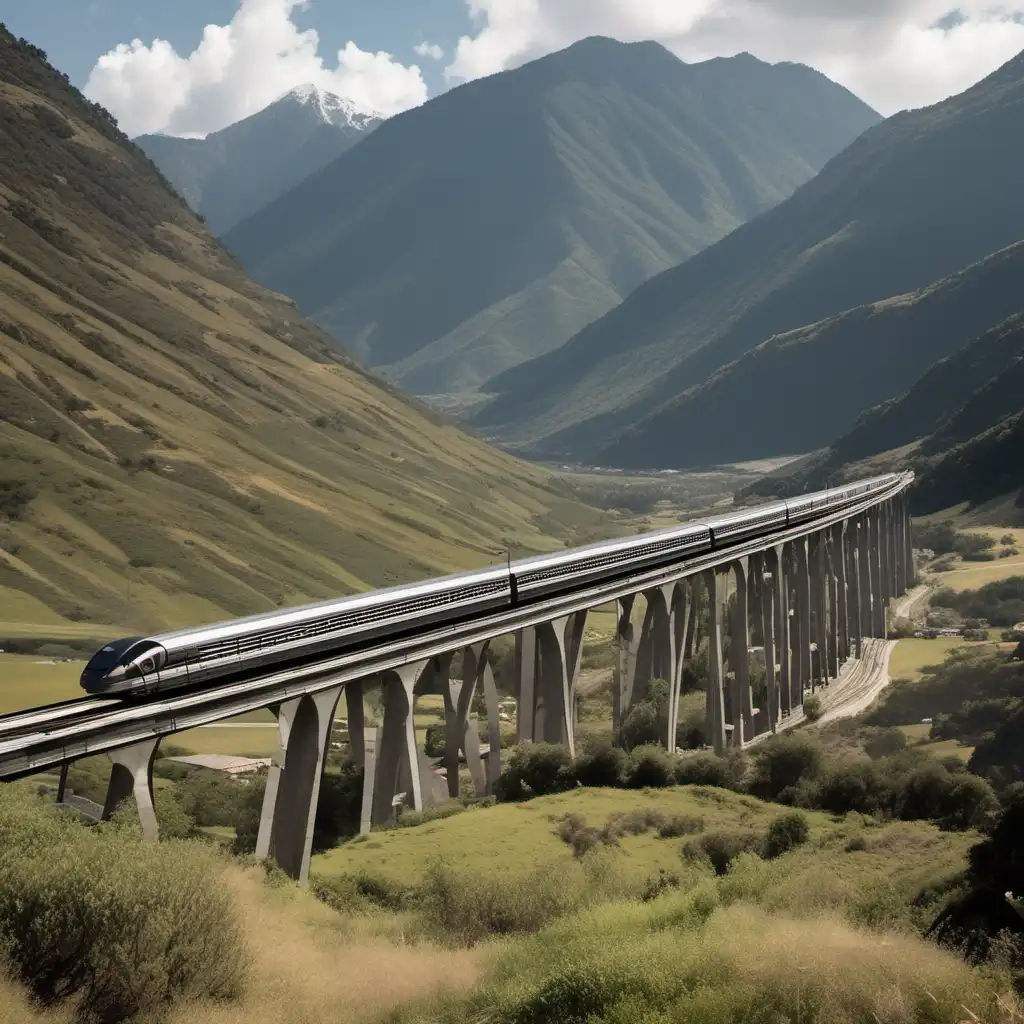
viaduct
noun viaduct
ˈvaɪədʌkt
A long bridge like structure, usually for roads or railways, that crosses over a valley or other low areas
The train was crossing a large viaduct when we entered the mountains.
viaduct
ˈvaɪədʌkt
読み込み中…
ˈvaɪədʌkt
A long bridge like structure, usually for roads or railways, that crosses over a valley or other low areas
The train was crossing a large viaduct when we entered the mountains.
音声を読み込めませんでした。しばらくしてからもう一度お試しください。
A viaduct is a structure that is built to allow a road or railway to pass over a valley or a river. It is like a long bridge made up of several arches or pillars. Viaducts are often used in cities to carry roads or railway lines over other buildings or rivers. You might see a viaduct while traveling on a highway, or walking near a railway station.
An aqueduct and a viaduct are both structures that are used for transportation of something from one place to another, but they are used in different ways.
An aqueduct is used to transport water from one place to another. It is a series of channels or canals that carry water over long distances.
Aqueducts are often seen in areas where there is a shortage of water, like in deserts or dry regions.
So, in summary, aqueducts are used to transport water and viaducts are used to transport people, animals or vehicles.
単語を開く: Aqueduct →A bridge is a structure built to cross an obstacle like a river or a valley. It generally consists of two or more supports or piers, and a deck, roadway or walkway which spans across the obstacle.
A viaduct is a type of bridge, but it is usually longer and often made up of many small spans or arches, with a series of pillars or piers supporting it.
In simpler terms, a bridge is a type of structure that allows people or vehicles to cross over an obstacle, while a viaduct is a long bridge with many supports that spans over a valley, a series of hills or a whole section of land.
Both bridges and viaducts serve the same general purpose but are used in different situations. Bridges are often built over bodies of water, whereas viaducts are built to cross over land obstacles.
単語を開く: Bridge →A causeway is a raised road or track that is built across a body of water, wetland, or low-lying land. It typically connects two pieces of land, and is made of earth, sand, or other materials.
Causeways are often built to provide access to islands, to connect two land masses separated by a body of water, or to protect coastal areas from erosion.
A causeway is a raised road built over water or wetland to connect two pieces of land, while a viaduct is a bridge-like structure made of multiple arches or spans used to carry a road or railway over a valley or other obstacle.
単語を開く: Causeway →A flyover and a viaduct are both types of elevated roadways, but they are slightly different.
A flyover is an elevated roadway that crosses over other roads or intersections without interrupting traffic flow below.
It is usually designed to reduce traffic congestion in busy areas. For example, a flyover might be built to allow traffic on a highway to bypass a busy intersection or to connect two highways at different heights, such as an elevated highway.
A flyover is an elevated roadway that crosses over other roads or intersections, while a viaduct is an elevated roadway that carries a road over an obstacle like a valley or river.
単語を開く: Flyover →A gantry is a frame structure that is typically used to support equipment or machinery, such as cranes or conveyor belts.
It is typically much longer and wider than a gantry and is designed to span a considerable distance.
A gantry is a smaller structure used for support, while a viaduct is a larger structure used for transportation.
A gantry is usually found in industrial settings, while a viaduct is found in transportation infrastructure like roads or railways.
単語を開く: Gantry →An overpass and a viaduct are both structures built to allow transportation to cross over an obstacle like a river, valley or another roadway.
An overpass is typically a bridge that crosses over something like a highway or a multi-lane road without interrupting the flow of traffic.
An overpass is a shorter bridge that goes over a road, while a viaduct is a longer bridge that goes over a large area or obstacle.
単語を開く: Overpass →A span refers to a single structure that can be used to cross a gap, typically a bridge or an arch. The term span can refer to any sort of structure that crosses from one side to the other.
A viaduct typically refers to a long bridge with multiple spans that cross over a valley or a roadway. Viaducts are typically composed of a series of arches that are connected by a number of piers or columns.
A span is a single type of structure that crosses a gap, while a viaduct is a larger, more complex structure composed of multiple spans joined together to form a bridge or an overpass.
単語を開く: Span →A trestle is a type of bridge made of a series of closely spaced and connected beams that support a roadway or railroad track.
Trestles are typically used to cross over valleys, rivers, or other types of landscape features.
In simpler terms, trestles are small and often used for crossing narrow valleys or waterways, while viaducts are larger and used for spanning wide-open areas.
単語を開く: Trestle →Amanda Burden: How...
YouTube で見る ↗