
repentance
noun repentance
rɪˈpentəns
A feeling of regret for doing something wrong or bad
He felt a deep sense of repentance after stealing money from his mother.
repentance
rɪˈpentəns
Chargement…
rɪˈpentəns
A feeling of regret for doing something wrong or bad
He felt a deep sense of repentance after stealing money from his mother.

rɪˈpentəns
A change in behavior because of regret for past actions
Her repentance was sincere; she had stopped lying to her friends.
rɪˈpentəns
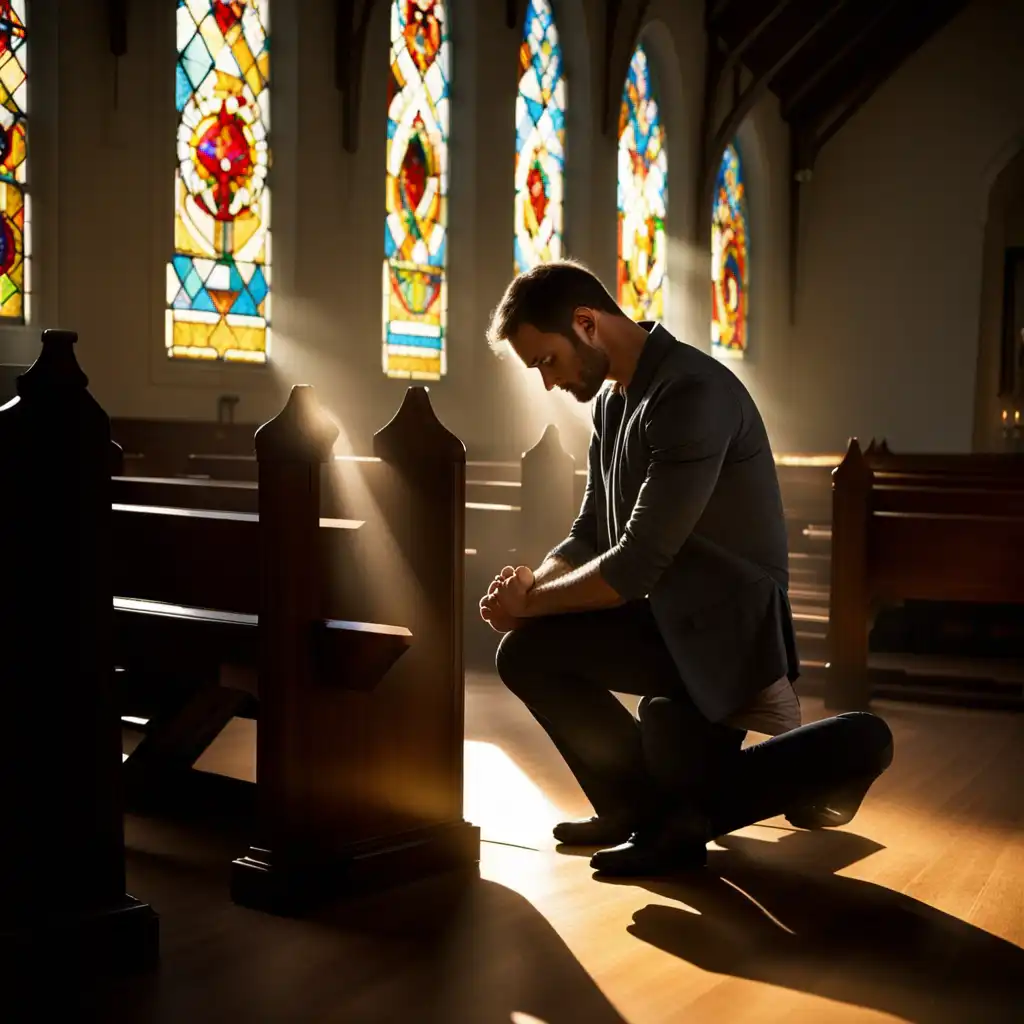
In religion, feeling sorry for your sins and seeking forgiveness from God
The priest spoke about the need for repentance to receive God's grace.
Impossible de charger l’audio. Réessayez plus tard.
Repentance is the act of feeling sorry or regret for something you did wrong or for bad behavior. It can be used in many different situations, such as apologizing to a friend you hurt or admitting to a mistake you made at work. Repentance is a way to show that you understand what you did wrong and want to make things right. It is often seen as an important element of forgiveness and emotional healing.
Atone refers to making amends for a wrongdoing or mistake, usually by doing something that rights the wrong or compensates for the damage caused.
For example, if someone accidentally breaks a friend's phone, they may offer to pay for the repairs as a way to atone for the mistake.
Both terms relate to acknowledging and addressing wrongdoing, but atone is focused on taking tangible action to make up for the mistake, while repentance is more focused on acknowledging and changing the root behavior that led to the mistake.
Ouvrir le mot: Atone →Contrite refers to feeling genuinely sorry or remorseful for one's actions, while repentance refers to the act of turning away from those actions and striving to do better in the future.
Contrite is applicable to a person who has done something wrong and feels genuinely sorry for their actions. It describes an emotional state of regret and sorrow for what was done.
For example, if someone accidentally breaks a vase, they may feel contrite about their carelessness.
Contrite refers to the feeling of remorse, while repentance refers to the actions taken to make things right.
Ouvrir le mot: Contrite →Guilt is feeling bad about something you did wrong. Repentance is feeling remorse and taking responsibility for your actions by trying to make it right or not doing it again.
Guilt is applicable when you realize you have done something wrong, but repentance is applicable when you want to make amends and take action to prevent similar mistakes in the future.
Guilt is focused on the past, but repentance is focused on the present and the future.
Ouvrir le mot: Guilt →Penitence and repentance both refer to the act of feeling sorry or regretting past actions.
Penitence is focused on feeling sorry for wrongdoing and wanting to make amends for that wrongdoing. It involves a sense of remorse and a desire to make things right.
Penitence often involves performing some form of penance or punishment to make up for the wrongdoing.
Both penitence and repentance are applicable in different contexts. Penitence may be appropriate for minor mistakes or transgressions, where one simply wants to make things right and move on.
Ouvrir le mot: Penitence →Regret is feeling sad, disappointed or sorry about something that has happened in the past. It is a feeling of remorse or sadness that is often accompanied by a wish that things had turned out differently.
Regret is applicable when we wish we had made a different choice or behaved differently in the past.
Repentance goes beyond regret. Repentance involves admitting to a mistake or wrongdoing, feeling remorse for it, and taking steps to make things right.
Regret is an emotion felt when we wish things had turned out differently, while repentance involves taking responsibility for our actions and making a commitment to not repeat the same mistake in the future.
Ouvrir le mot: Regret →Remorse is a feeling of guilty regret for something that one has done wrong, while repentance is the feeling of being sorry for one's actions and wanting to change them.
Remorse is applicable when one feels sad or guilty about something they did wrong, but they may not necessarily want to change their behavior.
For example, if someone cheats on a test and feels bad afterwards, they may feel remorseful, but they may still cheat again in the future.
Ouvrir le mot: Remorse →Shame is a feeling of embarrassment or humiliation that arises from a negative action or experience. It is a personal emotion that one feels internally and does not necessarily lead to action.
Shame is applicable in situations where someone feels guilty for their actions or has been publicly called out for their behavior.
Repentance involves action and change, while shame is a feeling and does not necessarily result in action.
Ouvrir le mot: Shame →Repentance and sorrow are two different emotions and actions. Repentance means feeling sorry for your actions and deciding to change your behavior.
Sorrow is simply feeling sad or regretful over something that happened.
Sorrow can occur without any intention of change, and it's usually associated with a sense of loss or disappointment.
Sorrow can be applicable in many situations where we face loss or disappointment, such as a breakup, losing a loved one, or failing a test.
Repentance and sorrow are two distinct emotions and actions that can be applied to different situations.
Ouvrir le mot: Sorrow →They were the victims of paranoia about the supernatural, misdirected religious fervor— and a justice system that valued repentance over truth.
Voir sur YouTube ↗There is no refuge from memory and remorse in this world. The spirits of our foolish deeds haunt us, with or without repentance.
looking for that he killed his sister we need to go down a path where we're going to help you work this problem out and his repentance will mean that he's not criminally charged or punished if he doesn't that he will go to a hardcore
Voir sur YouTube ↗Put a bridle on thy tongue; set a guard before thy lips, lest the words of thine own mouth destroy thy peace... on much speaking cometh repentance, but in silence is safety.
It does seem to me that if we can show people that on the other side of repentance, on the other side of confession on the other side of acknowledgment, there's something beautiful, like what you experienced with that Klan member, then maybe they'll find their courage
Voir sur YouTube ↗The idea of right and wrong, being righteous, acknowledging when you make a mistake, repentance - all these important things I got from my Catholic background.
with me for your forgiveness in repentance there's been a tradition
Voir sur YouTube ↗Conversion is an enlarging, a deepening, and a broadening of the undergirding base of testimony. It is the result of revelation from God, accompanied by individual repentance, obedience, and diligence.
Repentance means you change your mind so deeply that it changes you.
Bad men are full of repentance.
I thank the Lord for the great principle of repentance and forgiveness.
It is not the healthy who need a doctor, but the sick. I have not come to call the righteous, but sinners to repentance.
Of all acts of man repentance is the most divine. The greatest of all faults is to be conscious of none.
The wonderful news is that our Lord is a God of mercy, and He responds to repentance.