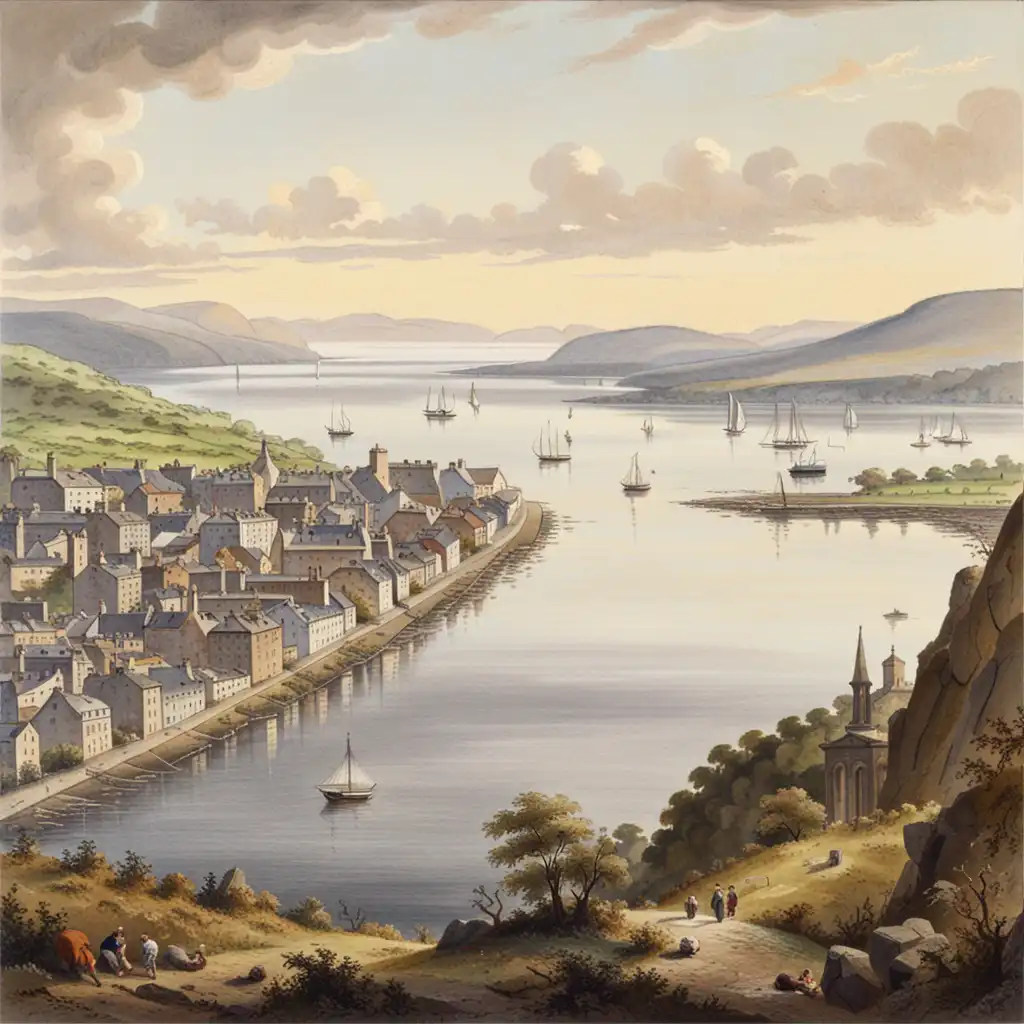
firth
noun firth
fɜːrθ
A narrow area of sea or ocean that comes in between land, often a kind of river mouth
The city is located by the firth of Clyde.
firth
fɜːrθ
Cargando…
fɜːrθ
A narrow area of sea or ocean that comes in between land, often a kind of river mouth
The city is located by the firth of Clyde.
No se pudo cargar el audio. Inténtalo de nuevo más tarde.
A firth is a long and narrow sea inlet found on the coast of Scotland. It is similar to a bay or an estuary, but usually deeper and wider. The word is commonly used in Scottish place names, such as the Firth of Forth or the Firth of Clyde. If you are visiting Scotland or studying Scottish geography, you may come across this word.
Arm is a common term that refers to a body part which extends from the shoulder to the hand.
Arm refers to a body part while firth refers to a geographical feature.
Abrir palabra: Arm →A bay is a broad curved inlet of the sea where land curves inward, while a firth is a narrow inlet of the sea, usually in Scotland.
Bays are typically found along coastlines where the land juts out into the water or where long sandy beaches form natural barriers that give rise to sheltered areas of water.
Bays can be large or small, shallow or deep, and are often used for recreational activities such as swimming, fishing, or boating.
Abrir palabra: Bay →A channel and a firth are both bodies of water, but they are different in their characteristics and locations.
A channel is typically a narrow stretch of water that connects two larger bodies of water, such as a river and a sea or two parts of an ocean.
Channels are usually man-made or formed by natural erosion. They are often used for navigation or transportation, and they can be found all over the world.
A channel is a narrow waterway that connects larger bodies of water, while a firth is a wide, estuary-like inlet of the sea typically found in Scotland.
Abrir palabra: Channel →A cove is a small, sheltered bay with a narrow entrance, often formed by a curved shoreline.
A cove may be used for swimming, boating, and other leisure activities.
In essence, a cove is smaller and more sheltered, while a firth is larger and more exposed to the sea.
A cove is a place for leisure, while a firth is often used for commercial purposes.
Abrir palabra: Cove →An estuary is the mouth of a river where fresh water meets salt water. It often has a wider opening and the water flow is influenced by the tides.
A firth is similar to an estuary, but it is a narrow inlet of the sea that is surrounded by land on three sides.
It is typically deeper than an estuary and may have higher water flow due to its narrow opening.
Estuaries are found along coastlines all over the world, while firths are primarily found in Scotland and Ireland. Both types of water bodies are important habitats for many aquatic species and contribute to the overall health of the surrounding ecosystems.
Abrir palabra: Estuary →A firth is a long, narrow inlet of the sea between high cliffs or steep banks, while a gulf is a large inlet of the sea between two pieces of land with a wider opening than a bay.
Firths are typically found in Scotland, while gulfs are found in many coastal areas around the world. Firths are usually shallower than gulfs, and are often named after the river that flows into them.
Gulfs can be deep, wide and open, and can be formed by many different geological processes.
Abrir palabra: Gulf →Both firth and inlet refer to a narrow strip of water that penetrates the coast along the shoreline.
However, a firth usually has a wider mouth and leads to a broad bay or sea, whereas an inlet is narrower and may be short, leading to a small cove or lagoon.
Firths tend to occur in Scotland, while inlets can be found in many parts of the world. A firth is a wider and larger body of water that flows into a larger body of water, while an inlet is a narrower, smaller body of water that is either independent or flows into a larger body of water.
Abrir palabra: Inlet →Both firth and sound refer to bodies of water that are typically long and narrow, with a connection to the sea.
However, firth usually describes such bodies of water in Scotland, while sound is usually used in coastal areas in North America, particularly in the Pacific Northwest.
Sound is a term used in North America to describe similar bodies of water that are connected to the sea but are usually found along the coast of the Pacific Northwest.
For example, Puget Sound is a large body of water located near Seattle, Washington.
In summary, both firth and sound are words used to describe long, narrow bodies of water that are connected to the sea.
However, firth is typically used in Scotland, while sound is mainly used in coastal areas of North America.
Abrir palabra: Sound →