Impossible de charger l’audio. Réessayez plus tard.
Comment l’utiliser
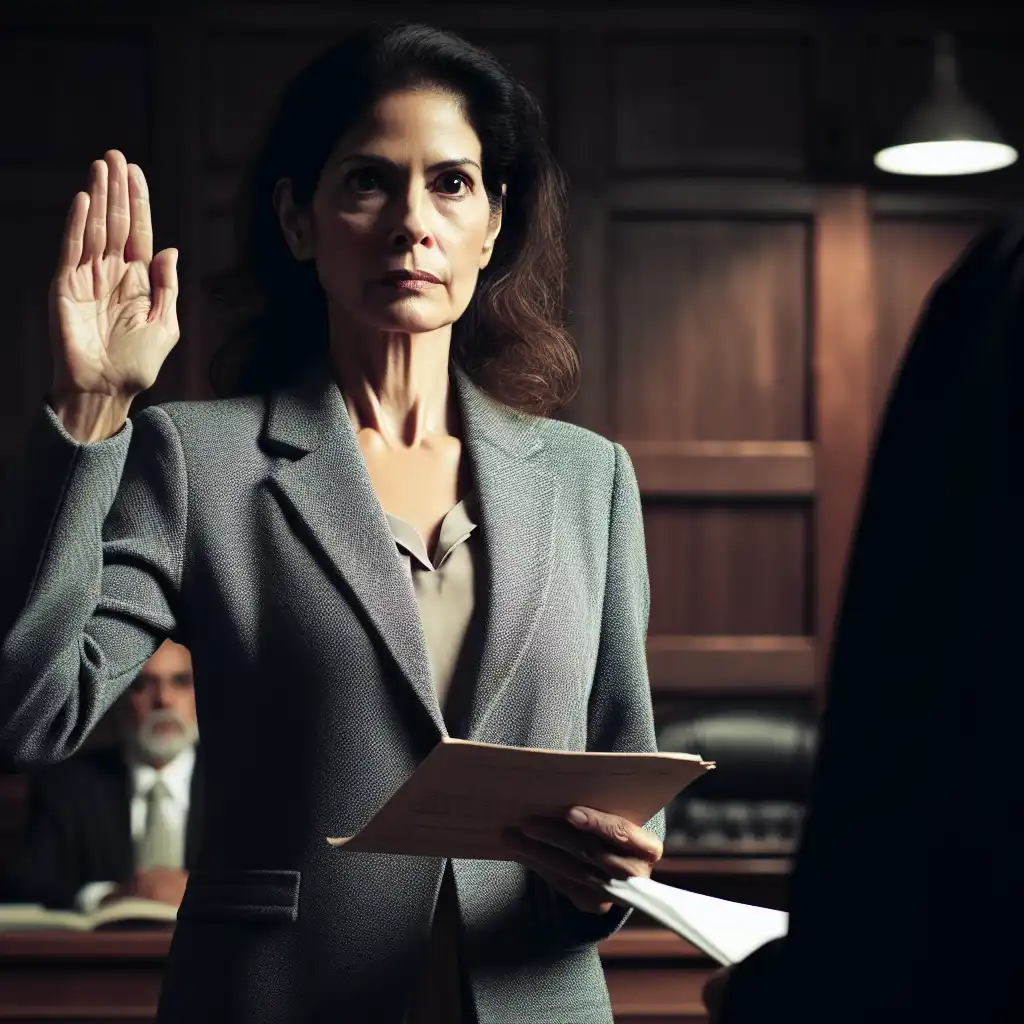
An affidavit is a type of legal document or statement that someone writes and signs to prove what they're saying is true. It's usually used in court cases or in legal situations where a person's testimony or evidence is needed. For example, if you were a witness to a crime and needed to prove what you saw, you might write an affidavit to swear that what you're saying is true. Affidavits are taken very seriously and can have serious consequences if they're found to be untrue.
Affirm means to declare something to be true or valid without the need for an oath or formal documentation.
An affidavit is applicable in legal contexts where sworn testimony is required, while affirm is applicable in conversations where someone wants to declare something to be true or acknowledge agreement.
A certificate is a document verifying something, such as completion of a course or achievement of a qualification.
It can be issued by an educational institution or a government agency. For example, a student might receive a certificate of completion after finishing a training program or a birth certificate to confirm their identity and place of birth.
An affidavit is used in legal proceedings while a certificate is used to verify a qualification or accomplishment.
A deposition is a sworn statement given orally or in writing by a witness in a legal proceeding. It usually takes place outside of court, with a lawyer asking questions and the witness giving answers under oath.
Depositions can be used as evidence in trials or hearings.
In general, affidavits are used more for written statements, whereas depositions are more commonly used for oral testimony.
Affidavits are often used in support of motions or as evidence in pre-trial proceedings, while depositions are typically taken in preparation for trial or to gather information for a case.
An affidavit is a written statement that someone signs under oath, stating that the information in the statement is true to the best of their knowledge.
An oath is a solemn promise that someone makes, usually before a person of legal authority, to do something or to tell the truth.
An affidavit is a written statement used as evidence in legal proceedings, while an oath is a solemn promise made in person, often in a legal setting.
A pledge is a promise or commitment to do something. It is commonly used in fundraising or charity events, where individuals pledge to donate a certain amount of money or time.
Both documents are different in their purpose and application. An affidavit is used to provide evidence in legal proceedings, whereas a pledge is a commitment to a cause or organization.
Testimony is an oral statement made under oath in a court of law or other legal proceeding. It involves a witness giving an account of events, usually in response to questions from an attorney.
Testimony is used to provide evidence or to provide a witness's perspective on an event.
An affidavit is a written statement while testimony is an oral statement given in person. Affidavits are generally used when the person making the statement cannot appear in court, while testimony is given in court.
Verification is the act of verifying or confirming something to be true or accurate.
While both affidavit and verification deal with statements of truth, affidavits are more formal and are often used in legal proceedings, while verification is a more general term that can refer to any process of verifying the accuracy or truthfulness of something.
and amongst them they wrote 100 pages of affidavits in which they set out more than 40 ways in which their complex cognitive capability, either individually or together, all added up to autonomy and self-determination.
When you're the spokeswoman for a weight-loss program, everything is witnessed. I weigh in once a week with a witness. I have to sign an affidavit saying I cannot have any surgeries.
In order to get a FISA warrant, you need an affidavit signed by a career law enforcement officer who swears the information is true... And if it is wrong, that person is going to face consequences.
And they talk about their bona fide doctors. They have a list of doctors that signed affidavits from looking at a picture of Terry. That's where they get their information from, by looking at a picture.
And then they sign an affidavit swearing that she's not in a vegetative stage. I'll tell you. That's a doctor you really want; they can look at a picture and make a diagnosis.