
leverage
noun leverage
ˈlevərɪdʒ
The power to influence people or things, or to achieve something you want.
She had always banked on her charm as leverage.
leverage
ˈlevərɪdʒ
Loading…
ˈlevərɪdʒ
The power to influence people or things, or to achieve something you want.
She had always banked on her charm as leverage.

ˈlevərɪdʒ
The ability to use borrowed money, especially to buy a company by paying only a small amount of the price and borrowing the rest.
He used leverage to finance the deal.
ˈlevərɪdʒ
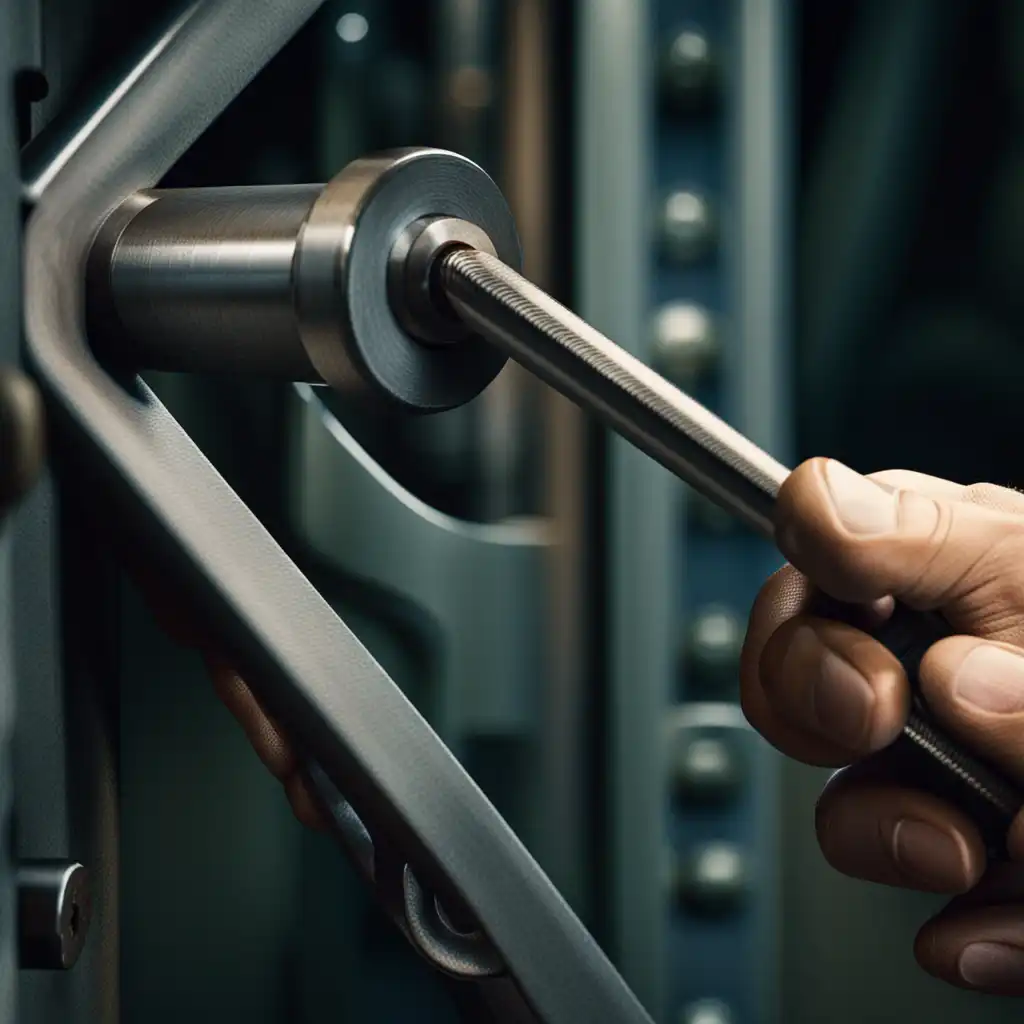
The action of using a lever or the power gained by using a lever.
A longer handled tool will give you more leverage.

ˈlevərɪdʒ
Using something you already have in order to achieve something new or better.
He hoped to leverage his Hollywood connections to find new opportunities.
Audio could not be loaded. Please try again later.
The word 'leverage' is often used in business or finance to mean using something to gain an advantage or achieve a goal. It can also mean using a small amount of effort or resources to achieve a larger effect or outcome. For example, a business may leverage their social media presence to reach a wider audience or a person may leverage their connections to get a job. It is important to use the word 'leverage' in appropriate contexts, such as in a professional or academic setting, and to understand its meaning before using it.
Both words refer to a type of benefit or advantage, but leverage refers to using something to your advantage, while advantage just means having a benefit.
For example, if you have good grades, that's an advantage when it comes to getting into college. But if you use those good grades to apply for scholarships, that's leverage because you're using your grades to get even more benefits.
Another example could be in sports, where an advantage might be having a taller player on your team, while leverage might be using that taller player to dominate rebounds or block shots.
Advantage is just having something positive, while leverage is using that positivity to gain even more advantage or benefit.
Open word: Advantage →Authority refers to power or control over a particular subject or situation.
For example, a teacher has authority over their students because they know more about the subject and are responsible for their education.
Authority is about having power and control, while leverage is about using resources to gain an advantage.
Open word: Authority →Control refers to having power or authority over something or someone, whereas the word leverage refers to using something to your advantage.
For example, if you have control over a situation, you have the ability to make decisions and direct the outcome. If you use leverage in a situation, you are using a specific advantage to achieve a desired result.
Control is often applicable in situations where there is a hierarchy, such as in a workplace or in a government.
Control is about having authority, while leverage is about using advantages for success.
Open word: Control →Force refers to the strength or power that's used to move something physically. For example, pushing a broken-down car with your hands requires force.
Leverage refers to using a tool or technique to amplify the impact of a force. It's like using a crowbar to move the same broken-down car - the crowbar provides leverage to make the task easier.
Force is the actual push or pull that's applied to an object, while leverage is the concept of using tools or techniques to make the force more effective or efficient.
Open word: Force →Influence means having the power to change someone's thinking, beliefs, or behavior without using force or pressure.
It is applicable in situations where you want to convince someone to do something willingly. For example, a friend might influence you to start reading a book that they find interesting.
So, essentially, influence is about persuasion, while leverage is about using strategic advantage.
Open word: Influence →Power refers to the ability to control or influence others or situations through authority, status, or force. For example, a government may wield power over its citizens through laws and regulations or a bully may use physical power to intimidate others.
Both leverage and power can be applicable in different scenarios, depending on the context and the goals of the individual or organization.
Leverage is often used in business or personal relationships to achieve specific objectives while power is often used in politics, military, or social hierarchies to exert control or dominance.
Open word: Power →Pressure usually refers to applying force or influence to achieve a particular goal or result. This can be physical pressure, like squeezing something or putting weight on it, or it can be social pressure, like trying to persuade someone to do something.
Leverage is often used when trying to make the most out of a situation or resource, while pressure is commonly used in situations where one is trying to push or persuade others to do something.
Open word: Pressure →Weight refers to the measure of the heaviness of an object, usually in pounds or kilograms. It is a physical property of an object and can be measured using a weighing scale.
Leverage is about using a force to move something, while weight refers to how heavy an object is. Leverage is applicable when you need to move or lift objects, while weight is applicable when you need to measure the heaviness of objects.
Open word: Weight →We would thus leverage its intelligence as much as possible to solve the problem of value-loading. This can happen, and the outcome could be very good for humanity.
Watch on YouTube ↗The world is still in deleveraging.
years even if the rivers were to run dry we're here in the trenches right this is a desert city and you can't go through a summer here without understanding that water here is really a life or death issue i think this is a good example of how you can meet those challenges and leverage mother nature while you're
Watch on YouTube ↗We'll have a public power authority, which will also have the ability to build power or finance power. And more importantly, we'll have more power than our economy provides. All of that will give us leverage we don't have today.
from medicine biotech artificial intelligence robotics nanotechnology space and address how could cross train and leverage these to impact major unmet goals we also have seven-day executive programs and coming up next month is actually future mat a program to help cross train and leverage technologies into medicine now I mentioned the phone
Watch on YouTube ↗People know my name, and because of that, I have more leverage as a professional fighter. And as a professional fighter, as a professional wrestler, that is something we are all battling for. We want to make our brand a name brand and a household name. And that essentially gives us more leverage and helps us provide for our families.
which have been driven by the overuse of leverage excessive leverage or the abuse of leverage the net result of this is that the cooperation becomes what we call too big to fail and by this I don't just mean the banks in too big to fail because you know caring and settlement would stop but I'm talking about
Watch on YouTube ↗We must not be afraid to push boundaries; instead, we should leverage our science and our technology, together with our creativity and our curiosity, to solve the world's problems.
combining all three parts the shorter jaws creating better leverage the larger springs representing more powerful muscles and the sharp teeth to really concentrate all of that force this really creates the ultimate bite
Watch on YouTube ↗As a small businessperson, you have no greater leverage than the truth.
worldwide right? Would any of you complain if this was the case about doing linear algebra? So what we are asking in the lab is how can we leverage that power? Now I want to step back a bit. I know most of you have had the experience of coming back
Watch on YouTube ↗The financial crisis was linked to the fact that banks had excessive leverage and too many risky assets. The solution is not to try to dictate to banks what they can do or not do, but to require them to strengthen their capital to absorb potential losses and hold less risky assets.
It's the same thing meaning, you have a certain amount of leverage, things go down, too much leverage means you're broke in accounting terms. So then you look around and you say, who are the systemically important entities that you don't want to go broke?
Watch on YouTube ↗The higher the unemployment rate, the more leverage I have to 'encourage' you to 'do what it takes' to keep your job. And so you work even more hours, pushing unemployment up and wages down. And that, my friends, is one of the little tricks that keeps you poor and me rich.
your sister your niece your employee your colleague -- to be comfortable with imperfection, because when we teach girls to be imperfect, and we help them leverage it, we will build a movement of young women who are brave
Watch on YouTube ↗I think the adoption rate with respect to social media and how companies leverage that varies by the company. Cisco is probably a leader in the space. A lot of times, we actually use virtual ways to communicate our brand and do some of our advertising, first on the social space, then we do on physical advertising.
that is now bigger than the entire advertising market of any nation, and you're primarily compensated and trying to develop economic security for you and the families of your employees, to increase that market share, you can't help but leverage all the power at your disposal. And that is the basis for regulation,
Watch on YouTube ↗I have always been interested in exploring how we can leverage our knowledge about everyday objects, and how we use them, in order to interact with our digital world.
The same principle applies if we're building a building, if we're diagnosing and caring for a patient, or if we are teaching a class to a roomful of high schoolers. As our tools improve, technology magnifies our leverage
Watch on YouTube ↗Hammer down product fundamentals first. Make sure you've got something that works before doubling down on promotion and marketing. Create a groundswell of organic support, and only then leverage PR and advertising to spread the word.