pantomime
noun pantomime
ˈpæntəmaɪm
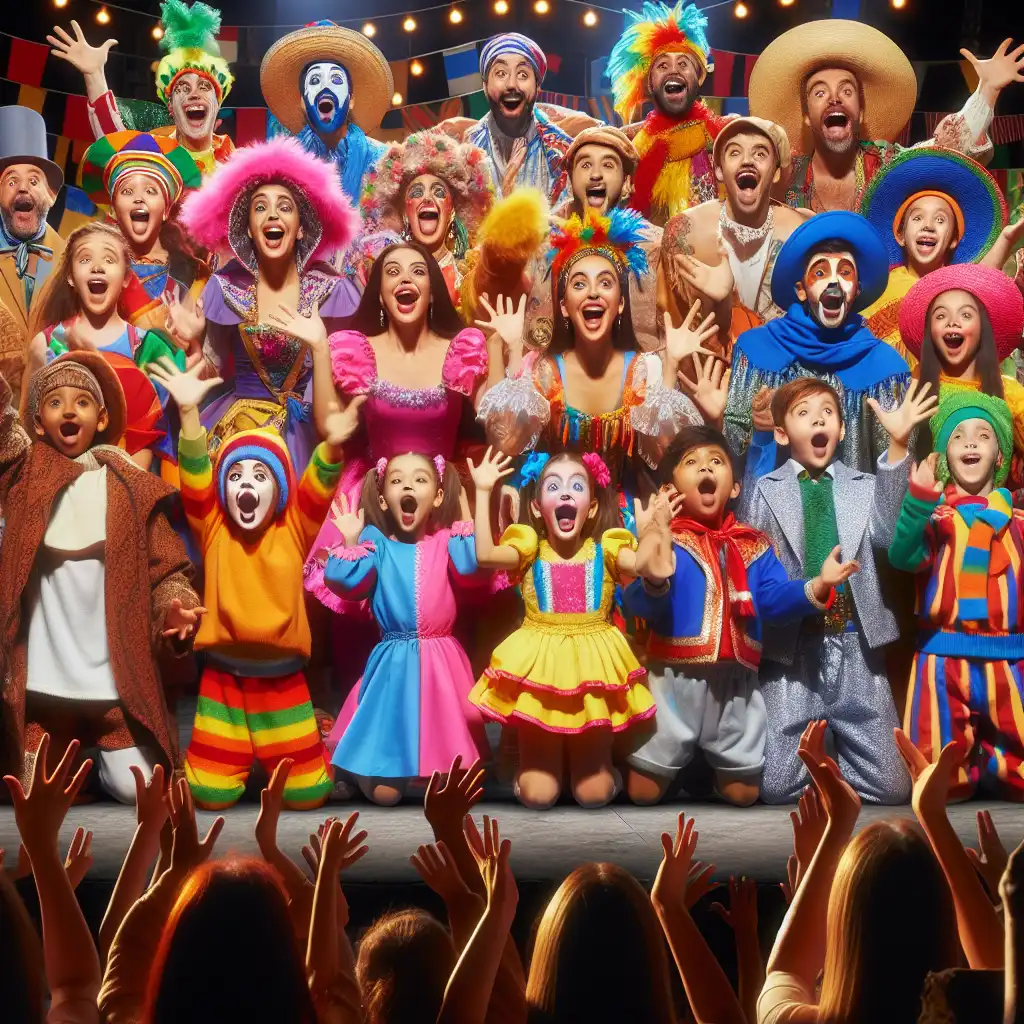
A type of theater performance where actors use gestures and body movements without words.
The children enjoyed the pantomime at the holiday festival.
pantomime
ˈpæntəmaɪm
Chargement…
ˈpæntəmaɪm
A type of theater performance where actors use gestures and body movements without words.
The children enjoyed the pantomime at the holiday festival.
ˈpæntəmaɪm
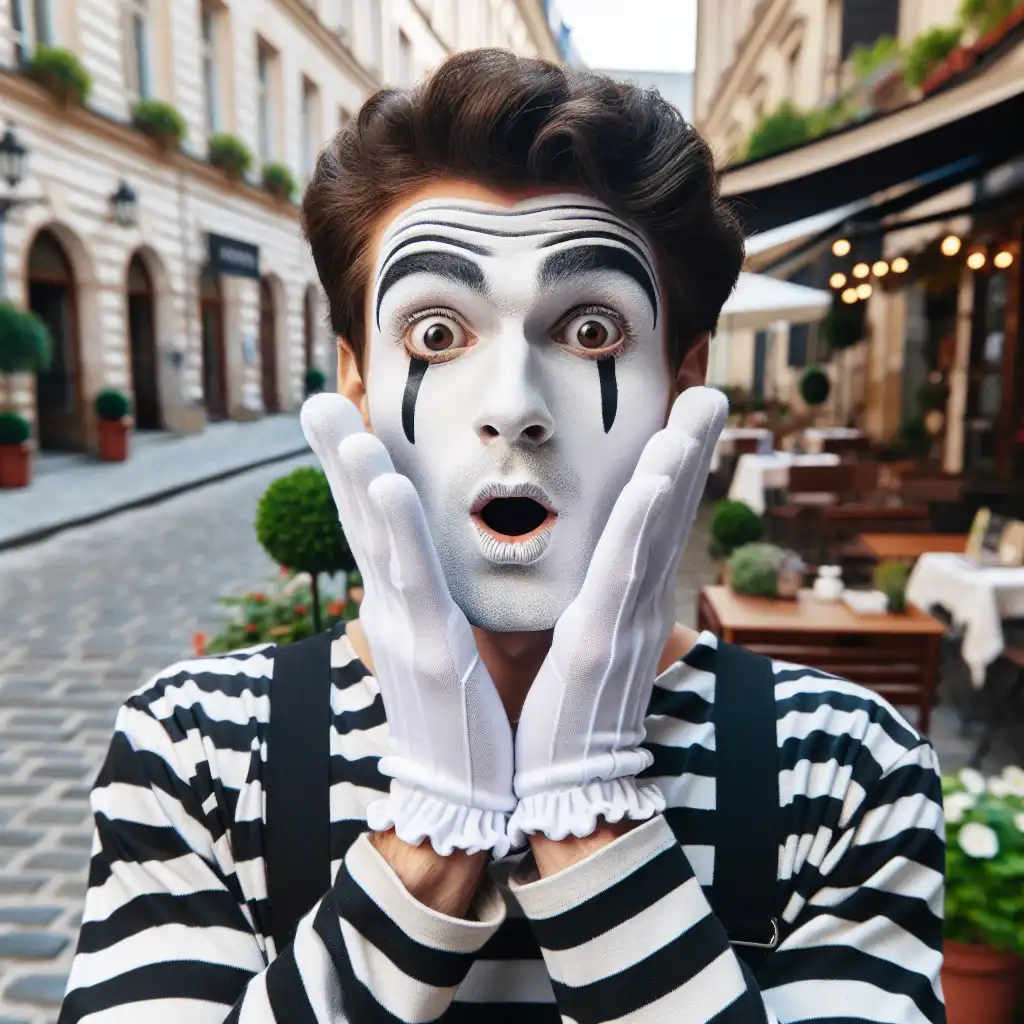
The art or technique of conveying emotions, actions or feelings by gestures without speech.
In drama class, we learned how to communicate through pantomime.

ˈpæntəmaɪm
A traditional style of British theater performed during Christmas, involving singing, comedy, and audience participation.
Every winter, they would attend the local pantomime, booing at the villain and singing along with the hero.

ˈpæntəmaɪm
To express or represent something by extravagant and exaggerated mime.
He pantomimed a person walking through the wind.
Impossible de charger l’audio. Réessayez plus tard.
Pantomime can be used to describe a type of theatrical performance that involves actors who use only gestures and facial expressions, instead of speaking, to tell a story. It is often performed around the Christmas season and is popular in the United Kingdom. It can also refer to the act of miming or gesturing without speaking, which can be used as a form of communication or entertainment. For example, if someone wanted to act out a story without using words, they could use pantomime. Or, if a person was trying to explain something to someone who speaks a different language, they could use pantomime to illustrate their point.
Both charade and pantomime are theatrical performances where the actors use gestures and body language to convey a story instead of using words.
Charade generally involves a group of people who divide into teams and act out a word or phrase without speaking. The other team has to guess the word or phrase being acted out.
Charade is often played as a party game.
In summary, charades are a game that is played where people act out words or phrases without speaking while pantomime is a type of theatrical performance where actors use body language and gestures to convey a storyline on stage.
Ouvrir le mot: Charade →Gesture refers to a movement or action made with the body or limbs to express an idea or emotion, such as waving or pointing.
Pantomime refers to the use of exaggerated body movements and gestures to tell a story or convey a message without using words.
Overall, gestures are more commonly used in everyday communication, while pantomime is more often used in stage or performance settings.
Ouvrir le mot: Gesture →Imitation refers to copying or mimicking something, such as imitating a celebrity's accent or speech.
It can also refer to creating a replica or copy of something, like an imitation diamond or an imitation leather jacket.
Imitation is applicable when you want to copy or replicate something while pantomime is applicable when you want to convey a message or story through gestures, facial expressions, and body language, without speaking.
Ouvrir le mot: Imitation →Impersonate means to pretend to be someone else by imitating their voice, mannerisms, and behaviors.
Impersonate is to act like someone else, while pantomime is to convey a message using body movements and expressions.
Ouvrir le mot: Impersonate →Both mime and pantomime are forms of non-verbal communication that rely on gestures and actions to convey meaning.
Mime refers to the art of performing without words, using only facial expressions, gestures, and body language to convey a message.
It is often associated with the French tradition of classical mime, where actors wear whiteface makeup and create exaggerated movements to express emotions and tell stories.
Pantomime is a type of theatrical performance that tells a story through exaggerated movement, often accompanied by music and sound effects.
In pantomime, performers use their bodies and facial expressions to convey a narrative without speaking, but they also incorporate other elements like dance, slapstick, and audience participation.
Mime is a more generalized form of non-verbal communication, while pantomime is a specific type of theatrical performance that incorporates mime, music, and other elements.
Mime is more commonly used in everyday situations, like conveying emotions or making gestures to communicate with others, while pantomime is an artistic performance tradition that typically takes place on a stage.
Ouvrir le mot: Mime →Mimic means to imitate someone or something, especially their actions, voice, or mannerisms. It is applicable when someone wants to perform an imitation or impersonation of someone or something.
Mimic involves imitating and copying someone or something, while pantomime involves telling a story or conveying a message through exaggerated gestures and movements.
Ouvrir le mot: Mimic →Simulation is the imitation of the operation of a real-world process or system over time.
Pantomime is applicable in the context of conveying a message through physical movements or performance, while simulation is used to mimic or recreate a real-world scenario or process.
Ouvrir le mot: Simulation →This Clown Philosopher...
Voir sur YouTube ↗I'm really passionate about pantomime because it is often the first introduction for a child to theatre, and if that child has a great experience at a pantomime they will continue to come year after year.
You are in a strange world in pantomime, where you are allowed to step out and talk to the audience and do silly gags. Sometimes I feel like a cartoon character.
My first job was in pantomime; I was a chorus girl in 'Dick Whittington' at 16. I got the part by ringing the director daily to see if anyone had dropped out, and it paid off eventually, when I was cast as a rat!
I cannot write poetically, for I am no poet. I cannot make fine artistic phrases that cast light and shadow, for I am no painter. I can neither by signs nor by pantomime express my thoughts and feelings, for I am no dancer; but I can by tones, for I am a musician.
It takes more drawing to tell a story in pantomime.
I'm a big fan of pantomime storytelling, being an animator.
This whole thing has become a pantomime.
I think British audiences are accustomed to the 'boo' factor and pantomimes.
I saw Marti Pellow in pantomime in Glasgow one time.
As a child I was taken to the pantomime or the theatre and I would always, always fall in love with somebody on the stage. And want to have sex with them.