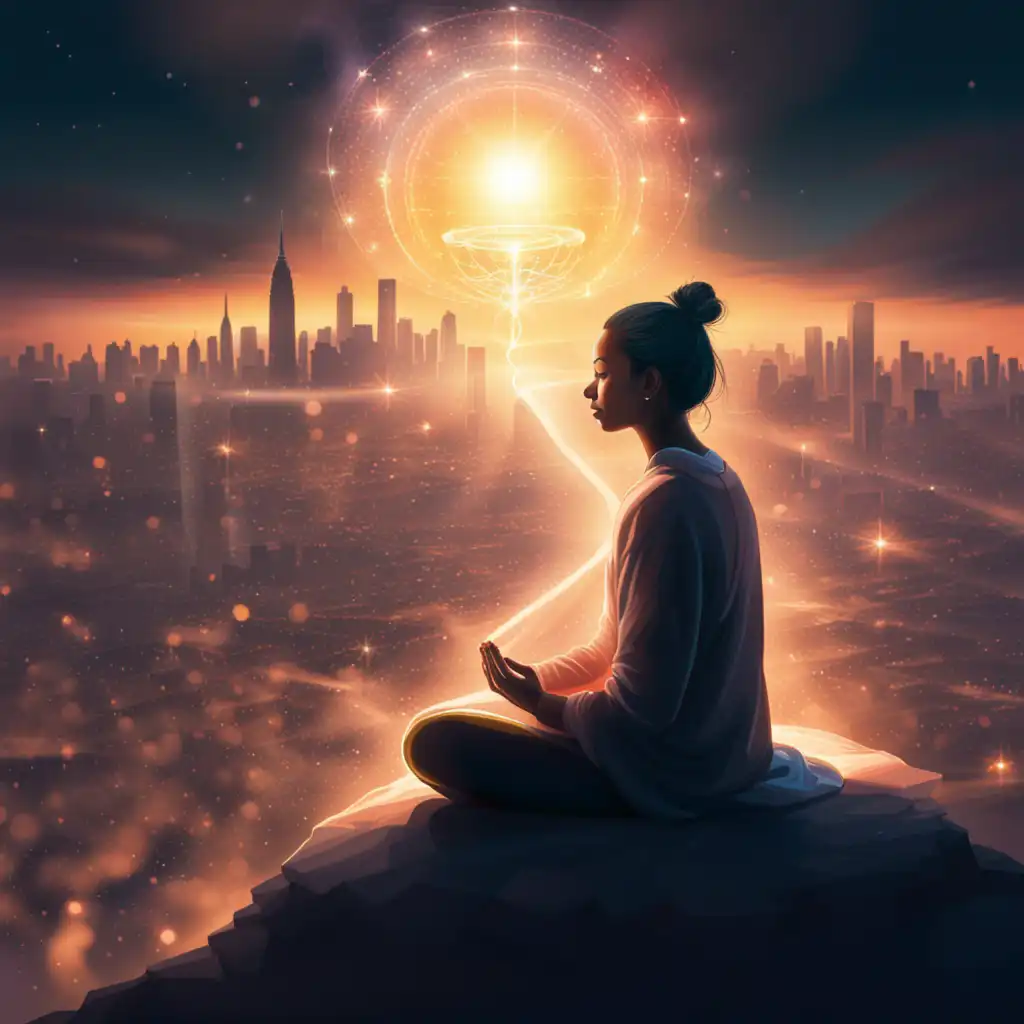
A literary movement of the mid-19th century, primarily in the U.S, propogating an intuitive and spiritual above empirical and material way of understanding life.
Transcendentalism greatly influenced American literature, with many famous authors such as Henry David Thoreau resonating its principles.
Transcendentalism is a philosophical and literary movement that emerged in the early 19th century in America. It values individualism, intuition, and the belief that humans are inherently good and connected to nature. Transcendentalists believe that spiritual reality exists beyond what we can see and touch in the physical world. The movement had an influence on American literature and thought, and its ideas can be seen in works such as Walden by Henry David Thoreau and Leaves of Grass by Walt Whitman. Today, the term is still used to describe philosophical or literary ideas that embrace similar themes of individualism, intuition, and the search for a higher truth.
Idealism is a philosophical belief that emphasizes the importance of ideas and concepts. It suggests that reality is not solely based on material objects but rather on ideas and thoughts.
Idealism is applicable in fields such as philosophy, politics, and art.
Idealism focuses on the importance of ideas, while transcendentalism emphasizes individualism and spirituality.
Metaphysics is a branch of philosophy that involves exploring questions about reality, existence, and the nature of the universe.
While both metaphysics and transcendentalism deal with philosophical questions about reality, they approach these questions in different ways.
Metaphysics focuses on exploring the fundamental nature of reality, while transcendentalism emphasizes personal experience and intuition in understanding reality beyond the physical world.
Metaphysics is applicable in exploring the fundamental nature of reality while transcendentalism is applicable in experiencing and understanding a spiritual reality beyond the physical world.
Mysticism is a belief in the spiritual world that goes beyond what can be seen and touched. It often involves a personal quest for a deeper understanding of God, the universe, and oneself.
Mysticism is applicable in religion and spirituality, where people seek to connect with a higher power or find inner peace.
Philosophy is a broad term that encompasses ideas about the nature of reality, human existence, knowledge, and values. It involves critical thinking and reasoning to arrive at a deeper understanding of these concepts.
Transcendentalism is a specific movement within philosophy that emerged in the mid-19th century in the United States. It is characterized by a focus on individualism, intuition, and the belief in the inherent goodness of both humans and nature.
While philosophy is a general term that can apply to a wide range of ideas and concepts, transcendentalism is a specific subset of philosophical thought.
Spirituality describes an individual's personal connection or belief system with a higher power or force. It pertains to a person's sense of purpose, meaning, and values in life.
Spirituality is a personal belief system while transcendentalism is a philosophical movement.
Spirituality can be applied to any belief system while transcendentalism pertains to a specific philosophical school of thought.
Transcendence refers to the idea of going beyond normal or ordinary limits, such as the limits of human experience or understanding.
Transcendence is a general concept that can be applied to a variety of contexts, whereas transcendentalism is a specific philosophical movement with its own set of ideas and beliefs.
Compared with members of other nations of Western civilization, the ordinary American is a rationalistic being, and there are close relations between his moralism and his rationalism. Even romanticism, transcendentalism, and mysticism tend to be, in the American culture, rational, pragmatic and optimistic.
The residue of religion in my work appears as a modified transcendentalism, and the positivist scientific side of my thought appears as concreteness and realism. The effort to reconcile the two is at the core of all my poetry.