moor
noun moor
mʊr
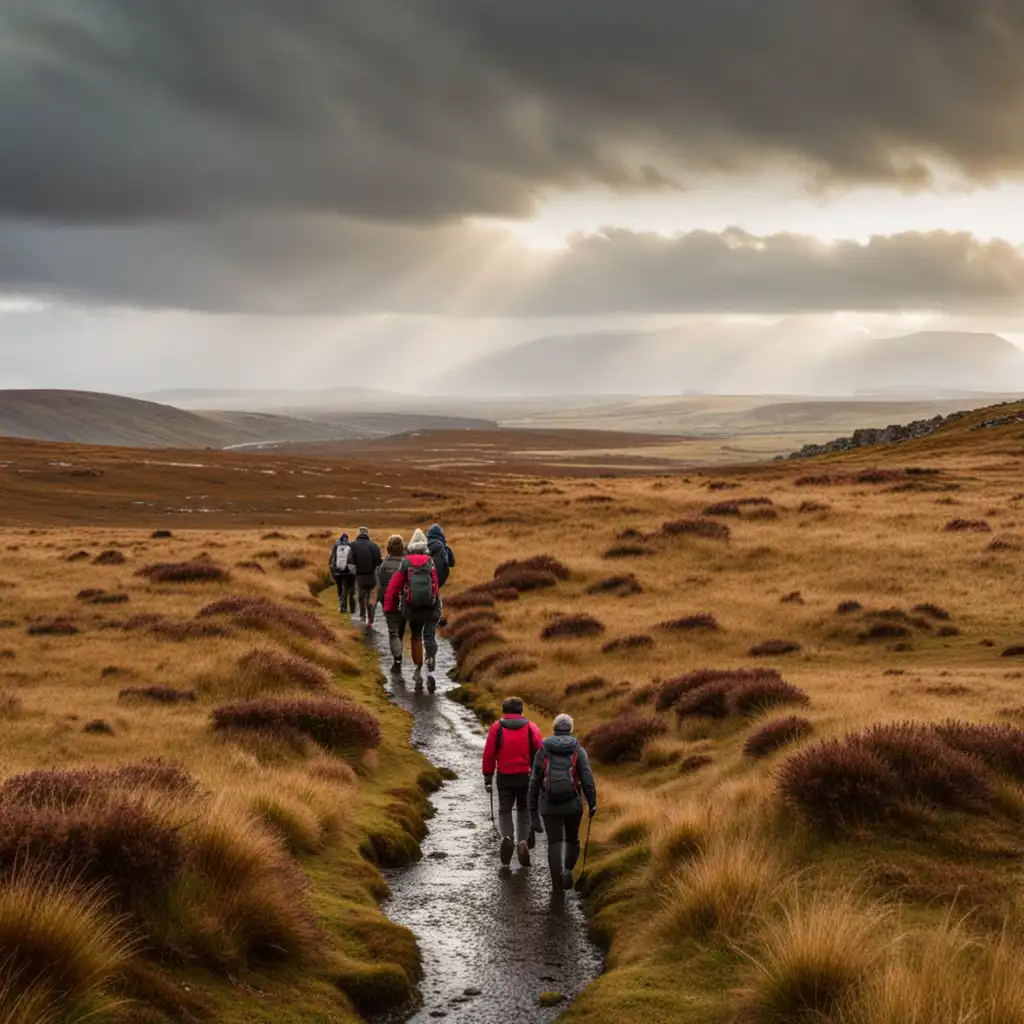
A large open area of land that is not good for farming and often has wet ground
We went for a long walk on the moor.
moor
mʊr
Cargando…
mʊr
A large open area of land that is not good for farming and often has wet ground
We went for a long walk on the moor.

mʊr
To attach a boat, ship, or aircraft to something so it stays in place
The ship was moored at the dock for the night.
mʊr
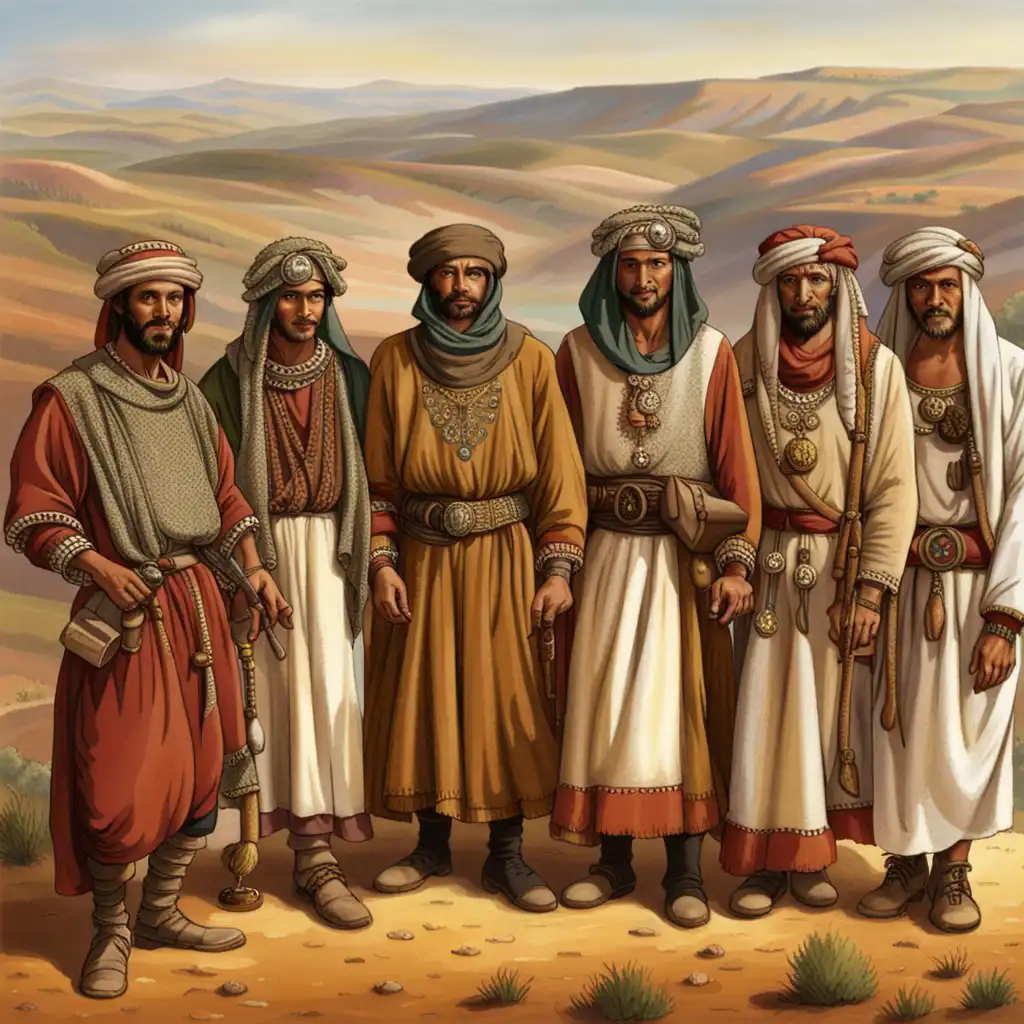
A group of North African people, mostly living in Morocco, Algeria, and Tunisia
The Moors ruled parts of Spain in the Middle Ages.
No se pudo cargar el audio. Inténtalo de nuevo más tarde.
The word 'moor' can refer to a large area of open land that is covered with heather, grass or similar vegetation. It is usually found in areas with wet and chilly climates, such as Scotland, and can be used as grazing land for livestock. The word can also be used in a historical context, referring to the Moorish people who were Muslim inhabitants of North Africa and Spain during the Middle Ages. This usage is not common in modern English.In everyday conversation, the word 'moor' might be used to describe a landscape, such as "We went for a walk on the moors." It could also be used to describe a type of animal, such as a moorhen, which is a bird that lives near or on the water in moorland areas.Overall, the word 'moor' is used to describe a specific type of land or landscape, and is not commonly used in everyday speech except in certain regions or contexts.
Bog and moor are both types of wetland landscapes, but they have some differences.
A bog is a type of wetland that forms when a depression in the ground fills up with water and organic material. Bogs are wet and spongy, and they are characterized by their acidic, peaty soil.
Bogs can be difficult to traverse, as their spongy ground can make it hard to walk without sinking in.
They can be marshy in places, but they are generally drier than bogs. Moors are often used for grazing sheep or cattle, and they are also popular areas for hiking and other outdoor activities.
In short, bogs are wetlands with peaty, acidic soil, while moors are open upland areas with vegetation.
Abrir palabra: Bog →Fen refers to a low-lying marshy area with nutrient-rich soil that is often flooded, while moor describes a high-altitude heathland with acidic soil and a covering of heather or gorse.
Fens are typically found in temperate regions and are characterized by wetlands vegetation, while moors are commonly located in upland areas and exhibit vegetation adapted to cold and windy conditions.
Overall, fens are associated with wetter conditions and more nutrient-rich soil, while moors are associated with drier, harsher environments.
Abrir palabra: Fen →Heath and moor are both types of uncultivated land, but they differ in their vegetation and location.
Heath is a type of open, low-growing, shrubby vegetation dominated by heather, gorse or broom.
Moor is a type of upland habitat dominated by heather, bilberry and coarse grasses, which is wetter than heathland. It characteristically has deep-set peat soils, and is found in highland areas of the UK.
Heath is low-lying, drier terrain with shrubby vegetation such as gorse or heather, mainly found in southern England.
Moor, in contrast, is high upland terrain with more heather, coarse grasses and bilberry, with deep-set peat soils and greater drainages, mainly associated with northern and western areas of the UK.
Abrir palabra: Heath →Marshes are wetlands that are sometimes flooded and characterized by tall grasses or cattails. They are found in low-lying areas close to water bodies such as bogs, estuaries, or lakes.
Marshes often have standing or slow-moving water and are frequently home to various bird and fish species.
In summary, marshes are wetlands with tall grasses, while moors are upland areas with low-growing shrubs. Marshes are found near water bodies and are often home to bird and fish species, while moors are found in high-altitude areas and have unique landscapes.
Abrir palabra: Marsh →Mire refers to a muddy or boggy area of ground, which can be difficult to walk on or sink into.
It can be either dry or wet and does not necessarily impede movement in the same way as a mire.
A mire is a wet and muddy area that can hinder movement, while a moor is a vast, open area of land that generally does not have the same obstacles as a mire.
Mire usually describes a wet or boggy environment, whereas moor describes drier, open land.
Abrir palabra: Mire →Sedge refers to a type of grass-like plant that grows in wetlands and marshes. Common types of sedge include the tussock sedge, the saw sedge, and the needle sedge.
Sedges are known for their tough leaves, which are often triangular in shape and can grow up to several feet tall.
While moors are large landforms that cover vast areas, sedge is a type of plant that is found within wetland ecosystems.
While moors are typically used for agriculture, grazing, and recreation, sedge is more often left untouched and is used as habitat for wildlife.
Abrir palabra: Sedge →A swamp is a wetland that is characterized by standing water that usually flows slowly.
It is often associated with warm, tropical regions where there is abundant rainfall. Swamps are typically low-lying areas that are covered with water for much of the year, and support vegetation such as trees, vines, and floating plants.
The key difference between a moor and a swamp is the type of vegetation they support and the location they are found. Moor is a wetland that has grasses and shrubs mostly while swamp is a wetland that has trees, vines and floating plants mostly.
Moorlands are found in temperate regions while swamps are mostly found in warm tropical regions.
Abrir palabra: Swamp →It is typically found in upland areas with damp soil and a cool climate. Wetlands are areas of land where water covers the soil, either seasonally or permanently.
Wetlands can be found in a range of environments, from coastal regions to inland areas, and can be home to a wide range of plant and animal species, including migratory birds and frogs.
The key difference between the two is that a moor is characterized by its dryness, while a wetland is defined by its waterlogged condition.
In practical terms, this means that moors are more likely to be found at higher elevations and in cooler, drier climates, whereas wetlands are more common in areas with abundant water sources, such as river valleys or near the coast.
Ultimately, both moors and wetlands are important ecosystems that play a vital role in supporting biodiversity, regulating the water cycle, and providing important habitat for a wide range of plant and animal species.
Abrir palabra: Wetland →almost looks like farmland where you have these these large mooring grid structures which run literally a kilometer from end to end and with the different pens growing fish inside it's a unique site because probably no place in the world where farms are
Ver en YouTube ↗We should not moor a ship with one anchor, or our life with one hope.
there's a very complex computational model. On the left hand side there's a new type of mooring, which I'll show you in just a second. And on the basis of several points, the oceans are complex and they're central to the life on earth.
Ver en YouTube ↗Home has always been one of the most important things. If I don't feel at home in my space, then I feel really unmoored.
they were taking from the moor a week ago they can be very very nervous of humans and whatever time we've heard of
Ver en YouTube ↗The moors have this weird energy. They trap you.
through small acts of love, which meant being kind even when people wronged you. But it gave them a to rein in the ego. Eventually I left home for college and without the daily grounding of Sufism in my life, I felt unmoored.
Ver en YouTube ↗Even Echo speaks not on these radiant moors.
they have the potential to provide homes for a rich variety of plants and animals we explore heaths and moors for 22 seconds of our walk stepping over heather bilbrey cowberry
Ver en YouTube ↗My main theme as a songwriter seems to be a feeling of homelessness, of being in motion. The feeling of being somehow unmoored, a radical internal freedom that is very painful and also joyful.
the short-eared owls have returned to the farm after a successful summer on the moors and now we are five again
Ver en YouTube ↗I think that when we're looking at things when we're right in the center of things, as opposed to being a bit unmoored from what's going on around us, we see things through a kind of dulling lens of convention, and there's something about extreme emotional experiences that gives us a heightened clarity, I think, of thought and of feeling.
This is an aircraft carrier moored alongside the Hudson River. Kenny Scharf's graffiti.
Ver en YouTube ↗It's very kind of 'Wuthering Heights' where my parents' house is, moors and deserted. It's very wild and mystic.
that means the most infamous fish of the moor is at the top of the menu the piranhas piranhas are really common on the lake and Diablo and the others seem to love them
Ver en YouTube ↗Natural' is a word that has become unmoored by its meanings. If you go into a vitamin shop, things are natural, and people look at that, and they think it's good. It's no different than any other thing you swallow.
moored up in Tenerife. Looks beautiful right? Great if you're not a great mariner. Sometimes it looks a little more like this. This is us trying to make sure that we don't lose precious samples. Everyone's scurrying around and I get terribly seasick, so it's not always a lot of fun but overall it is.
Ver en YouTube ↗There was something punk rock about Bobby Kennedy not going where the pollsters said or where consultants said. He was unmoored from what was safe or easy.
but I've been studying nature recently. You know bees come in swarms and fish come in schools. Starlings in the area around Edinburgh, in the moors of England, come in something called a murmuration, and the murmuration refers to the murmuring of the wings
Ver en YouTube ↗Being alone on the moors is scary; as the rain clouds settle in, it makes you realise your place in nature.