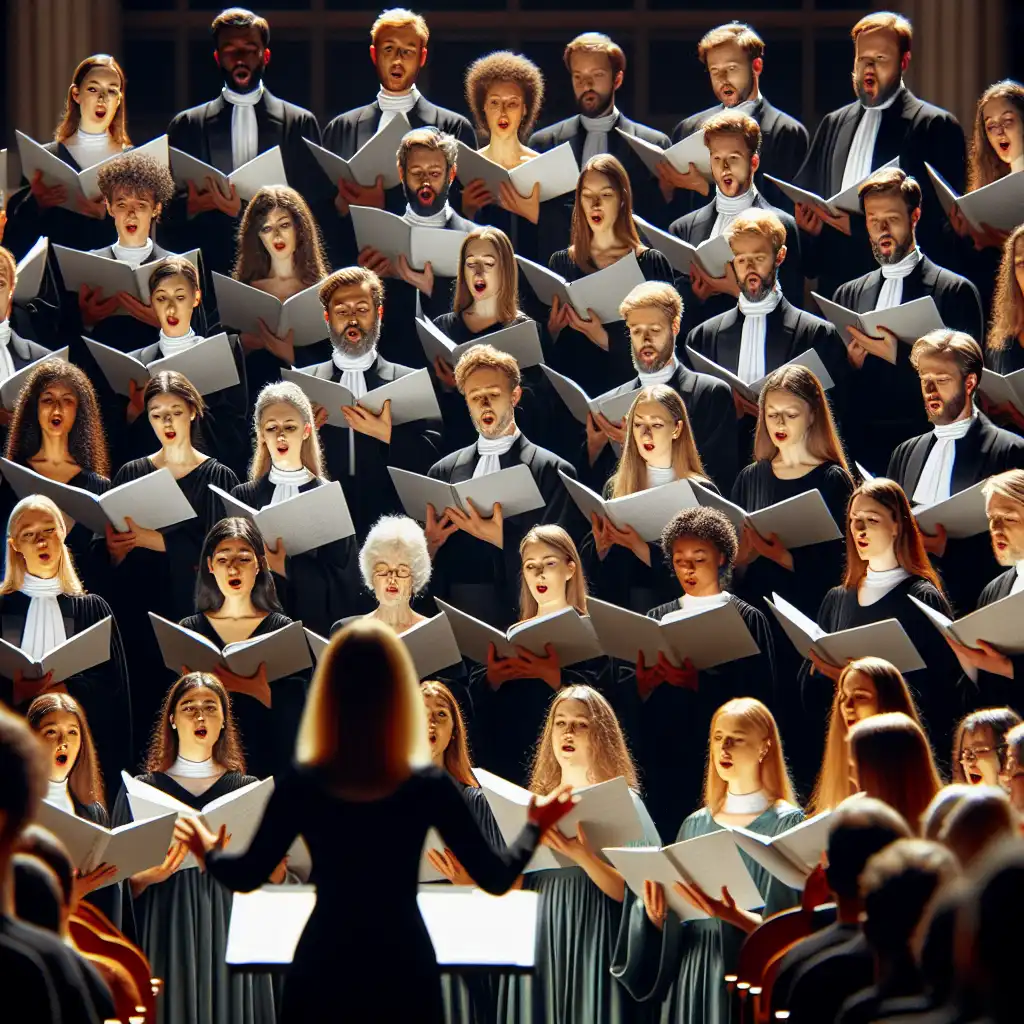
choral
adjective choral
ˈkɔːrəl
Related to a choir or a group of singers
They performed a choral piece at the concert.
choral
ˈkɔːrəl
読み込み中…
ˈkɔːrəl
Related to a choir or a group of singers
They performed a choral piece at the concert.
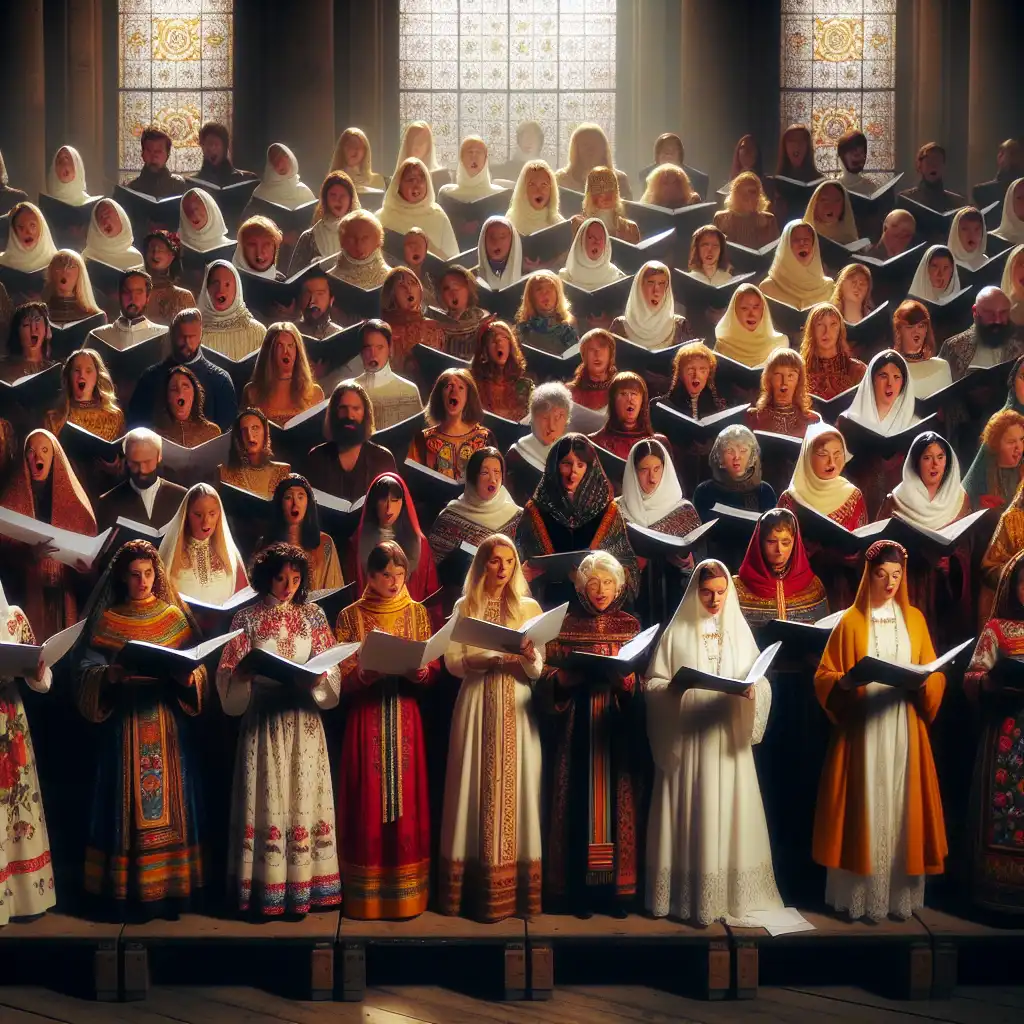
ˈkɔːrəl
Composed for or sung by a choir or chorus
The choral arrangement of the song was beautiful.
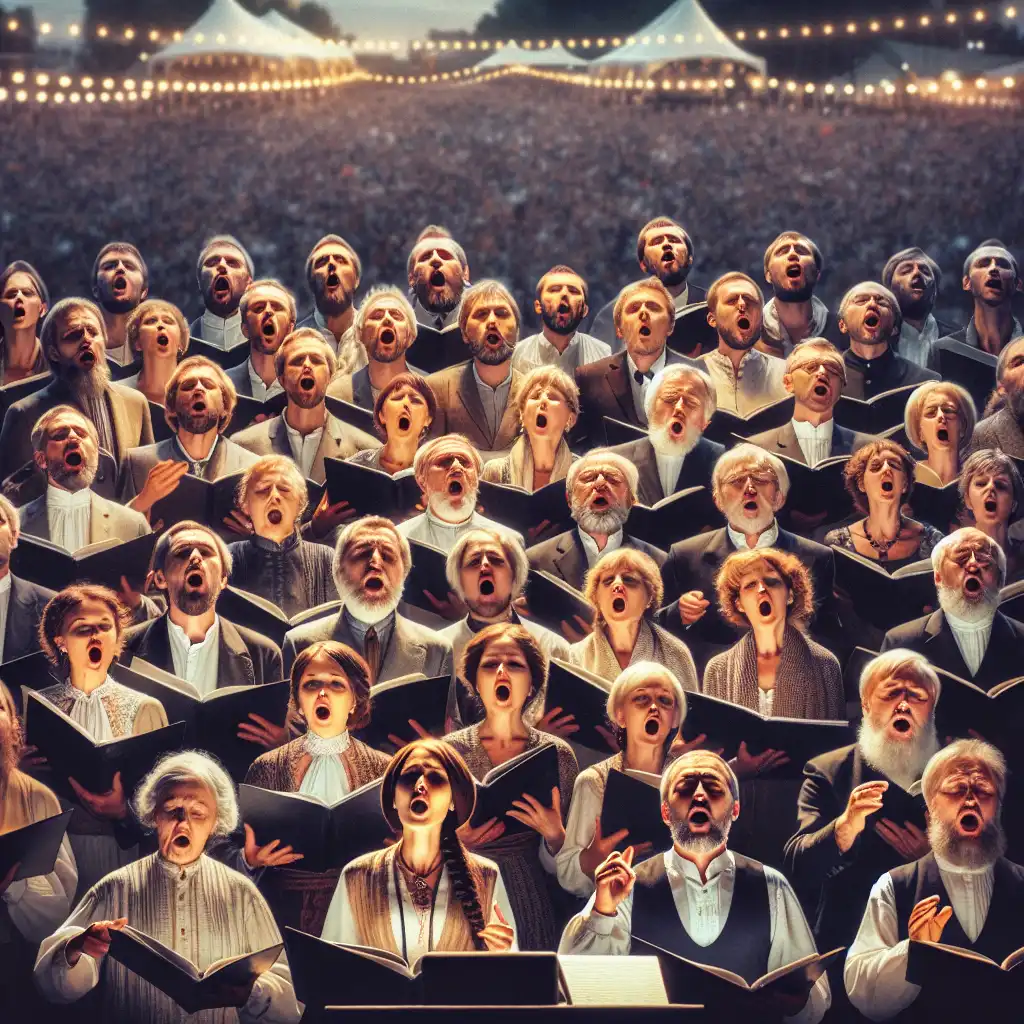
ˈkɔːrəl
Involving or relating to voices or singing
The festival offered choral workshops for participants.
音声を読み込めませんでした。しばらくしてからもう一度お試しください。
The word 'choral' refers to something that is related to a choir or singing with a group of people. You can use this word when you talk about music that is sung by a choir, like choral music. Or you can use it to describe a style of singing, like choral singing. This word can also describe something that is done or performed by a choir, like a choral performance. So, if you ever hear someone mention the word 'choral' in a conversation about music, it usually means they are talking about singing with a group.
A choir is a group of singers who perform together, typically in a religious or musical setting. Choir is used to refer to the group itself.
Choral describes music that is sung by a choir or that is written for a choir to sing. Choral describes the style of music that is being performed.
You could say "The choir performed a choral piece."
In simpler terms, choir refers to a group of singers, while choral refers to the type of music they sing.
単語を開く: Choir →Ensemble refers to a group of musicians who play instruments like guitar, piano, violin, drums or any other musical instrument.
Ensemble music can be classical, jazz, rock, pop or any other type of music that is played together by a group of musicians.
Choral music involves singing, while ensemble music involves playing instruments. Both choral and ensemble music can be performed in various settings like concerts, musical shows, and religious events.
単語を開く: Ensemble →Choral refers to a group of people singing together, typically in a choir or ensemble. It relates to the collective sound produced by a group of voices singing harmoniously.
Harmonious means something that is pleasing or agreeable to the ear. It refers to a combination of sounds or elements that blend well together and create a pleasing effect.
Both words describe musical qualities, but choral specifically relates to a group of singers while harmonious can describe any pleasing combination of sounds.
For example, a melody played on a piano can be harmonious even if it is played solo, but a choir singing in unison would be considered choral.
単語を開く: Harmonious →Melodic refers to music that is focused on a single line of melody, usually performed by a singer or an instrument. Melodic music can have accompaniment, but the focus is on the melody itself.
Choral music is for singing by a group, while melodic music is typically a single line of melody.
単語を開く: Melodic →Polyphonic refers to music that has multiple independent voices or melodies that are played or sung simultaneously. It often involves intricate and complex harmonies and is typically associated with classical music.
Choral music focuses on group singing with a unified sound, while polyphonic music focuses on multiple voices or melodies played together in harmony.
Choral music is applicable in settings such as church choirs or school concerts, while polyphonic music is often used in classical music compositions.
単語を開く: Polyphonic →Choral refers to a group of singers who perform together, while sing refers to the act of producing musical sounds with the voice.
Choral is applicable when talking about a group of people who are singing together, such as in a choir or ensemble, while sing can describe both individual and group singing.
単語を開く: Sing →Vocal generally refers to singing or voice in general, while the word choral specifically refers to a group of singers who perform together as a choir.
Vocal can describe a solo singer, a performance by a small group of singers, or even instrumental music that features vocalizations.
Vocal can be used in a broader sense to describe any singing, while choral specifically refers to music performed by a choir.
単語を開く: Vocal →The battle of the Greek...
YouTube で見る ↗I'm not a great deductive thinker, but I will admit to having competence in a very wide range of things - not being afraid to try to write about baseball, choral music and dinosaurs in the same week and see connections among them.
How Africa can use its...
YouTube で見る ↗My taste in both is pretty eclectic. I do encourage people to try new and different kinds of tea if they can - there are so many different sorts, and so many, flavored or not, and there's bound to be something you like. The same with choral music, really.
I'd been trained in choral, gospel, and a little bit of opera.
With vocal and choral music, first and foremost, it's the text. Not only do I need to serve the text, but the text - when I'm doing it right - acts as the perfect 'blueprint', and all the architecture is there. The poet has done the heavy lifting, so my job is to find the soul of the poem and then somehow translate that into music.
Singing harmony is not the same as singing a part in a choral group, where you know you're going to have to hit this note and then that note. There are nuances that change every day. Maybe today you have a slight cold or voice fatigue, or you've done something and there's a slight difference in your breathing.
My own introduction to music came quite early. My father didn't have much of an education, but he was keen for me to get some qualifications, and I ended up winning a choral scholarship to a cathedral school.
I love music, and I once thought about doing a choral scholarship, but the people put me off.
I enjoy my family a lot. I have active teenagers, and they're in soccer and choral events.
I loved teaching and directing choral activities at BYU, but nothing surpasses working with the MTC musicians.
I did a lot of choral music in high school, and that was kind of my primary, stable outlet for music because I didn't feel comfortable being a soloist. It was a cool, safe space for me musically.