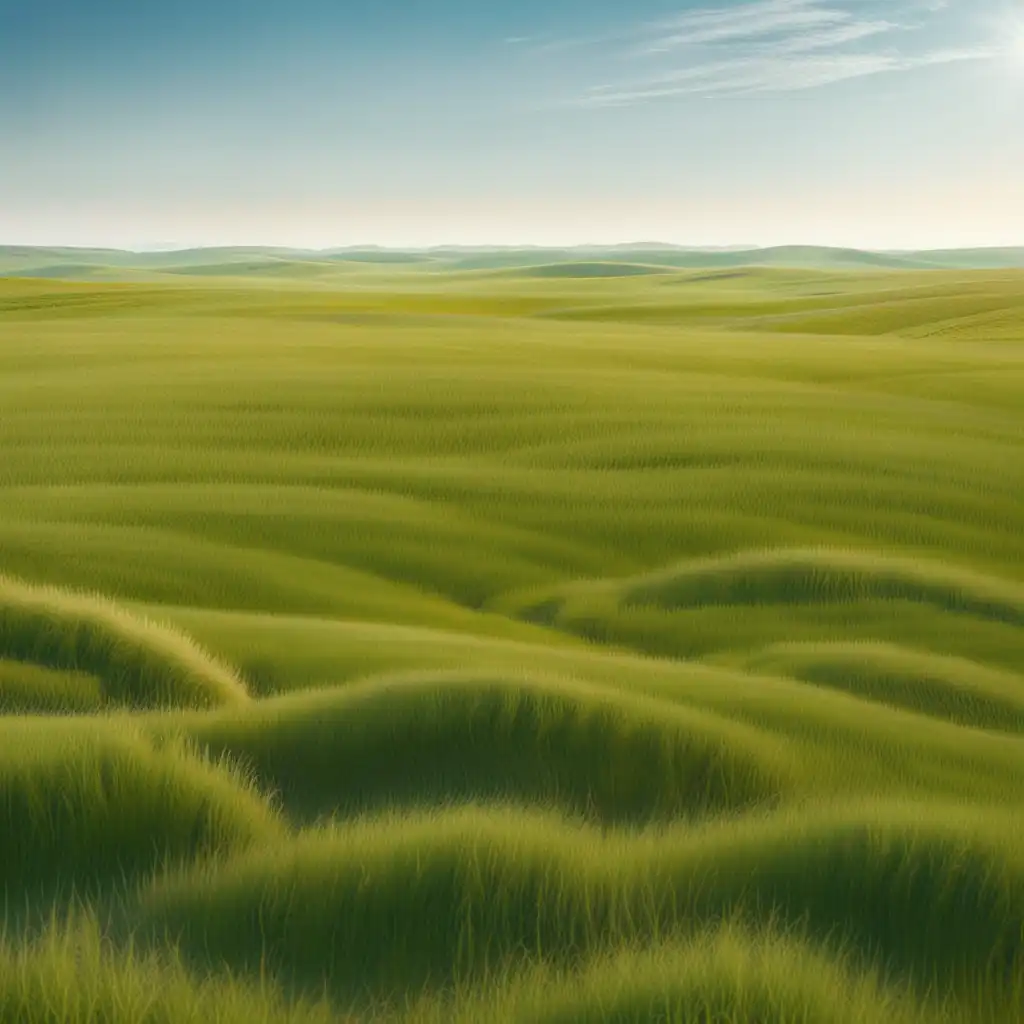
steppe
noun steppe
step
A large area of flat grassland, mainly found in southeastern Europe and Siberia.
Mongolia is largely covered by the steppe, a grassy plain.
steppe
step
Cargando…
step
A large area of flat grassland, mainly found in southeastern Europe and Siberia.
Mongolia is largely covered by the steppe, a grassy plain.
No se pudo cargar el audio. Inténtalo de nuevo más tarde.
A steppe is a large open grassy plain, typically found in central Asia or Eastern Europe. It is a flat area without many trees, and is often used for grazing animals like horses or sheep. You might use the word steppe when talking about the landscapes in countries like Mongolia or Russia.
Heath and steppe are both words used to describe different types of landscapes. The main difference is that heath is a type of shrubland that is found in cool, wet climates, while steppe is a type of grassland found in drier, continental climates.
Heaths are often found in places like the UK and northern Europe, where there is a lot of rainfall and mild temperatures.
They are characterized by low-growing shrubs, like heather and gorse, and have a lot of biodiversity.
Heath and steppe are two very different types of landscapes that are adapted to different types of climates and environments.
Abrir palabra: Heath →A meadow is an area of grassland usually found near a body of water such as a river, lake or stream.
So, meadows are lush, grassy areas close to water sources while steppes are vast, treeless plains with lower grasses and are found in drier regions.
Abrir palabra: Meadow →A moor is a type of wetland habitat found in upland areas, whereas a steppe is a vast grassland plain found in dry areas.
In other words, a moor is a wet and boggy area, while a steppe is dry and grassy.
Moorland is typically found in cooler, northern regions, such as Scotland, where it forms a unique ecosystem of peat bogs and heathlands.
In summary, moors are wet and boggy areas found in cooler regions of the world, while steppes are vast dry grasslands found in drier regions of the world.
Abrir palabra: Moor →Both pampas and steppe are vast, grassy plains without trees.
However, pampas refers specifically to the grasslands of South America, while steppe refers to the grasslands of Eurasia.
The term steppe also describes the similar grasslands found in North America and Africa. If someone is talking about the grasslands of Argentina, Uruguay, or Brazil, they would use the term pampas.
Abrir palabra: Pampas →Plain refers to a flat and open area with no hills or mountains, often covered in grass.
Plain can also refer to something that is simple or unadorned.
Steppe refers to a vast, usually treeless plain, often found in eastern Europe and Asia. It is characterized by grasses and is often used to describe the great grasslands of Russia, Ukraine, and Kazakhstan.
The steppe is typically drier than a plain.
In summary, both words describe flat areas, but plain is more general, while steppe is more specific to a certain region and characterized by dry grasslands.
Abrir palabra: Plain →The prairie is a type of grassland found in North America, specifically in the central United States and Canada. It is considered to be more humid than the steppe and has a greater diversity of plant life, including tall grasses and wildflowers.
It is considered to be drier than the prairie and has a more uniform landscape, with shorter grasses and less tree cover.
Both prairies and steppes are important ecosystems that support a variety of wildlife and plant species, and they are both subject to human activity such as agriculture and grazing.
Abrir palabra: Prairie →The steppe and the tundra are both vast, flat, treeless landscapes, but they differ in location and climate.
In contrast, the tundra is a treeless plain located in the northern latitudes where it's consistently cold. It has a very short growing season, and much of the ground is permanently frozen, making it difficult for plants and animals to survive.
The tundra is found in places such as Canada, Alaska, and northern Europe. It's not easy for people to live on the tundra for long periods, as the climate and conditions are harsh.
The main differences between the steppe and the tundra are their location and climate. The steppe is a semi-arid grassland found in central Asia and Russia, while the tundra is a treeless plain in northern latitudes where it's consistently cold.
Abrir palabra: Tundra →could maybe you could travel places you could visit different areas and clock up some frequent flying miles maybe a migratory one as well like a steppe Eagle you could really have the best of both worlds some are in two different
Ver en YouTube ↗Exchanging gifts is an important thing in the steppe culture, a way for them to feel you have become a part of their lives.
even in the winter when snow is on the ground. And the way the mammoth steppe, which used to wrap all the way around the North Pole -- there's a lot of landmass around the North Pole -- that was all this grassland. And the steppe was magnificent, probably one of the most productive biomes in the world,
Ver en YouTube ↗It is said the boundless steppes of Asia gave flight to tales of heroes and heroines because the conditions there are so harsh.
theory that would put the manless to work he says that the world's largest biome used to be what was called the mammoth steppe it was Arctic grasslands kept in order by dense herds of mega herbivores
Ver en YouTube ↗I've been almost everywhere. But I've never been to the steppes of Latvia. It's something I've always wanted to do.
and trace the origins of Proto-Germanic to a language called Proto-Indo-European, spoken about 6000 years ago on the Pontic steppe in modern day Ukraine and Russia.
Ver en YouTube ↗The most successful hyperpowers are the ones where there was actual intermixing. Tang dynasty China was China's golden age, and contrary to what I was told when I was growing up, Tang China was founded by a man who by today's standards was no more than half Chinese. It was a mixed-blood dynasty that pulled in 'barbarians' from the steppe.
why in the past on the steppe people were always buried with their best mounts because the horse literally carries people into life in step through life and then they hope off into the afterlife there's two meters of snow up here in
Ver en YouTube ↗Celebrating historic triumphs is a favorite pastime for many Turks. Tales of how Turkic peoples emerged from Central Asia, crossed the steppes to Anatolia, established the Ottoman Empire and ruled for centuries over large swaths of Europe and Asia are the subject of countless legends, poems and books.
Ukraine learning to look at the world who are nomads odds the only problem was I couldn't ride a horse I set off and within five days my world had come crashing down the horses were stolen life on the steppe without a horse is
Ver en YouTube ↗We see evidence that lakes and forests and wetlands can have different equilibria - so you have a savanna system that may be stable and thriving, but it can also tip over and become an arid steppe if pushed too far by warming, land degradation, and biodiversity loss.
Before the sun never set on the British Empire, before Genghis Khan swept the steppe,
Ver en YouTube ↗Perhaps most important for nomads was the belief in the symbiosis that existed between wolf and humans on the steppe. Wolves were an integral part of keeping the balance of nature, ensuring that plagues of rabbits and rodents didn't break out, which in turn protected the all-important pasture for the nomads' herds.
These burial grounds created permanent places to commemorate the dead. The nomadic Scythians littered the steppes with grave mounds known as kurgans. The Etruscans built expansive necropoles, their grid-patterned streets lined with tombs.
Ver en YouTube ↗What drew me to Kazakhstan was a curiosity to learn about life in this 'middle earth' of steppe between the endless forests of Russia in the north and the world's greatest mountain chains to the south.
Early depictions of Amazons showed them with Greek weapons and armor. But in later representations, they wielded bows and battle-axes, rode horses, and wore pointed caps and patterned trousers characteristic of steppe nomads.
Ver en YouTube ↗In the initial stages of my journey, I was trying to travel too fast by horse by sticking to a 'five days on and two off' schedule. On the steppe, time is not measured by days, weeks or hours but the fall of the seasons and condition of the animals.
the East Asian steppe was home to scattered groups of Mongol and Turkic pastoral nomads led by Khans. The people herded sheep cattle yaks and camels. They lived in felt tents and moved between summer and winter campsites.
Ver en YouTube ↗I have brought many artifacts back with me from the steppe. My favourite is a 90-year-old Kazakh saddle decorated with silverwork in traditional motifs. It symbolises the deep relationship between man and horse on the Eurasian Steppe.