maw
noun maw
mɔː
読み込み中…

mɔː
A destructive, consuming force or thing
He was swallowed up by the maw of the corporation.
音声を読み込めませんでした。しばらくしてからもう一度お試しください。
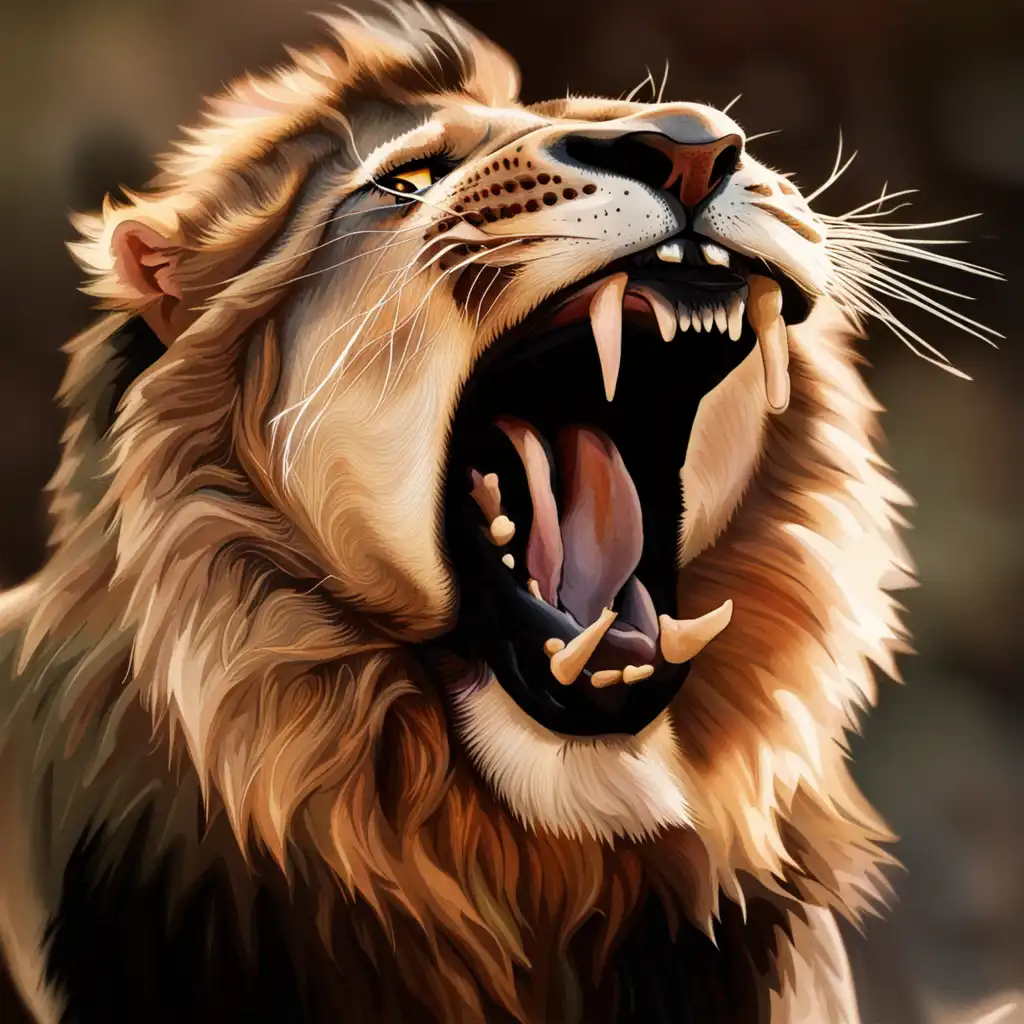
Maw is a noun that describes a large and open mouth of a creature such as a whale, shark, or other animal. It can also be used to refer to a person's mouth or the mouth of a scary or dangerous place, such as a cave or abyss. It is not commonly used in everyday speech and may sound old-fashioned or poetic.
Beak refers specifically to the hard, pointy, protruding mouthpart of a bird, while maw is a more general term for the mouth or jaws of any animal.
Beak describes the mouth of a bird, while maw may be used to describe the mouth of any animal, from a lion's powerful jaws to a snake's gaping mouth.
Beak is a more precise term, while maw is more general.
単語を開く: Beak →Chop refers to cutting something into smaller pieces, usually with a sharp tool like a knife or an ax.
Chop is used for cutting things into smaller pieces, while maw is used to refer to an animal's mouth or someone's large appetite.
単語を開く: Chop →Both words refer to the mouth, but gob is more commonly used in British English while maw is more commonly used in American English.
However, maw can also refer to the jaws or throat, while gob typically only refers to the mouth.
Additionally, maw can be used in a more metaphorical sense to refer to something that consumes or devours, while gob is not typically used in this way.
単語を開く: Gob →Both jaw and maw refer to a mouth or the opening to the mouth.
However, jaw specifically refers to the lower part of the mouth, often associated with teeth and chewing, while maw typically refers to a large, gaping mouth, often associated with animals or monsters.
Jaw can be used in everyday conversations about eating or speaking, while maw is more commonly used in literature or storytelling to create a vivid image of a frightening or powerful creature.
単語を開く: Jaw →Both maw and mouth refer to the opening through which food and air enter in animals, including humans.
However, maw is a more formal or literary term typically used to describe the mouth of a fierce or dangerous animal, whereas mouth is a more common term used for any animal's mouth, including humans.
For example, we might say "The lion growled, revealing its sharp teeth in its maw," but for a human, we would simply say "She opened her mouth to speak."
単語を開く: Mouth →Muzzle usually refers to a device that is put over the snout of an animal to prevent it from biting or eating.
For example, a dog might wear a muzzle, especially if it tends to be aggressive or if it is recovering from surgery.
It can also be used as a verb, meaning to restrain or prevent someone from speaking, as in "the government muzzled the journalists."
Maw is about the open mouth, while muzzle is about anything that covers the mouth.
単語を開く: Muzzle →Both maw and snout refer to the mouth and nose area of an animal, but they are used in slightly different contexts.
Snout usually refers to the elongated and protruding nose of certain animals, such as pigs, dogs, or elephants.
It can also refer to the mouth and nose area together, as in the case of a snout-like facial feature on a car or a boat.
If you're talking about a wide-open mouth, you'd use 'maw.' If you're talking about a nose that sticks out from the face, you'd use 'snout.'
単語を開く: Snout →Maw refers to the mouth or jaws of a fierce animal, while the word trap means a device used to catch or ensnare something, typically an animal.
Maw is only applicable to animals, whereas traps can be used to catch animals, people, or objects. Maw refers to an animal's mouth, and trap refers to a device used to catch something.
単語を開く: Trap →Amazing Octopus Color...
YouTube で見る ↗My maw died when I was 20. You tune into the radio or the telly and life goes on. Things keep on happening. The world doesnae stop.
Every time I step onto an airplane, I turn to the right and take a good, hard stare into the maw of the engine. I don't know what I'm looking for. I just do it.