vinaigrette
noun vinaigrette
ˌvɪnɪˈɡret
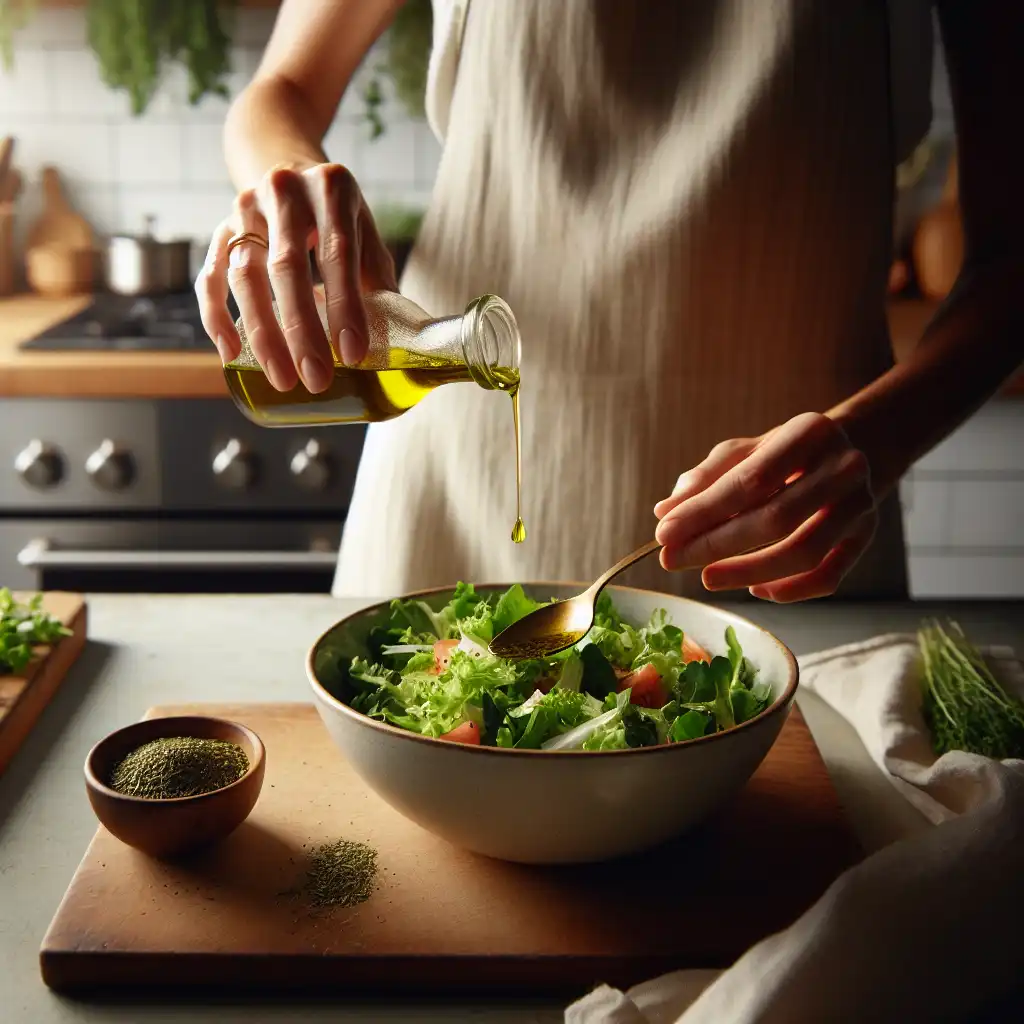
A sauce that is made from oil, vinegar, and seasonings, often used on salads.
She dressed her salad with a homemade vinaigrette.
vinaigrette
ˌvɪnɪˈɡret
Cargando…
ˌvɪnɪˈɡret
A sauce that is made from oil, vinegar, and seasonings, often used on salads.
She dressed her salad with a homemade vinaigrette.

ˌvɪnɪˈɡret
A small container with a perforated lid used for holding an aromatic substance such as vinegar or perfume.
The lady held a silver vinaigrette to her nose to combat the foul odors in the streets.
No se pudo cargar el audio. Inténtalo de nuevo más tarde.
Vinaigrette is a type of dressing for salads or other dishes. It is usually made with oil, vinegar, and other flavorings like herbs, spices, or honey. When you go to a restaurant or prepare a salad at home, you might see vinaigrette as an option for dressing. It's a popular choice because it adds flavor to the greens and can be used on many different kinds of salads.
A condiment is a substance that is used to add flavor to food.
A condiment is used to add flavor to a meal as a side or topping, while a vinaigrette is used as a dressing or marinade for salads and vegetables.
Abrir palabra: Condiment →Dress usually refers to clothing, like a shirt or pants. The word vinaigrette is a type of salad dressing made from oil, vinegar, and usually other seasonings like herbs or mustard.
You would use the word dress when talking about getting dressed in the morning, or buying a new dress for a special occasion.
And you would use the word vinaigrette when talking about adding a salad dressing to your salad at lunch or dinner.
Abrir palabra: Dress →Emulsion refers to a mixture of two liquids that are normally immiscible (not able to mix), but are held together by an emulsifying agent, such as egg yolk, mustard, or lecithin.
Emulsion refers to a type of mixture held together by an emulsifying agent, while vinaigrette specifically refers to a salad dressing made from oil and vinegar.
Abrir palabra: Emulsion →Flavour refers to the taste of a particular food or drink.
Vinaigrette can be made with different types of vinegar, such as balsamic, red wine, or apple cider, and can be flavoured with herbs, spices, or mustard.
Flavour is a taste or sensation experienced when consuming food or drink, while vinaigrette is a type of sauce or dressing made with vinegar and oil used to dress salads or vegetables.
Abrir palabra: Flavour →A marinade is a liquid mixture that is used to add flavor to meat, fish, or vegetables before cooking.
Marinades are best used for longer cooking times such as grilling, roasting, or baking.
Vinaigrettes are used to enhance the flavors of the salad ingredients, and can also be used as a marinade for vegetables or seafood.
A marinade is used to flavor and tenderize meat, fish, or vegetables before cooking, while a vinaigrette is a dressing used for salads or as a marinade for vegetables or seafood.
Abrir palabra: Marinade →Relish is a type of condiment that is made with chopped vegetables or fruits that are pickled in vinegar or brine.
Relish is a type of condiment used as a topping, while vinaigrette is a type of salad dressing used to dress salads and other dishes.
Abrir palabra: Relish →Sauce is a thick or creamy liquid that is used to flavor or enhance the taste of food.
It is a thinner liquid than sauce and is used to dress salads and sometimes as a marinade for meats or vegetables.
Sauce is a thicker liquid used to accompany main dishes, while vinaigrette is a thinner liquid used as a dressing for salads or marinade for meats and vegetables.
Abrir palabra: Sauce →Season refers to the process of adding spices, herbs, or other ingredients to enhance the taste of food, typically meat, vegetables or salads.
Season is adding flavor to the main ingredient of a dish and vinaigrette is a salad dressing.
Abrir palabra: Season →Marriage? It's like asparagus eaten with vinaigrette or hollandaise, a matter of taste but of no importance.
The addition of vinaigrette to freshly roasted vegetables gives them a freshness and juiciness they don't normally have; the acidity brings out new shades of flavour, too.
If we put a vinaigrette together, every part of it is weighed. For the burger, we do a bit of arugula, olive oil - everything is weighed. To the gram.
Of course, eating broccoli raw, nutritionally and aesthetically speaking, is no doubt the best way of all. Raw broccoli makes a delectable salad when sliced into thin strips on a mandolin, marinated in lemon-mustard vinaigrette, then tossed with toasted pecans or hazelnuts, halved cherry tomatoes, and fresh minced basil.
There are two proper ways to use garlic: pounding and blooming. Neither involves a press, which is little more than a torture device for a beloved ingredient, smushing it up into watery squiggles of inconsistent size that will never cook evenly or vanish into a vinaigrette. If you have one, throw it away!
The early days of being vegetarian meant ordering plain salads with vinaigrette and a baked potato. You could put the potato in the salad, and, if you were lucky, there were kidney beans.
In L.A., I get a meal delivery service called Diet Designs. I like a nice butter lettuce salad with some avocado, fresh grapefruit, shredded chicken breast and raw almond slices with a sesame vinaigrette dressing. I also love juicing and am kind of obsessed with it.
What I love about the term 'salad' is that it can appear in so many different forms and says a lot about the cook. It could be a simple as fresh green lettuces tossed with a basic vinaigrette, or it could be as hearty as a couscous salad with grilled shrimp.
I know pastry chefs who are overwhelmed by the idea of tasting, rather than measuring, their way to a balanced vinaigrette.