goblin
noun goblin
ˈɡɑːblɪn
A small, ugly, and often evil creature in folklore and fantasy stories.
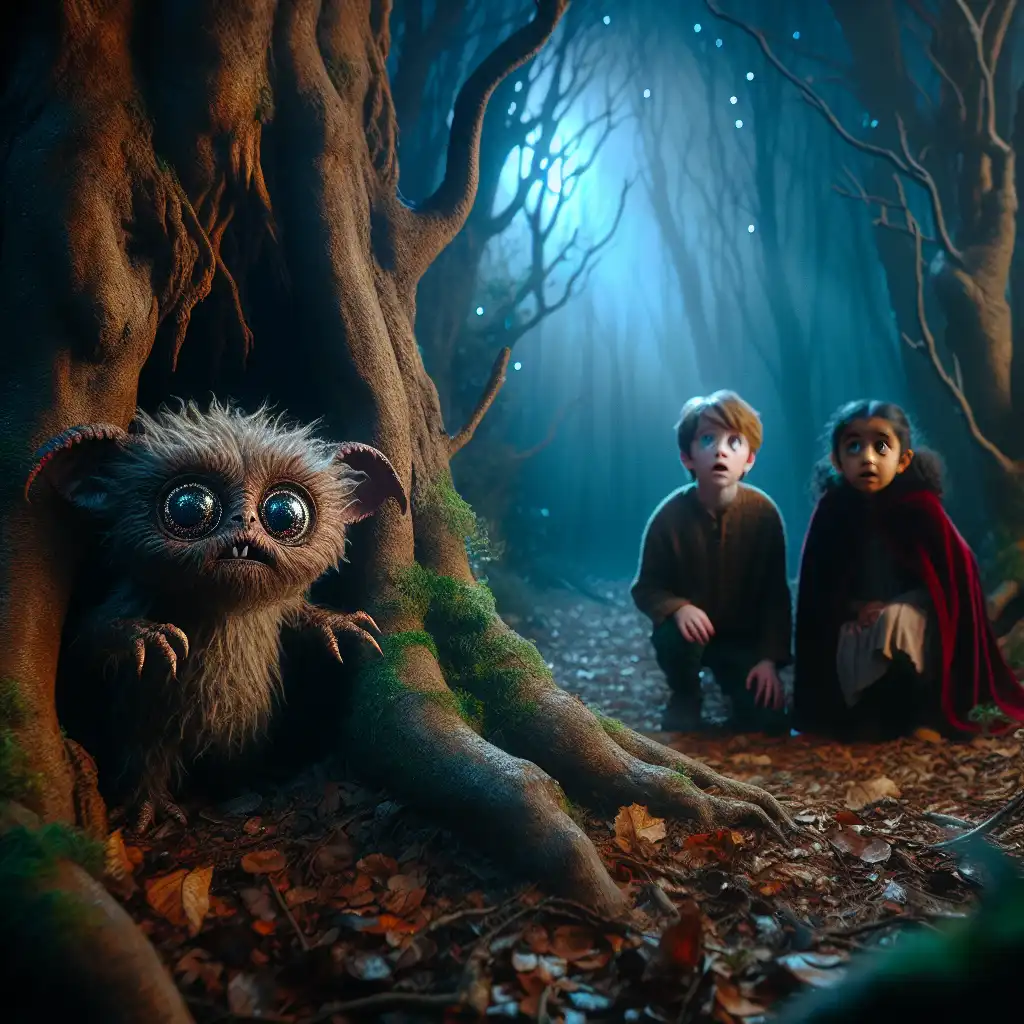
In the dark forest, the children encountered a goblin.
goblin
ˈɡɑːblɪn
불러오는 중…
ˈɡɑːblɪn
A small, ugly, and often evil creature in folklore and fantasy stories.
In the dark forest, the children encountered a goblin.
ˈɡɑːblɪn
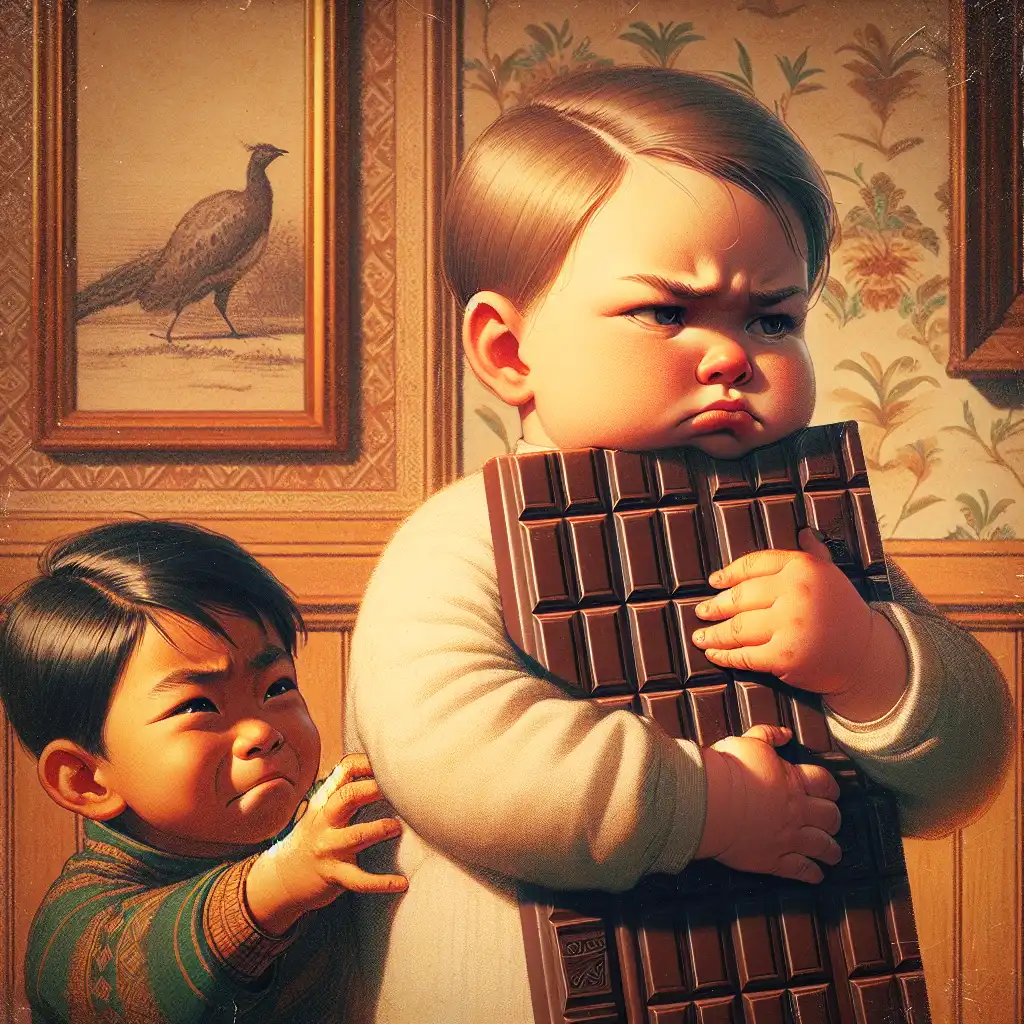
Someone who is very greedy or unpleasant.
Don't be such a goblin, share some of your chocolate with your sister.
오디오를 불러오지 못했어요. 잠시 후 다시 시도해 주세요.
A goblin is a mythical creature that is often portrayed as an evil or mischievous creature in stories and folklore. It is typically depicted as a small, ugly, and grotesque creature with sharp teeth, pointed ears, and a hunchbacked posture. You might hear the word 'goblin' used in books, movies, or other stories about magical worlds or fantasy adventures. It is often used to describe a villainous character who may be causing trouble for the main characters or causing mischief in general. For example, in the Harry Potter series, goblins are depicted as the bankers of the wizarding world, skilled in handling money and valuables. In the story, they are generally portrayed as being greedy and untrustworthy, creating tension and conflict between the characters. Overall, the word 'goblin' is a fun and imaginative way to describe a mythical creature that adds an element of fantasy to storytelling.
Bogeyman refers to a mythical creature commonly used to scare children into behaving well.
It is usually portrayed as a humanoid monster who hides in closets or under beds and is associated with the dark. In this context, bogeyman is most applicable when talking about childhood fears and scaring kids into good behavior.
Bogeyman is used when referring to scaring children, while goblin is used in the context of folklore and fantasy stories.
단어 열기: Bogeyman →The main difference between an elf and a goblin is their nature and appearance.
Elves are typically portrayed as slender and graceful creatures with pointed ears and magical abilities. They are often associated with beauty, wisdom, and kindness.
Elves are often depicted as protectors of forests and natural spaces, and sometimes act as guides or helpers to humans in mythology and fantasy stories.
In summary, while elves are known for their beauty and magical abilities, goblins are known for their mischievous and often untrustworthy nature.
단어 열기: Elf →Fairy and Goblin are both mythical creatures, but they have different characteristics and are applicable in different settings.
Fairy is a small, magical creature often depicted as having wings and being friendly to humans. They are associated with beauty, kindness, and good luck.
Fairies are often portrayed as living in forests or meadows, and are sometimes guardians of nature.
Overall, fairies are seen as friendly and helpful, while goblins are seen as mischievous or even dangerous. Fairies are applicable in contexts where beauty, nature, or good luck are associated, while goblins are applicable in contexts where chaos, trickery, or darkness are associated.
단어 열기: Fairy →A hobgoblin is a larger, more menacing version of a goblin. Hobgoblins are often depicted as tricksters rather than outright evil, but they are still considered dangerous and unpredictable.
Both goblins and hobgoblins are used in fantasy literature and games, but hobgoblins are typically portrayed as more powerful and dangerous than goblins.
In general, goblins are seen as smaller and more mischievous creatures, while hobgoblins are larger and more menacing.
단어 열기: Hobgoblin →Goblin and imp are both mythical creatures, but they have distinct differences.
- Imp: An imp is usually seen as a small and mischievous creature that likes to play pranks on people. They are thought to have horns, wings, and a devilish appearance.
Imps are often viewed as the minions of the devil, and their main goal seems to be to lead humans astray or tempt them into doing evil deeds.
In summary, goblins are more sinister and tend to cause harm, while imps are smaller and more mischievous in nature. Both creatures are often depicted in fantasy literature and mythology.
단어 열기: Imp →Both goblins and ogres are mythical creatures, but they have different characteristics and origins.
On the other hand, ogres are much larger and stronger than goblins. They are often portrayed as being dim-witted and cruel, and their appearance varies depending on the depiction.
To sum up, a goblin is a small, mischievous creature that is associated with fairy tales, while an ogre is a large, cruel creature that is associated with fantasy and magic.
단어 열기: Ogre →The main difference between goblins and sprites is their appearance and origin. Goblins are ugly and mischievous creatures from European folklore, often depicted as having green skin, pointy ears, and sharp teeth.
They are often associated with dark places and magic, and sometimes said to be involved in malicious activities. Sprites are small and delicate creatures from English folklore.
In summary, goblins are ugly and mischievous while sprites are delicate and associated with nature.
단어 열기: Sprite →The main difference between a goblin and a troll is their physical appearance and personality. Goblins are typically smaller, with pointy ears and a tendency to be mischievous.
They are often portrayed as tricksters who enjoy causing trouble for humans. On the other hand, trolls are larger and stronger, with a more aggressive personality.
In popular culture, goblins are often associated with fantasy or fairy tales, while trolls are more commonly found in folklore or legends.
단어 열기: Troll →harboring a huge diversity of life, from giant squids and goblin sharks to minuscule animals smaller than a millimeter. How do so many species thrive in this underwater world? Over the decades intrepid scientists have ventured there to find out. Traveling down through the water column,
YouTube에서 보기 ↗I definitely do not like Halloween. I don't like masks, creepy clowns, dark things, goblins or witches. They're not just my thing.
Only the goblin has a jaw that whips forward like a slingshot an ancient weapon that works even today.
YouTube에서 보기 ↗Profits on the exchange are the treasures of goblins.
Don't get me wrong, magic is cool. But a nervous mother singing to her child at night while something moves quietly through the dark outside her house? That's a story. Handled properly, it's more dramatic than any apocalypse or goblin army could ever be.
As a kid, I was more scared of the supernatural stuff and ghosts and goblins and the Crypt Keeper from 'Tales from the Crypt.' I was always scared he would chase me up the stairs, as a kid.
Us comics guys tend to get really good at the things we draw a lot. I'm good at creepy old forests, Victorian houses, underground goblin cities, and beautiful but creepy fairies.
I learned how to comport myself among trolls, elves, hobbits or goblins. I learned that a friend can be lost to greed and avarice. I learned that solving riddles may be as important a survival skill as bowmanship. I know how to talk to a dragon, and that it's best not to.
Dragons, to my way of thinking, are just another 'race' of sapient characters. We see lots of elves, dwarves, orcs, goblins, giants and, of course, dragons.
As a child I was really into fantasy books with elves and goblins and swords, and I went through a phase for a few years when I was reading endless series. But in the end I became totally fed-up with all these sub-Tolkien rip-offs because they all end up doing the same old things and there's no rigour to it.
I could never see myself playing a goblin or gnome, without some serious CGI at least!