cartilage
noun cartilage
ˈkɑːrtɪlɪdʒ
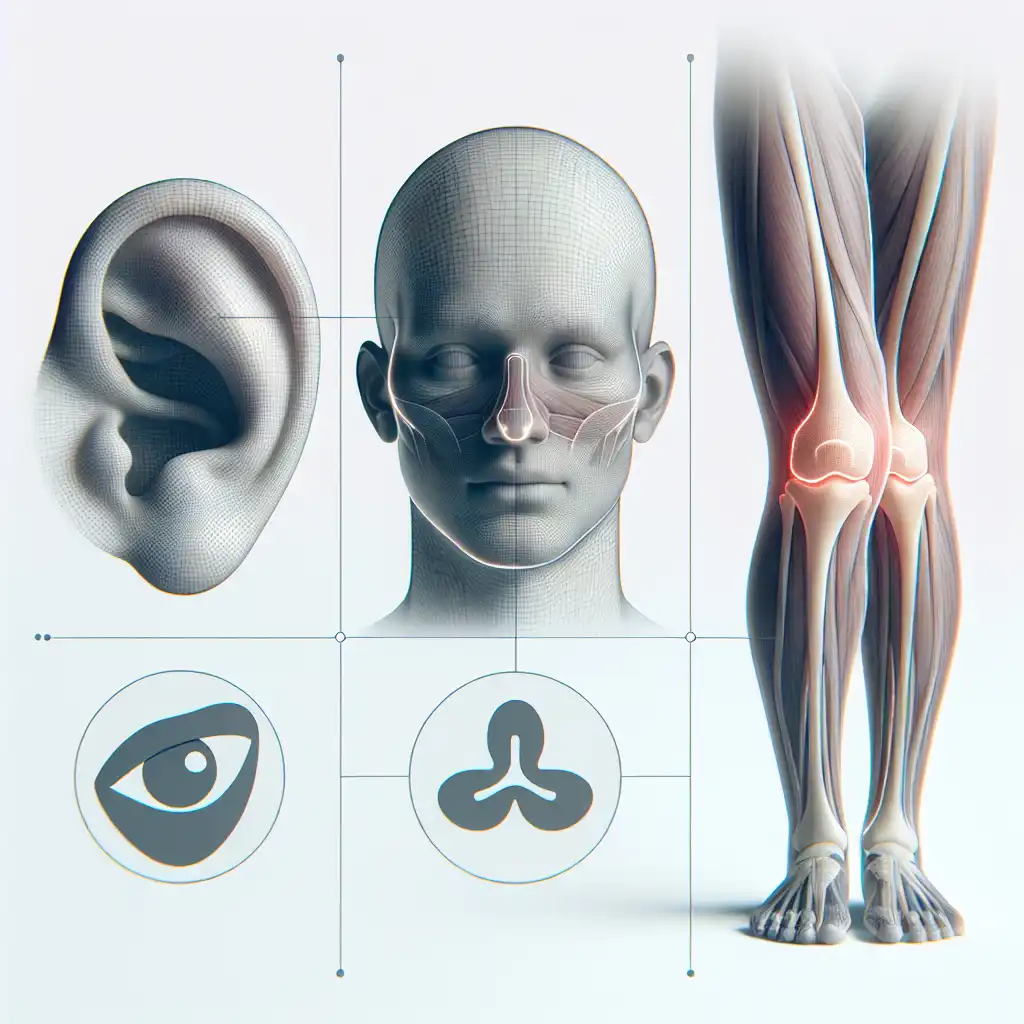
A flexible tissue found in many areas of the body like the ears, nose and joints.
The doctor explained that injury to the knee may damage the cartilage.
cartilage
ˈkɑːrtɪlɪdʒ
Cargando…
ˈkɑːrtɪlɪdʒ
A flexible tissue found in many areas of the body like the ears, nose and joints.
The doctor explained that injury to the knee may damage the cartilage.

ˈkɑːrtɪlɪdʒ
The part of seafood (like crabs, lobsters) that is not easily eaten because it's tough and chewy.
When preparing the lobster, remove the cartilage before serving.
No se pudo cargar el audio. Inténtalo de nuevo más tarde.
Cartilage refers to a tough, flexible tissue found in our bodies that serves as a cushion between our bones to prevent them from grinding against each other. It’s present in body parts such as the ears, nose, joints, and our ribcage. Cartilage is different from bone because it doesn't have blood vessels or nerves. We use the word ‘cartilage’ in medical and anatomical contexts to refer to this type of tissue. For example, if you injure your ankle, your doctor might tell you that you have injured the cartilage in your joint.
Cartilage and gristle are both types of connective tissue in the body, but they differ in structure and location.
Gristle is a tough connective tissue found mainly in meat.
It is usually made up of collagen and is found in areas like the joints of animals. In the culinary world, gristle is often trimmed away as it is chewy and tough to eat.
In summary, while both cartilage and gristle are connective tissues, cartilage is found in the body and is essential for bone development and joint flexibility, whereas gristle is found in meat and is often removed before consumption.
Abrir palabra: Gristle →It also contains phagocytic cells that help clean up any bone or cartilage debris that ends up in the joint. But the reason it's important for knuckle cracking is that like other fluids in your body, it contains lots of dissolved gas molecules.
Ver en YouTube ↗The painter who is familiar with the nature of the sinews, muscles, and tendons, will know very well, in giving movement to a limb, how many and which sinews cause it; and which muscle, by swelling, causes the contraction of that sinew; and which sinews, expanded into the thinnest cartilage, surround and support the said muscle.
called dermal denticles. The denticles help water flow smoothly over the skin, which reduces friction and helps sharks swim quickly and quietly. Sharks also have skeletons made of cartilage instead of bone.
Ver en YouTube ↗Well, any time I'm preparing for a performance or even a rehearsal, it's as if in a way, like any other athletes, these are muscles that support the vocal cords which are just I believe cartilage. It demands a kind of constant warming up and a constant feeling of where is the voice today.
for the rest of your life. This is kind of getting boring right? I mean you understand where this story's going. But I mean it gets more interesting. Last year this group was able to take all the cells off a heart, leaving just the cartilage. Then they sprayed stem cells onto that heart from a mouse.
Ver en YouTube ↗Ribs are a real tricky thing: you don't really know when they're going to heal, especially when mine weren't broken. I don't know what it was, exactly - either a deep bruise or cartilage.
take the cells from the cartilage and actually there there are a lot of examples of cartilage injuries in the sports in arthritis so I'm working now on diminishing those so I take hearts of cells and the important thing is actually this they have the same calcium
Ver en YouTube ↗Your head is a stereo input. The density and cartilage of your ears embed certain extra characteristics into stereo sound sources. Your brain decodes that and gives you sound plus conscious directions.
floor at first the skeleton seemed totally abandoned but even after so long there was still some flesh left in the head hagfish have a skeleton of cartilage and are so flexible that they can tie
Ver en YouTube ↗My problem is that I have no cartilage or tendons. My 86 kilos are supported by bones alone. That's what generated the pain.
while slow large vibrations produce deep bellowing rumbles. Finally by moving the laryngeal muscles between the cartilages, we can stretch and contract those folds to intuitively play our internal instruments.
Ver en YouTube ↗I had cartilage sticking out my nose. I couldn't breathe out of my left nostril.
These enzymes clear out the damaged tissue and contribute to inflammation. But while this rapid swelling helps protect the joint during recovery, inadequately healed tissue can cause these immune cells to overstay their welcome. The continuing flood of enzymes starts to degrade the cartilage, weakening the joint and leading to arthritis later on.
Ver en YouTube ↗At 49, I find it a little bit difficult to run these days. I've got grade four tears in both Achilles, shin splints, I got no cartilage the toes in my right foot, I've got bone marrow edemas under both knees, I've got one degenerating hip - that's the problem you get.
as well as various chemicals that encourage cells to communicate and grow. Some bioinks include a single type of cell, while others combine several different kinds to produce more complex structures. Let’s say you want to print a meniscus, which is a piece of cartilage in the knee
Ver en YouTube ↗I never developed hard cartilage in my ears because I played with them since I was a baby. I can fold my ear entirely inside out, and I can put the whole thing inside itself.
so that you can recreate or regenerate degenerating cartilage? And perhaps more interesting and more importantly, the question is can you apply this model more globally outside medicine?
Ver en YouTube ↗I retired because I had a knee injury, my cartilage was wearing out, it was painful and I couldn't put in the four hours of practice each day that I needed to.
and so day after day he was punished for eternity by the gods. And liver will regenerate in this very nice way, but actually if we think of other tissues, like cartilage for example, even the simplest nick and you're going to find it
Ver en YouTube ↗The general framework of the body is built up mainly of a series of bones, supplemented, however, in certain regions by pieces of cartilage; the bony part of the framework constitutes the skeleton.