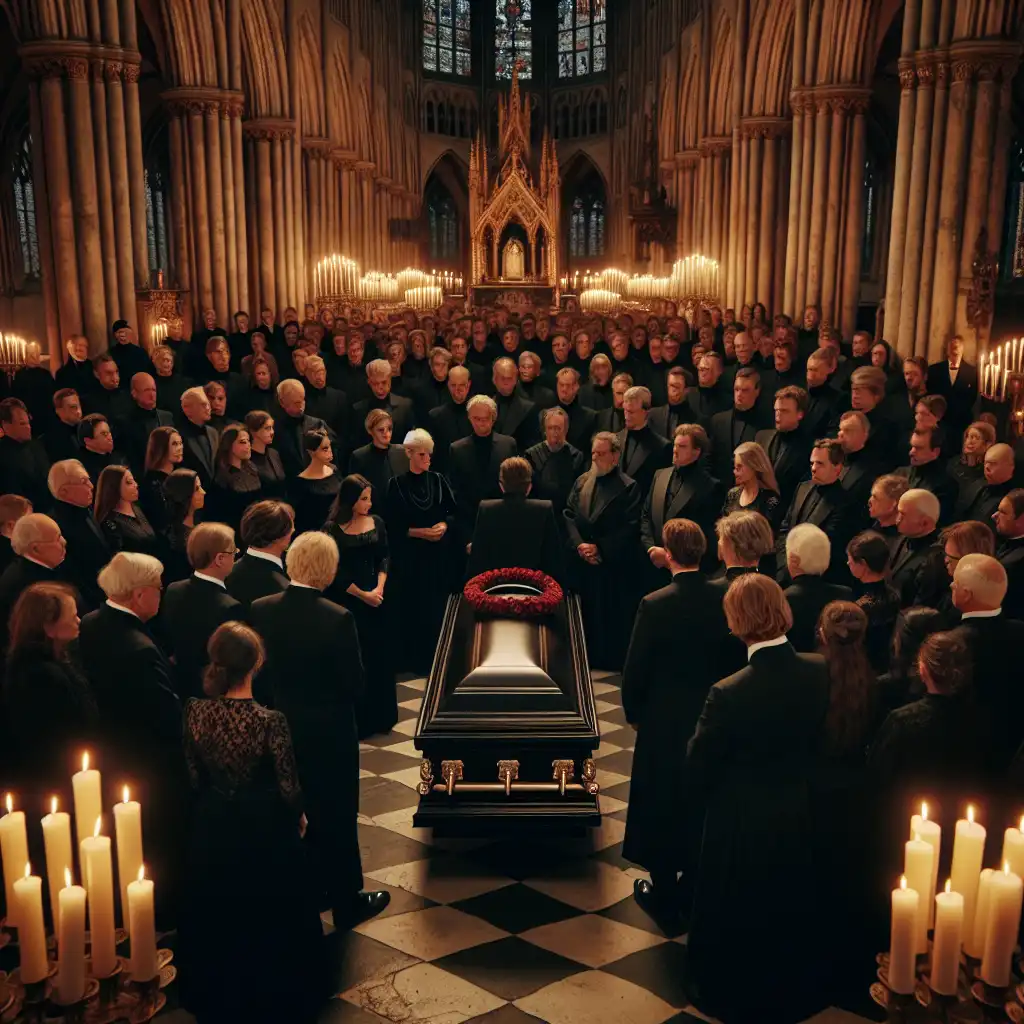
obsequies
noun obsequies
ˈɑːbsəkwiz
Funeral rites or ceremonies
They held obsequies for the dead king.
obsequies
ˈɑːbsəkwiz
Chargement…
ˈɑːbsəkwiz
Funeral rites or ceremonies
They held obsequies for the dead king.
Impossible de charger l’audio. Réessayez plus tard.
The word 'obsequies' refers to the funeral rites or ceremony that takes place after someone dies. It is not a commonly used word and is usually reserved for formal or literary contexts, rather than everyday speech. So, if you are attending a funeral or writing a formal document, you might use the word 'obsequies' to refer to the funeral ceremony.
Burial refers to the act of laying a dead body to rest in the ground or tomb. It usually involves basic rituals and procedures like digging a grave, placing the body in a casket or shroud, and covering it with soil.
Obsequies refers to the entire process of funeral rites and ceremonies, including the burial or cremation. This includes the religious or cultural practices, the procession, the viewing of the body, and any other traditions associated with honoring the deceased.
Burial is just one part of the obsequies, which is a comprehensive term for all the events that occur when someone passes away.
Burial is applicable when simply referring to the act of physically burying a body, while obsequies encompass everything surrounding the funeral in a more general sense.
Ouvrir le mot: Burial →Committal refers to the act of burying or cremating a person's remains in a formal or official manner, such as in a funeral ceremony.
It includes the committal as well as other aspects of the funeral service such as speeches, music, and prayers.
So, while committal specifically refers to the act of burying or cremating a person's remains, obsequies encompasses the entire funeral service.
Ouvrir le mot: Committal →However, funeral is the more commonly used term and generally refers to the entire process of mourning and burying the body of the deceased, including the ceremony or service itself.
Obsequies is a more formal or literary word that typically refers specifically to the religious or formal aspects of the funeral ceremony, such as prayers, hymns, and other rituals.
Funeral is the appropriate word to use, while obsequies may be more appropriate in formal or written contexts.
Ouvrir le mot: Funeral →Interment refers to the burial or placement of a dead body in a grave or tomb.
Interment refers to the physical act of burying the body, while obsequies refer to the funeral rituals that are carried out to honor and remember the deceased.
Ouvrir le mot: Interment →Procession refers to a line of people or vehicles that move together, usually for a specific purpose or event. In the context of a funeral, a procession may refer to the group of people who accompany the body of the deceased from the funeral home to the cemetery.
Essentially, obsequies refers to the actual funeral ceremony, while procession refers to the movement of people or vehicles as part of that ceremony.
Ouvrir le mot: Procession →Obsequies and requiem are both related to funerals, but they are used in different contexts.
Requiem specifically refers to a musical composition or Mass performed in honor of the dead. It is a type of choral music that is typically sung in Latin and includes prayers for the deceased's soul.
Obsequies refer to the general funeral rites and ceremonies, while requiem refers specifically to the musical or religious observances performed during a funeral.
Ouvrir le mot: Requiem →Both obsequies and wake refer to a funeral or a gathering to honor someone who has died, but they are used in slightly different contexts.
Wake typically refers to a less formal gathering of friends and family members who come together to mourn the loss of the deceased.
This might involve sharing stories and memories, offering condolences, or simply gathering to honor the person's life. Wakes are often held before or after the formal funeral ceremony.
To summarize, obsequies are more formal and focus on the religious and ceremonial aspects of a funeral, while wakes are more informal and focus on bringing together loved ones to mourn and remember the deceased.
Ouvrir le mot: Wake →It was appointed by law in Athens, that the obsequies of the citizens who fell in battle should be performed at the public expense, and in the most honorable manner.