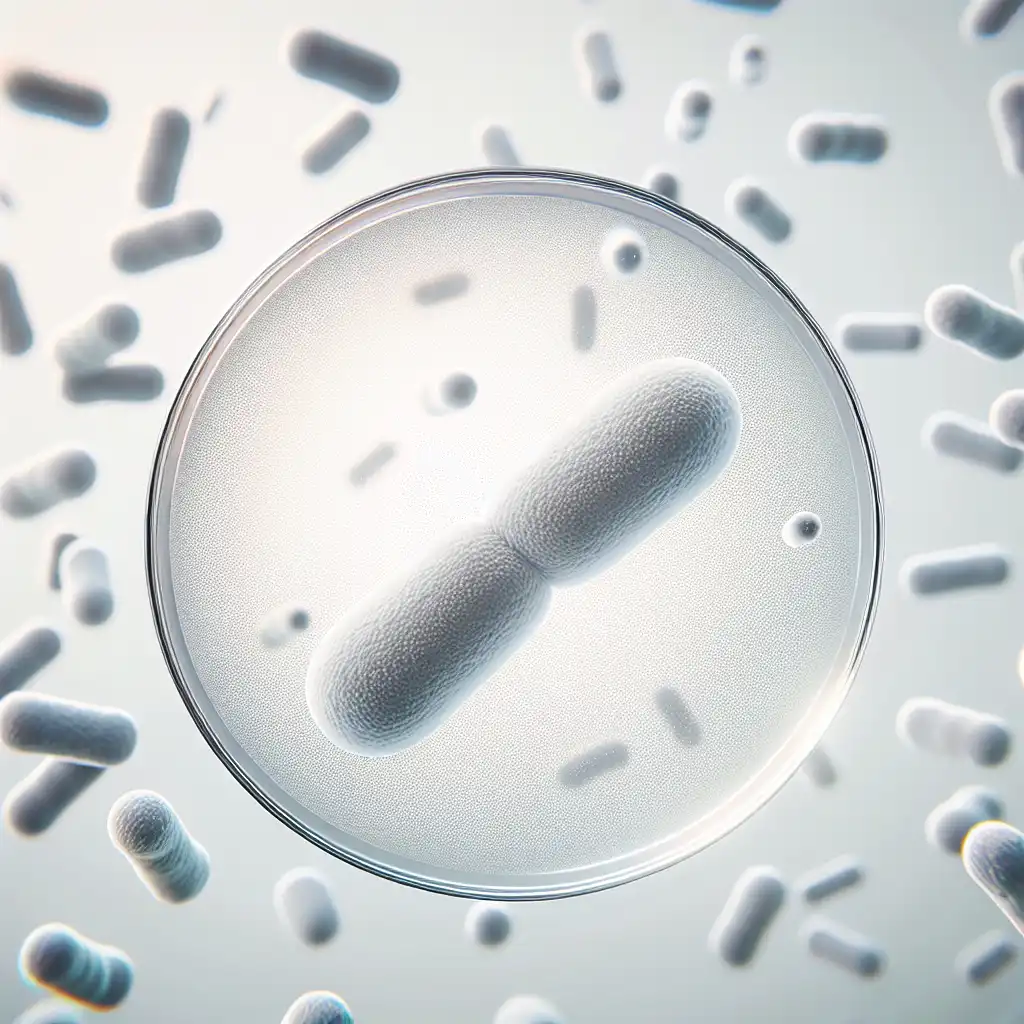
unicellular
adjective unicellular
ˌjuːnɪˈseljələr
Something that is made of a single cell
Bacteria are unicellular organisms.
unicellular
ˌjuːnɪˈseljələr
Cargando…
ˌjuːnɪˈseljələr
Something that is made of a single cell
Bacteria are unicellular organisms.
No se pudo cargar el audio. Inténtalo de nuevo más tarde.
Unicellular is a word used to describe something that is made up of only one cell. It can be used to describe very tiny organisms called bacteria or to describe how some organisms are different from others that are made up of many cells. For example, a human body is made up of many cells while a bacteria is only made up of one cell. This is important to know when learning about different types of living things or to understand how the human body works.
Basic refers to something that is simple or fundamental, while unicellular refers to a living organism that is made up of only one cell.
Basic can describe anything that is easy to understand, while unicellular describes small living creatures such as bacteria, yeast or some protozoa.
For example, we can say that a basic math equation is easy to solve, but a unicellular organism is too small to see without a microscope.
Abrir palabra: Basic →Elementary refers to something that is basic or fundamental.
It can describe concepts or ideas that serve as building blocks for more complex ones. For example, learning addition and subtraction is an elementary concept that is necessary to understand more advanced math concepts like calculus.
Elementary describes basic concepts or ideas, while unicellular describes simple living organisms.
Abrir palabra: Elementary →Microscopic describes something that is too small to be seen with the naked eye.
Microscopic can apply to anything that is too small to be seen with the naked eye, while unicellular specifically refers to living organisms that are made up of only one cell.
Abrir palabra: Microscopic →Primitive refers to something that is old or basic, often used to describe an early stage of development or a simple way of life.
Abrir palabra: Primitive →Simple means easy or not complicated, while the word unicellular refers to a living organism composed of a single cell.
Simple can describe things that are not complex, such as a simple task, a simple design, or a simple recipe.
Simple is a general term used to describe things that are not complex, while unicellular is a specific term used to describe living organisms made up of a single cell.
Abrir palabra: Simple →Singular refers to something that is unique or one of a kind.
It describes individual objects or ideas. For example, a singular event would be a one-time occurrence that is not repeated.
Singular describes something unique or individual, while unicellular describes organisms that are made up of only one cell.
Abrir palabra: Singular →Undifferentiated refers to cells that have not yet developed into specialized types of cells with specific functions. These cells have the potential to become any type of cell in the body.
Both words are applicable in the field of biology, but undifferentiated is typically used in the context of stem cells and cellular development, while unicellular describes simple, single-celled organisms like bacteria or protozoa.
Abrir palabra: Undifferentiated →How a single-celled...
Ver en YouTube ↗While arguments rage about plant- versus meat-based diets, new technologies will soon make them irrelevant. Before long, most of our food will come neither from animals nor plants, but from unicellular life.
Saul Griffith: Hardware...
Ver en YouTube ↗I haven't a clue if there is life on other planets but I'd be charmed if we found a unicellular organism on Mars. It would change our whole concept of life on Earth.